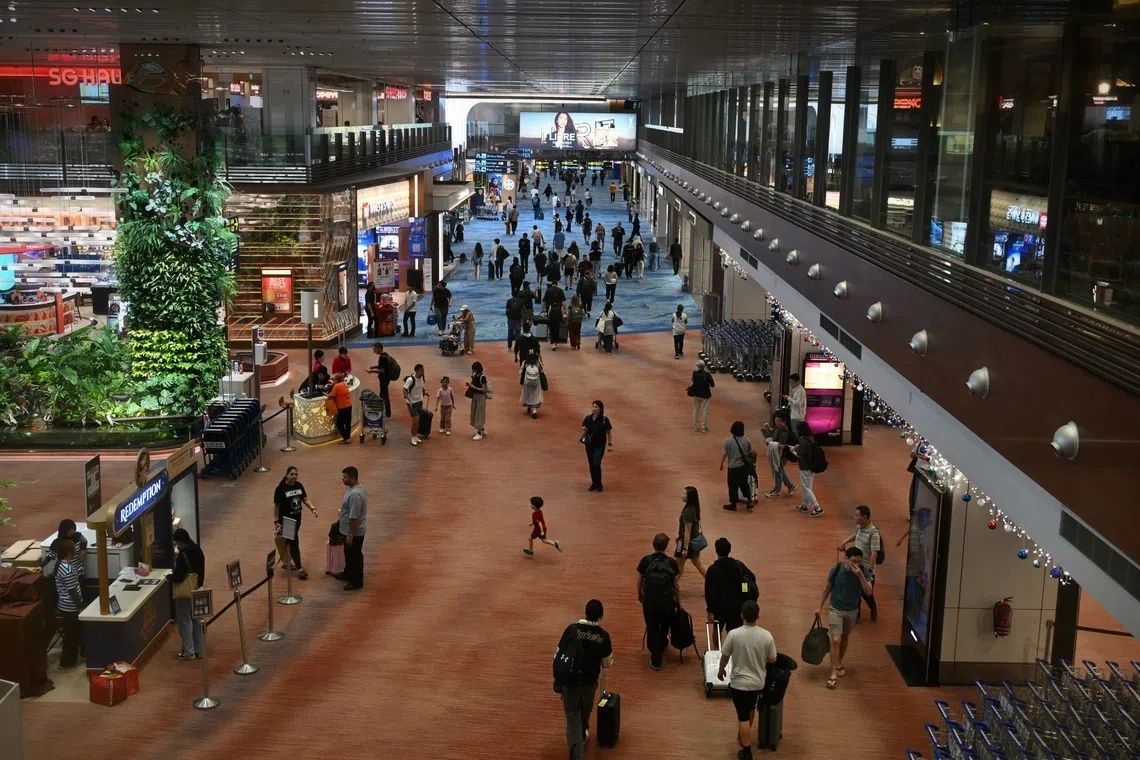
Singapore authorities have arrested two foreign nationals in connection with separate perfume theft cases at Changi Airport, highlighting the persistent challenge of retail theft at one of Asia's busiest aviation hubs. An Australian man, aged 37, and an American man, aged 50, face court proceedings scheduled for August 17 following their arrests in early August. The cases underscore how advanced surveillance technology continues to identify suspects even when considerable time has elapsed between the incident and apprehension.
The first incident occurred in November 2025 when a retail assistant at a shop in the transit area of Changi Airport Terminal 2 discovered two boxes of perfume missing from a display shelf. Upon reviewing closed-circuit television footage, authorities identified the Australian man removing the items, valued at approximately $430, at 4:50pm without payment. He departed Singapore before police could identify him, seemingly evading accountability. However, his freedom proved temporary. When the suspect transited through Changi Airport again on August 4—more than eight months after the original theft—he was apprehended by authorities who had maintained an alert for his return.
The second case unfolded rapidly, with enforcement action occurring before the suspect could flee the jurisdiction. Police received notification of a theft at approximately 1:25am on August 5 from a retail outlet located in the transit area of Changi Airport Terminal 1. A retail assistant reported a missing perfume box from a display shelf. Video surveillance footage revealed that an American man had taken the item, which cost over $310, around 12:40am without settling payment. Unlike the Australian case, this suspect was detained prior to boarding his flight, preventing his departure.
Further investigation using CCTV material revealed a more extensive pattern of theft involving the American suspect. He had stolen two additional items from separate stores within the transit area: another perfume box valued at $170 and a perfume tester bottle worth more than $230. The combined value of all three stolen items exceeded $717. Authorities successfully recovered all merchandise, preventing the suspect from profiting from his actions. This discovery transformed what initially appeared to be a single incident into evidence of serial retail crime at the airport.
The offence of theft in a dwelling—defined as theft committed in any building or residence—carries substantial legal consequences under Singapore law. Convicted individuals face potential imprisonment for up to seven years, financial penalties, or both. These penalties reflect the seriousness with which Singapore treats retail theft, particularly at high-profile locations like Changi Airport that serve as gateways for international travel and commerce.
Assistant Commissioner of Police M. Malathi issued a statement on August 16 emphasizing the authorities' commitment to combating shop theft through technological means and persistent investigation. He noted that CCTV technology advancements and widespread retailer adoption have dramatically improved detection capabilities for such offences. Malathi specifically warned that even when perpetrators initially evade immediate capture, ongoing investigative work will ultimately identify and apprehend them. This message carries particular resonance for transiting passengers who might assume that crossing international borders provides immunity from consequences.
The Changi Airport police unit has reinforced its collaborative approach with retail stakeholders to prevent and discourage shop theft throughout the terminal complex. This partnership model represents a broader approach to airport security that extends beyond traditional law enforcement to encompass retailer participation in loss prevention. Retailers benefit from improved incident reporting mechanisms and coordination with authorities, while police gain valuable intelligence about emerging theft patterns and suspect methodologies.
These cases demonstrate how persistence in investigation can overcome the challenges posed by international travel and jurisdiction complications. The eight-month interval between the Australian man's initial theft and his eventual arrest illustrates that modern aviation databases and coordinated border security measures create persistent tracking systems. International travelers cannot reasonably assume that a previous undetected theft will remain unresolved indefinitely. The rapid deployment against the American suspect before his departure reflects heightened airport security protocols that prioritize real-time intervention.
For Malaysian readers and Southeast Asian business interests, these cases carry implications regarding retail security at major transportation hubs. As regional air travel continues expanding, coordinated efforts among airport operators, retailers, and law enforcement agencies across borders become increasingly important. The success achieved at Changi Airport in detecting and apprehending these suspects may inform similar initiatives at Kuala Lumpur International Airport and other major regional aviation facilities. The precedent established—that international travel records and surveillance coordination enable delayed prosecutions—potentially deters would-be offenders who might otherwise calculate that the risk-to-reward ratio favors criminal activity at busy transit zones.

