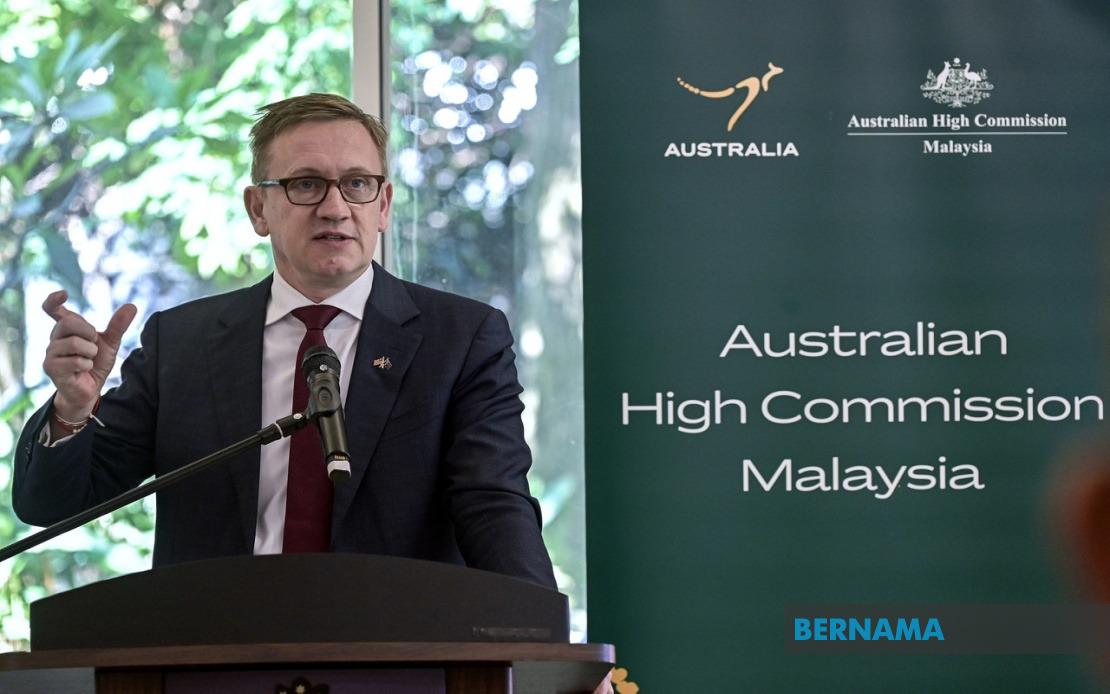
The Australian High Commission in Malaysia has rolled out a fresh scholarship initiative designed to remove financial barriers preventing talented Malaysian students from experiencing tertiary education across the Tasman. The Australia Awards-Malaysia Semester Programme, formally launched this month, allows enrolled students at Malaysian branch campuses to undertake up to two semesters of study in Australia while receiving comprehensive financial backing that covers travel, accommodation, living costs, visa processing, and insurance.
Assistant Minister for International Education Julian Hill, who presided over the launch in Kuala Lumpur, characterised the scheme as emblematic of Australia's commitment to nurturing deeper human connections with Malaysia's next generation. The initiative reflects a strategic recognition that educational exchange creates enduring bonds between nations—bonds that outlast trade cycles and political shifts. Hill emphasised that over half a million Malaysians have previously studied in Australia, and most return home with tangible skills and intangible ties to Australian institutions and values. The new programme aims to extend this legacy while ensuring that students lacking substantial financial resources are not excluded from international mobility opportunities.
The bilateral education relationship between Australia and Malaysia carries considerable historical weight and contemporary significance. For decades, Malaysian professionals in medicine, engineering, business, and the humanities have credited their Australian studies with shaping their careers and worldviews. By institutionalising semester-long exchanges through this scholarship, Australia is deliberately investing in sustained people-to-people engagement as a cornerstone of regional diplomacy. Hill noted the importance of reciprocity, expressing hope that Australian students would increasingly pursue studies at local Australian university branches through complementary schemes such as the New Colombo Plan, ensuring the educational pipeline flows bidirectionally.
The programme's inaugural cohort consists of 16 Malaysian students who commenced studies in Australia following the July intake this year. This modest pilot cohort provides a manageable foundation to assess programme efficacy, refine support mechanisms, and build enthusiasm among both Malaysian students and their families. The phased approach reflects pragmatic policy design—starting small allows administrators to troubleshoot logistical challenges, gather feedback from participants, and gather evidence of developmental and economic returns before scaling operations.
Current participating institutions include Curtin University Malaysia, Monash University Malaysia, and the University of Wollongong Malaysia, with Swinburne University of Technology Sarawak Campus also invited to join the expanded scheme. This multi-campus participation signals Australia's commitment to distributing educational opportunity across Malaysia's geographic and demographic landscape. The involvement of Malaysian branch campuses is particularly significant because it bridges access—students can progress their studies without requiring initial relocation, then transition to Australia for their semester abroad with greater preparedness and institutional support.
The scholarship addresses a structural challenge within international education: cost remains the primary deterrent preventing capable students from disadvantaged backgrounds from pursuing overseas study. By absorbing travel, accommodation, and living expenses, Australia removes a critical friction point in the decision-making process. This approach carries strategic implications beyond immediate enrolment figures. Graduates who complete degrees partially in Australia often develop stronger professional and social networks within the country, increasing likelihood of return visits, collaborative research, and ongoing engagement with Australian institutions post-graduation.
Hill articulated an important rationale grounded in collaborative problem-solving: he stressed that Australian universities in Malaysia function as research hubs capable of generating knowledge rather than mere teaching satellites. The exchange programme positions these campuses as platforms for tackling shared regional challenges spanning medical innovation, renewable energy transitions, mining sustainability, and agricultural advancement. When Malaysian students work alongside Australian academics on problems affecting both nations, they develop nuanced understanding of bilateral priorities and constraints—understanding that translates into informed policy advocacy and professional practice decades later.
The Australian government has committed funding for an initial four-year period aligned with its budget cycle, though Hill expressed aspiration for the programme's eventual transition into permanent status. This temporal commitment reflects political and fiscal realism: new schemes require demonstration of value before securing indefinite appropriations. The four-year runway provides sufficient time to generate outcome data, gather stakeholder testimonials, and build political support for continued investment. Malaysian policymakers should note this pattern; schemes with explicit expiry dates often transition to permanence once early-stage results prove compelling.
From a Southeast Asian perspective, the scholarship programme demonstrates Australia's strategic prioritisation of educational influence within the region. As competition intensifies among developed nations for regional influence—with the United States, United Kingdom, and increasingly Canada expanding scholarship offerings—Australia's targeted investment in Malaysia signals sustained commitment to a relationship that encompasses trade, security, immigration, and cultural exchange. Malaysian students represent future decision-makers in government, business, and civil society; investing in their educational experience generates long-term diplomatic dividends.
The scheme also reflects evolving attitudes toward international education among donor countries. Rather than positioning scholarships as charitable benevolence, Australian officials frame the initiative as enlightened self-interest: stronger ties with Malaysia benefit Australia economically and geopolitically. This framing proves more politically durable than aid-based rhetoric, particularly in democracies where taxpayer scrutiny of international expenditure intensifies during economic downturns. By articulating clear returns on educational investment, Australia makes its case more persuasively to both domestic audiences and Malaysian stakeholders.
For Malaysian students, the programme offers tangible advantages beyond academic credentials. Semester-long immersion in Australian universities provides exposure to different pedagogical approaches, research methodologies, and professional cultures. Students develop networks spanning academic disciplines and professional sectors, facilitating cross-border collaboration throughout their careers. The experience often catalyses broader personal and intellectual development—encountering different perspectives, navigating unfamiliar systems, and building resilience through adaptation.
Looking forward, the programme's success will likely depend on sophisticated support mechanisms extending beyond financial provision. Participating universities must attend carefully to student welfare, academic integration, cultural adjustment, and career guidance to ensure participants thrive rather than merely survive their semester abroad. Alumni engagement proves equally critical; maintaining connections with returning students transforms them into programme ambassadors, encouraging peers and younger cohorts to apply and deepening lasting ties between Malaysian and Australian institutions. If executed thoughtfully, the Australia Awards-Malaysia Semester Programme could catalyse a generation of bilateral engagement that yields returns far exceeding the initial investment.

