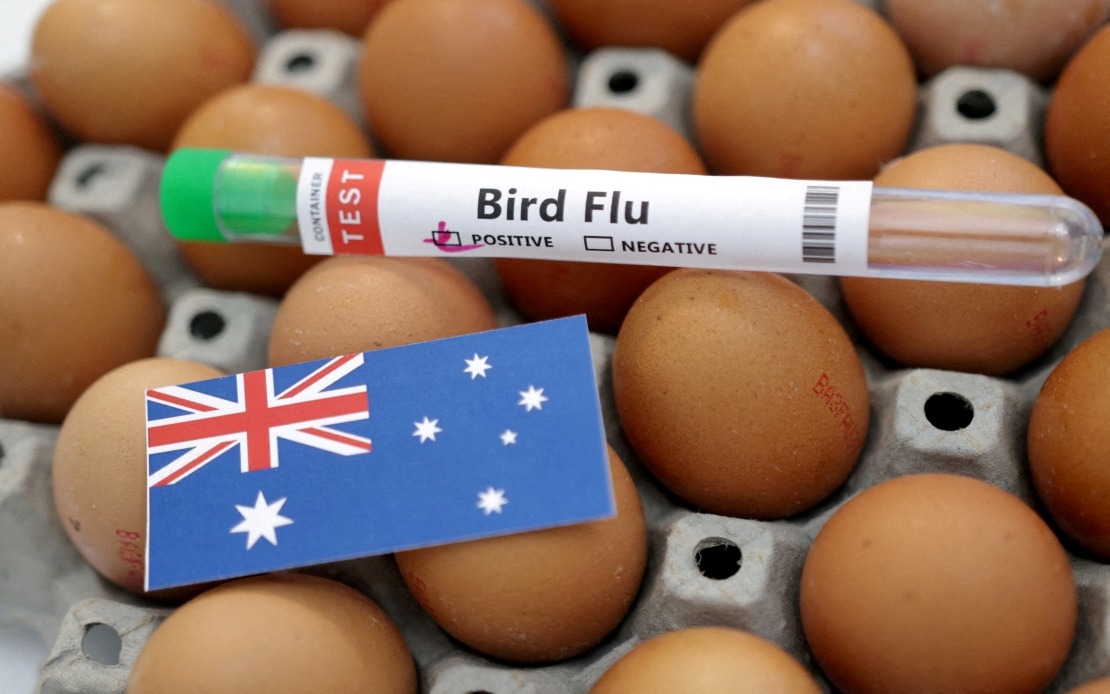
Australia has entered a new phase in its battle against avian influenza after detecting H5N1 in a non-migratory seabird found dead on the South Australian coast, marking a critical shift in how the deadly virus is spreading across the continent. Agriculture Minister Julie Collins announced Friday that the greater crested tern discovered near the town of Robe had tested positive for the highly pathogenic H5N1 strain, representing the first confirmed case in local wildlife on the Australian mainland rather than in migratory birds returning from sub-Antarctic regions.
The detection carries significant implications for Australia's biosecurity framework and regional disease management strategies. Until now, every confirmed H5N1 case on the mainland had been traced to migratory birds that had travelled from southern polar regions, creating a clear epidemiological pattern. The emergence of the virus in a non-migratory species suggests a fundamental change in how the disease may be circulating and establishing itself within Australia's wildlife populations. This development has prompted urgent investigations into the transmission pathway that allowed the greater crested tern to become infected.
Authorities in South Australia have already ramped up surveillance measures in the area surrounding Robe, where the infected bird was recovered. Collins stated that scientists are conducting detailed research to determine how local wildlife became exposed to the virus, a crucial step in understanding whether the infection represents an isolated incident or the beginning of wider community spread among coastal and inland bird populations. The enhanced monitoring efforts reflect the seriousness with which Australian health and agricultural officials are treating the discovery.
The broader picture has grown more concerning since Australia's first confirmed mainland detection in Western Australia in June. Beyond the greater crested tern case, authorities have now confirmed two additional H5N1 detections in South Australia and one more in Western Australia, bringing the total number of confirmed cases on the Australian mainland to twelve. This rapid accumulation of cases over a short timeframe underscores the virus's expanding reach and the urgency of understanding its transmission dynamics.
For Southeast Asian observers, Australia's experience offers both cautionary lessons and insights into effective disease containment. The region's poultry industry and wildlife populations share ecological connections with Australia, and the demonstrated ability of H5N1 to establish itself in non-migratory local birds raises questions about similar risks in neighbouring countries. Malaysia, Indonesia, and other regional economies with significant avian agriculture sectors must consider whether the pathways facilitating transmission in Australia could operate within their own borders.
Collins acknowledged the concerning nature of the discovery while framing it within Australia's broader biosecurity success story. She noted that while the emergence of H5N1 in local wildlife represents a development that authorities had anticipated, it actually demonstrates the effectiveness of Australia's surveillance systems in detecting the virus promptly. This perspective highlights a critical distinction: the detection of a problem is not equivalent to the failure of biosecurity measures, but rather evidence that monitoring mechanisms are functioning as intended.
The investigation into transmission pathways carries particular importance for regional disease control strategies. Understanding whether the bird contracted the virus from food sources, direct contact with infected migratory species, or environmental contamination will help predict and potentially prevent similar transmissions elsewhere. Each transmission pathway suggests different intervention points for authorities seeking to limit further spread and protect vulnerable populations of wild and domesticated birds.
Australia's status as the last major continent to avoid confirmed H5N1 cases in local wildlife was short-lived, lasting only until June when the first Western Australian case emerged. That milestone had represented a geographic anomaly in a global landscape where the virus has established itself across Europe, Asia, Africa, and the Americas. The mainland's unusual protection reflected both its geographic isolation and rigorous biosecurity protocols, factors that may continue to limit widespread community transmission despite the recent detections.
The timing of these discoveries relative to Australia's winter season adds another dimension to the emerging threat. Seasonal factors influence bird migration patterns and congregation behaviour, which in turn affects virus transmission opportunities. As Australia moves deeper into its cooler months, understanding how H5N1 behaves within local bird populations becomes increasingly important for predicting and managing potential outbreaks.
For the broader Indo-Pacific region, Australia's experience serves as a reminder that even well-resourced nations with sophisticated biosecurity infrastructure cannot completely isolate themselves from emerging infectious diseases. The virus's arrival in non-migratory Australian birds suggests that established pathways of transmission operate at scales that transcend traditional geographic and ecological boundaries. This reality demands continued regional cooperation, information sharing, and coordinated preparedness measures among Southeast Asian nations and their international partners to protect both human health and agricultural stability.

