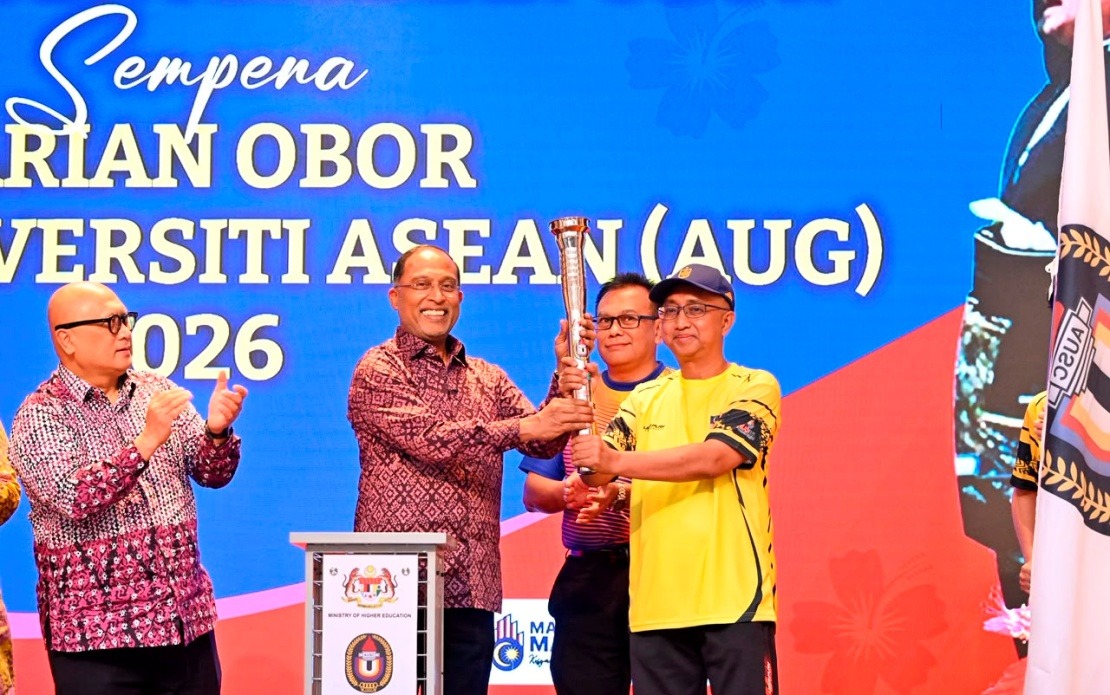
Malaysia has officially launched its campaign to host the ASEAN University Games 2026 with a symbolic torch run beginning at the Ministry of Higher Education in Putrajaya, underscoring the nation's readiness and sporting ambitions for the region's premier university athletics event. Higher Education Minister Datuk Seri Dr Zambry Abd Kadir handed over the AUG 2026 torch during a ceremony at the ministry's monthly assembly, passing the symbolic flame to Prof Dr Mohammad Ismail, who serves as both the Malaysian contingent's chief and Deputy Vice-Chancellor for Student and Alumni Affairs at Universiti Malaysia Kelantan. The gesture encapsulates Malaysia's broader commitment to excellence as it prepares to welcome thousands of young athletes from across Southeast Asia to compete on home soil.
Zambry's remarks at the handover ceremony carried particular weight, calling upon the nation's university athletes to embody not just competitive spirit but also national pride. His exhortation for athletes to "carry the Malaysian torch and the torch of victory" frames the upcoming games as more than a sporting competition—it is, in his view, an opportunity for young Malaysians to represent their country's values and capabilities on a regional platform. This messaging reflects a broader governmental strategy of leveraging major sporting events to foster national unity and project soft power within ASEAN, positioning university athletics as a vehicle for diplomatic engagement and cultural exchange across the region.
The ceremonial torch relay was accompanied by four elite national athletes whose presence symbolised the calibre of competition expected in December. Long jumper Andre Anura Anuar and shot putter Nani Sahirah Maryata, both representing Universiti Putra Malaysia, were joined by karate competitor Thevendran Kaliana Sundram from Universiti Pertahanan Nasional Malaysia and taekwondo athlete Lee Hui Yee from Sultan Salahuddin Abdul Aziz Shah Polytechnic. The selection of athletes spanning both traditional Olympic disciplines and combat sports demonstrates the breadth of Malaysia's university sports ecosystem and the diversity of competitive pursuits that will feature at the games.
The torch's physical journey through Malaysia's educational institutions carries symbolic significance beyond ceremonial protocol. Beginning at the Ministry of Higher Education grounds in Putrajaya, the torch proceeded to the Ministry of Tourism, Arts and Culture before completing its initial circuit. Subsequent legs of the relay will traverse major Malaysian universities—Universiti Kebangsaan Malaysia, Universiti Putra Malaysia, Universiti Pertahanan Nasional Malaysia, Universiti Malaya, and Universiti Teknologi MARA—ensuring that the nation's premier institutions of higher learning are visibly connected to the games and their student bodies engaged in the pre-competition momentum building.
The scale of AUG 2026 underscores Malaysia's substantial logistical undertaking. Scheduled for December 10 to 19, the games will convene approximately 4,669 participants drawn from 11 ASEAN nations. This includes 2,849 athletes and officials competing across 19 distinct sports, supported by 700 referees and competition officials alongside 920 volunteers who will ensure smooth operations. The dispersal of venues across Shah Alam, Kuala Lumpur, Serdang, and Bangi reflects the games' geographic footprint and highlights the coordinated effort required across multiple municipalities to deliver a world-class sporting spectacle.
Under the thematic banner "HOLISTIC.EXCELLENCE," the games signal Malaysia's aspiration to demonstrate not merely competitive sporting prowess but also comprehensive excellence in organisation, hospitality, and inclusive development. This framing suggests that Malaysia views the AUG 2026 as an opportunity to showcase institutional maturity and strategic capacity in hosting complex international events—credentials that carry weight beyond the sports arena and position the nation as a capable partner for future regional and international collaborations. For Malaysian university athletes, the games represent a chance to test themselves against peers from regional rivals Thailand, Vietnam, Indonesia, and the Philippines in an environment designed to elevate performance standards across all competing nations.
The torch run's timing reflects broader governmental strategy regarding university sports development in Malaysia. By elevating the profile of university athletics through ceremonial elements and ministerial engagement, the government signals its investment in cultivating athletic talent pipelines that may eventually feed elite national teams. University games serve dual purposes: they provide competitive opportunities that keep young athletes engaged and developing while simultaneously fostering regional connectivity and mutual respect across ASEAN's educational institutions. For Malaysia, successful hosting of AUG 2026 could establish precedent for greater involvement in future continental and international sporting events.
From a regional perspective, Malaysia's hosting of AUG 2026 arrives at a moment when ASEAN nations are increasingly conscious of sporting diplomacy and soft power projection. University games, by their nature, facilitate people-to-people exchanges among younger cohorts across Southeast Asia and can foster lasting networks and friendships that transcend national boundaries. The inclusive participation of 11 ASEAN nations ensures that the games remain truly representative of the region's diversity, with smaller nations and island states having equal standing with larger demographic powers. This egalitarian structure differentiates university games from professional sports competitions and reinforces ASEAN's stated commitment to mutual respect and cooperation.
The selection of December for the games reflects practical considerations regarding climate, academic calendars, and the regional sporting calendar. Hosting during the northern hemisphere's winter and Southeast Asia's cooler season optimises conditions for athletic performance, while the timing allows universities to manage competition scheduling around examination periods and academic commitments. This coordination between sporting logistics and educational calendars demonstrates the sophistication required to stage university games successfully and highlights Malaysia's understanding of the unique demands of organising competitions for student-athletes balancing academic and athletic responsibilities.
Looking forward, the torch run serves as both conclusion and commencement—marking the formal end of preparatory phases and the launch of intensive countdown activities toward December. Each subsequent torch relay through Malaysian universities will generate local institutional pride and media attention, building grassroots anticipation for the games. For student-athletes across the nation, the torch's passage through their campuses represents a tangible reminder that their sporting endeavours matter not just for personal achievement but for national representation on a regional stage. The symbolism embedded in the relay process thus extends far beyond ceremony, functioning as a mobilising mechanism to energise Malaysia's university sports community and broader society in anticipation of hosting one of Southeast Asia's most significant youth sporting spectacles.

