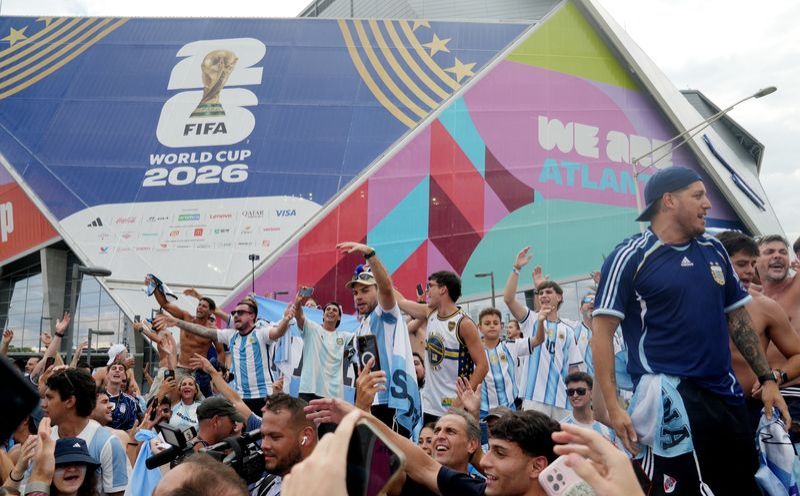
When Atlanta hosted the 2024 FIFA Women's World Cup, the traditionally hip-hop centred American city pivoted to an unfamiliar rhythm. The tournament transformed Atlanta's streets and Mercedes-Benz Stadium into a global gathering ground, with supporters from every continent converging to witness Cape Verde's World Cup debut, England's dramatic victory over DR Congo, and Argentina's remarkable two-game comeback run that led them to the final. The city, accustomed to setting trends in music and culture, found itself dancing to the beat of international football.
Atlanta's rapid ascent as a soccer hub represents a significant shift in the American sports landscape. The city initially received the hosting invitation in July 2017 through a formal outreach from FIFA's partner organisations seeking candidate venues. Dan Corso, the host committee president, recalled the decision-making process as remarkably swift. The city seized the opportunity without hesitation, recognising immediately the potential significance of hosting world football's flagship women's tournament.
The foundation for Atlanta's successful bid rested on infrastructure and demonstrated fan engagement that had crystallised over the previous decade. Atlanta United's establishment in 2017 and their subsequent MLS Cup victory just a year later proved transformative. The franchise's consistent league-leading attendance figures created an undeniable narrative: Atlanta possessed both the venues and the passionate supporter base necessary for a major tournament. This tangible proof of soccer's commercial viability in the city proved decisive during FIFA's selection deliberations.
Arthur Blank's ownership of both Atlanta United and the NFL's Falcons enabled significant investment in regional soccer infrastructure. His $50 million donation toward the U.S. Soccer National Training Center, established just outside the city limits, further solidified Atlanta's credentials as America's emerging soccer capital. These institutional commitments, backed by substantial private capital, conveyed to international football authorities that the city's soccer ambitions extended far beyond temporary tournament arrangements.
Atlanta's broader experience hosting world-class sporting events strengthened its candidacy considerably. The city's stewardship of the 1996 Olympic Games demonstrated organisational capacity and community mobilisation capabilities. The Super Bowl returns to Mercedes-Benz Stadium in 2028, marking the fourth occasion Atlanta has hosted America's premier annual sporting spectacle. This track record of successful major event hosting provided confidence that the World Cup would be executed with the professionalism and attention to detail expected by FIFA.
The three-week tournament delivered substantial economic and cultural benefits to Atlanta and Georgia. More than 544,500 spectators filled stadiums across eight matches, encompassing group fixtures, knockout rounds, and a semi-final featuring Argentina's thrilling comeback victory over England. These attendance figures reflected international tourism flows and the drawing power of women's soccer on a global stage. The accompanying Fan Fest initiative attracted over half a million additional visitors over nineteen days, extending tournament engagement beyond match days to the broader community.
Civic participation underscored local ownership of the event. More than 2,000 residents from Atlanta and Georgia volunteered, transforming the World Cup from an imported spectacle into a shared community endeavour. This grassroots involvement ensured that tournament benefits permeated beyond hospitality and transport sectors into neighbourhood-level social fabric. For many Atlantans, hosting the world's premier women's soccer tournament represented validation of their city's cosmopolitan aspirations and diverse cultural identity.
The tournament's legacy extends beyond memorable matches and atmospheric stadium experiences. The host committee collaborated with MARTA, Atlanta's public transport authority, and the Soccer in the Streets programme to establish a permanent mini-pitch facility. This infrastructure investment directly supports youth soccer development and provides free access to the sport for children throughout the city. Such legacies distinguish successful World Cups from temporary events, embedding sporting development into long-term community structures.
Atlanta's appetite for future soccer development shows no signs of diminishing. The city will welcome a new National Women's Soccer League franchise in 2028, coinciding with Super Bowl LV and reinforcing the city's emergence as a premier destination for women's professional sports. More ambitiously, Atlanta is pursuing hosting rights for the 2031 FIFA Women's World Cup, seeking to build on the momentum and infrastructure established during the 2024 tournament.
For Southeast Asian observers, Atlanta's transformation offers instructive lessons about leveraging major sporting events for long-term development. The city's strategy combined existing sporting infrastructure, demonstrated fan engagement, private sector investment, and civic participation to create a compelling hosting narrative. Rather than viewing the World Cup as a one-off tournament, Atlanta positioned it as a milestone within a longer arc of soccer infrastructure and cultural development. This approach suggests that successful tournament hosting requires alignment between immediate event requirements and multi-year strategic sporting vision.
Atlanta's World Cup experience also demonstrated women's soccer's capacity to attract international audiences and generate economic activity comparable to men's tournaments. The tournament's success challenges lingering perceptions about women's sports viability as major commercial and cultural events. For developing soccer markets across Southeast Asia, this validation carries implications for investment priorities and audience development strategies.

