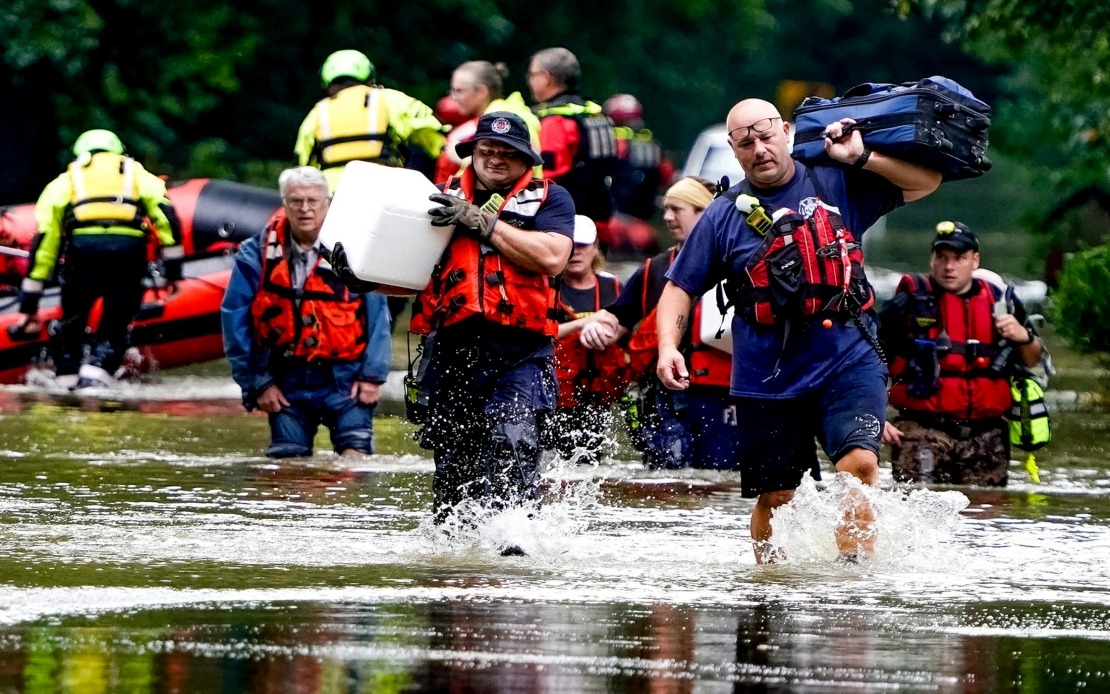
A destructive storm system has brought catastrophic flooding to Indiana, leaving at least six people dead and prompting one of the largest rescue operations in the state's recent history. The deluge, which deposited more than 11 inches of rain across parts of the American Midwest, has transformed communities along the White River into disaster zones, with residents forced to navigate submerged streets in kayaks and makeshift boats.
The most severe impacts have concentrated in the corridor stretching from Hamilton County through the northern suburbs of Indianapolis, where rescue teams have pulled nearly 90 people and 45 pets from rising floodwaters. In the Ravenwood neighbourhood of Indianapolis, the scale of the inundation became immediately apparent as vehicles disappeared beneath murky water and floodwaters reached the entrance of residential homes. The scene underscores the ferocity of what officials are describing as a once-in-a-century weather event.
The White River, which serves as a crucial drainage system for central Indiana, has become a raging torrent. In both Anderson and Noblesville, the river rose above 24 feet, shattering records established in 1913 and marking more than a century of water management history. Jacob Spence, who directs emergency management efforts in Marion County, characterised the situation with stark language: the flooding represents an event so rare that it occurs perhaps once in a lifetime, with new records being set as water continues its relentless climb.
Governor Mike Braun has invoked federal assistance mechanisms, confirming that he spoke directly with President Donald Trump about expediting a Federal Emergency Management Agency declaration to unlock additional resources for recovery and relief efforts. Indianapolis Mayor Joe Hogsett issued an emergency declaration and ordered residents in flood-prone areas near the river to evacuate immediately, recognising the ongoing danger as water levels remained volatile.
Fatalities have been distributed across multiple counties, reflecting the broad geographic reach of the disaster. The Indiana Department of Homeland Security confirmed deaths in Jennings, White, Porter, and La Porte counties. A particularly tragic case occurred in Delaware County, where a 58-year-old woman lost her life while attempting to drive across flooded roadways—a scenario that represents one of the deadliest mistakes people make during extreme weather events.
Governor Braun released a statement expressing deep sorrow for those who perished. "My heart is with the families and loved ones of the five Hoosiers we have lost and every family whose life has been changed by these storms," he said, before emphasising the critical importance of heeding warnings. "Please continue to take flooding seriously and stay away from floodwaters." His message targeted a persistent public safety challenge: the tendency of some individuals to underestimate floodwater dangers.
The National Weather Service documented the rainfall intensity across affected areas, with certain locations receiving more than 11 inches of precipitation within just 48 hours. This extraordinary volume of water overwhelmed drainage systems designed for normal precipitation patterns and contributed to the record-breaking river levels. Todd Wilson, who oversees Indianapolis' public works department, warned that water levels continued climbing, indicating that peak conditions had not yet been reached.
Beyond Indiana's borders, the storm system has inflicted damage across a wide swathe of the Midwest. Communities from the Chicago area extending east into western Pennsylvania have reported flooding, tornadoes, and severe wind damage, suggesting that this was a regional weather phenomenon of substantial intensity rather than a localised event. The multi-state nature of the disaster indicates that emergency response and recovery coordination will require federal and interstate cooperation.
For Malaysia and Southeast Asian observers, this disaster offers sobering reminders about climate change's intensifying weather patterns and the vulnerability of urban infrastructure to extreme precipitation events. Many Malaysian and Southeast Asian cities experience tropical downpours but lack the scale of response infrastructure visible in American emergency management systems. The Indiana case demonstrates how even wealthy, developed nations with sophisticated early warning systems, professional emergency management agencies, and substantial resources struggle when rainfall exceeds historical parameters.
The flooding also illustrates the interconnection between water management, urban planning, and disaster preparedness. River systems that have been stable for over a century can transform into dangerous torrents when precipitation events exceed the capacity of those systems. As climate patterns shift globally, communities worldwide are confronting the reality that historical data increasingly provides inadequate guidance for future extreme weather scenarios.
Recovery from the Indiana flooding will extend across months and years, involving not merely the removal of water and sediment but also the restoration of homes, businesses, and critical infrastructure. The psychological toll on survivors should not be underestimated—residents who have witnessed their communities transformed by water, whose neighbourhoods have become temporarily uninhabitable, and whose possessions have been destroyed face a lengthy process of emotional and practical recovery.
As investigation continues into how this disaster unfolded and what measures might prevent similarly catastrophic outcomes in the future, state and federal officials will examine early warning systems, evacuation protocols, and the adequacy of existing flood mitigation infrastructure. The lessons learned from Indiana's flooding will likely influence emergency preparedness discussions in vulnerable regions throughout North America and potentially inform international climate adaptation strategies.

