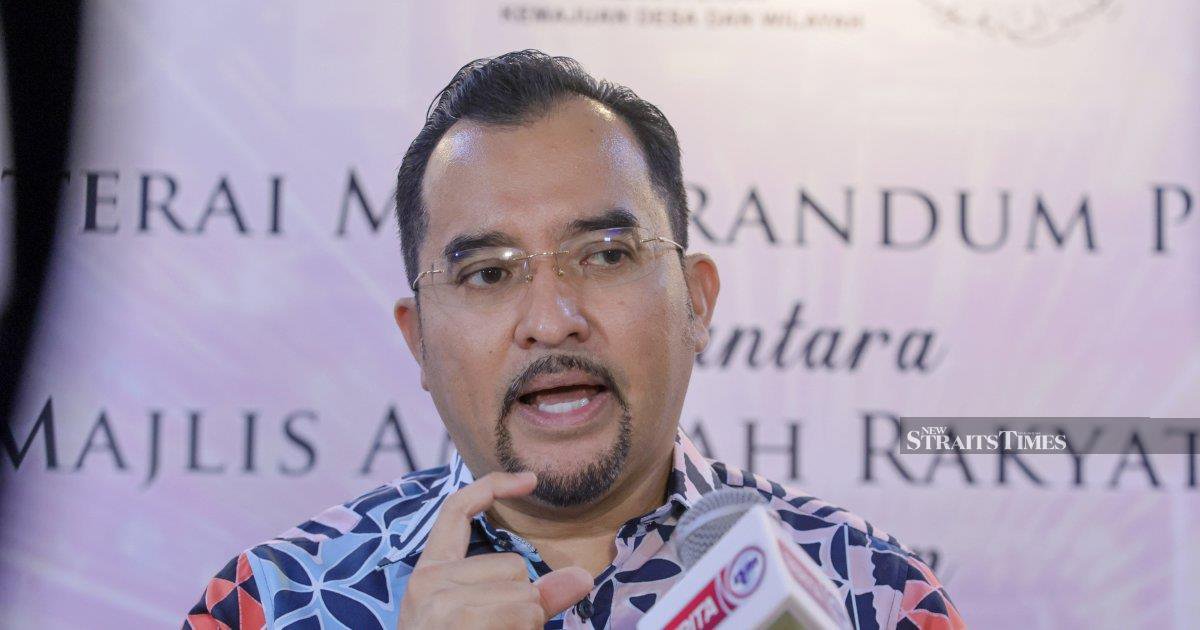
Umno secretary-general Datuk Dr Asyraf Wajdi Dusuki has firmly rejected suggestions that he wielded influence or authority over Tabung Haji transactions while serving as deputy minister in the Prime Minister's Department, distancing himself from the controversial Al-Rawda property acquisition that has drawn heightened public and political attention.
The pilgrimage fund manager's dealings have come under increasing scrutiny in recent months, with particular focus on major asset acquisitions and investment decisions made during specific periods. The denial marks an important moment in ongoing questions about governance and oversight within the state-owned institution, which manages billions of ringgit in savings accumulated from millions of Malaysian pilgrims over decades.
Ashraf's statement carries weight given his prominence within Umno's leadership hierarchy and his previous proximity to sensitive government functions. As deputy minister in the Prime Minister's Department, his portfolio would typically have encompassed various statutory bodies and advisory roles, yet he maintains that Tabung Haji operational decisions fell entirely outside his remit and authority structure during that period.
The Al-Rawda transaction has emerged as a focal point for broader concerns about Tabung Haji's investment strategy and asset management practices. Property acquisitions by the fund, particularly those involving substantial capital deployment, ordinarily undergo board-level scrutiny and formal approval processes. Questions have arisen about the decision-making framework and whether appropriate due diligence protocols were rigorously followed in evaluating such significant commitments of pilgrim funds.
Tabung Haji's governance structure involves multiple layers of oversight, including its board of directors, senior management, and various internal committees responsible for investment and financial decisions. The institution operates under statutory provisions and regulatory frameworks established to safeguard member interests and ensure prudent management of accumulated savings. Any major transaction should theoretically involve comprehensive assessment of risk factors, market conditions, and strategic alignment with the fund's long-term objectives.
The pilgrimage fund has previously faced criticism regarding investment performance and asset allocation decisions. As Malaysia's primary savings institution for Muslims preparing for the Hajj pilgrimage, Tabung Haji carries significant public trust and social responsibility. Members contribute consistently throughout their working lives, expecting their funds to be managed with utmost care and transparency, generating reasonable returns while preserving capital.
Asyraf's explicit denial suggests he anticipates further scrutiny or potential allegations regarding his involvement in specific Tabung Haji decisions. By clarifying the boundaries of his authority, he appears to be establishing clear separation between his government role and the fund's autonomous decision-making processes. This demarcation becomes particularly important should any investigations or inquiries subsequently examine the transaction chain and authorization procedures.
The timing of his statement reflects broader political and institutional dynamics currently affecting major government-linked entities. Several Malaysian institutions managing substantial public or member assets have faced increased accountability demands, with stakeholders demanding greater transparency regarding investment decisions and asset deployment. This broader context amplifies scrutiny on individual transactions and the officials involved in related policy areas.
For Malaysian pilgrims and Tabung Haji members, questions about governance and financial stewardship directly affect confidence in the institution. The fund serves millions of contributors who depend on reliable management of their savings, making transparency about decision-making processes and authorization channels essential for maintaining public trust. Any perception of improper influence or unauthorized involvement by government officials could undermine confidence in the fund's independence and competence.
Asyraf's clarification may also signal potential forthcoming revelations or investigations into the Al-Rawda deal and related transactions. Political figures sometimes preemptively address questions they anticipate will be raised publicly, establishing defensive positions before adverse information emerges. His explicit denial creates an official record that may later become relevant should inquiries proceed or additional facts surface through parliamentary scrutiny or independent investigation.
The distinction between government oversight responsibility and day-to-day operational control proves crucial for understanding Tabung Haji's governance architecture. While various government officials may exercise supervisory roles over statutory bodies, operational decisions including significant asset acquisitions typically remain within management and board authority. Asyraf's position implies he maintained appropriate distance from such matters despite his government portfolio.
Moving forward, the focus may shift toward examining which officials and board members approved the Al-Rawda transaction, what assessment processes occurred, and whether decision-making aligned with established protocols. Clarity regarding the authorization chain and involved parties becomes increasingly important for evaluating whether the transaction reflected sound judgment and appropriate governance standards or whether deficiencies in oversight or due diligence merit further investigation and potential remedial action.

