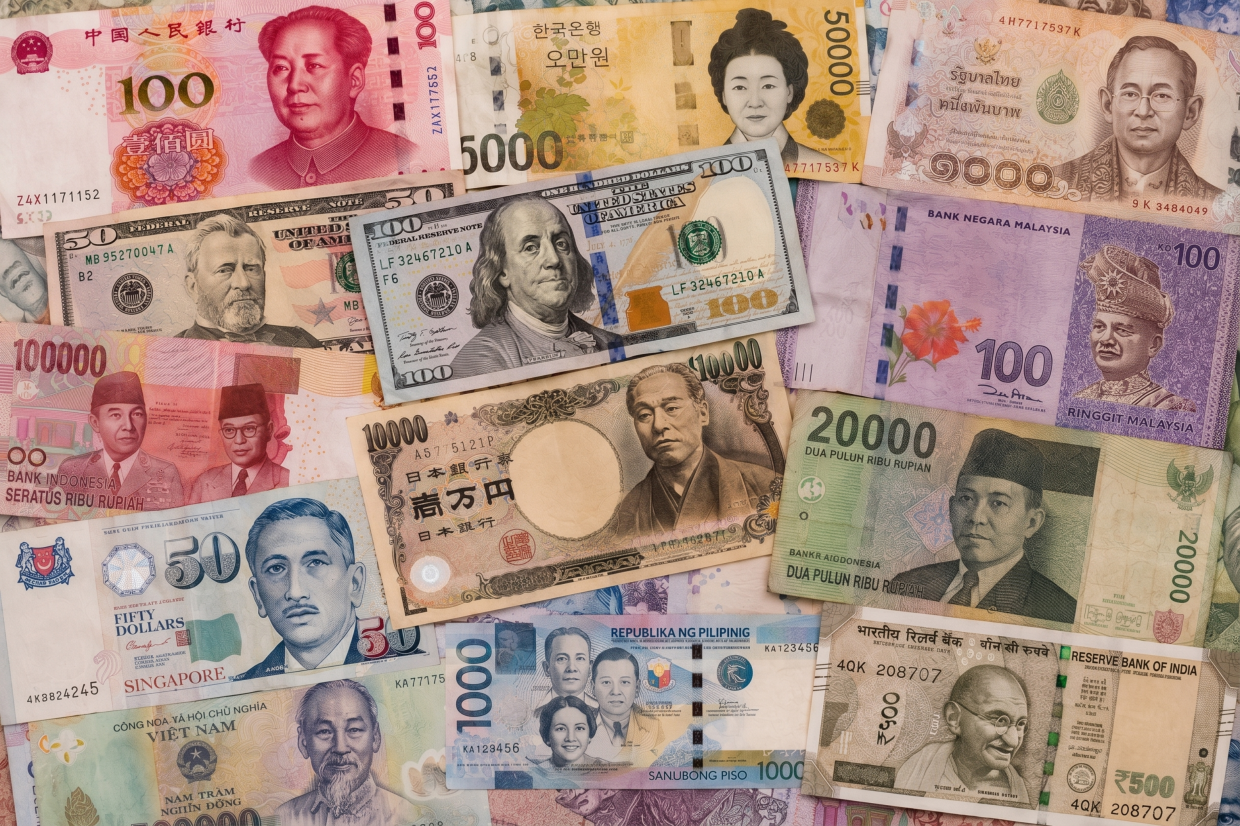
Mounting geopolitical tensions in the Middle East have swept through regional financial markets, sending the U.S. dollar higher against a basket of Asian currencies while equity benchmarks stumbled on Monday. The escalation fanned inflation concerns globally and rekindled expectations that central banks may maintain restrictive monetary policy longer than previously anticipated, weighing on investor sentiment across emerging Asia and prompting a sharp selloff in high-growth technology stocks that have led regional gains this year.
Oil prices surged roughly 4% on the renewed Gulf conflict, reversing weeks of relative calm in energy markets and triggering a familiar cascade of consequences through currency and equity channels. The strengthening dollar index reflected this shift, as investors rotated toward safe-haven assets and priced in the possibility that persistently elevated energy costs could keep inflation pressures alive despite recent cooling trends. For Malaysia and other emerging economies heavily dependent on oil imports, the spike threatens to complicate inflation management and potentially slow the pace of monetary policy easing that regional central banks have begun implementing.
The Indonesian rupiah bore the brunt of currency selling, slipping to 18,140 against the U.S. dollar—a level not seen in more than a month—as emerging market investors reassessed their exposure to economies vulnerable to commodity price shocks and external funding pressures. Similarly, the South Korean won weakened to 1,507.9 per dollar, reflecting not only the broader Asian currency selloff but also domestic equity market turbulence that has begun attracting notice from international investors watching for signs of financial stability concerns in a major advanced economy within Asia.
South Korea's benchmark KOSPI index delivered the region's most dramatic performance, plummeting 7.96% to touch its lowest level in ten weeks and triggering automatic circuit breaker halts designed to cool panic selling. The decline was concentrated in semiconductor stocks, with SK Hynix—a leading manufacturer of advanced memory chips critical to artificial intelligence systems—suffering a sharp 13% drop as investors rushed to lock in profits following the company's successful listing debut on U.S. exchanges the previous Friday. The sharp pullback underscores growing anxiety among market participants about whether the exceptional earnings growth driving the semiconductor sector can be sustained once initial euphoria around AI capex cycles moderates.
Underlying this volatility is a broader reassessment of the semiconductor complex's fundamental trajectory. Investors have begun questioning whether the torrent of capital spending by artificial intelligence hyperscalers will continue indefinitely and whether the premium valuations now assigned to memory chipmakers properly reflect the sector's true earnings power over the medium term. Additionally, the proliferation of single-stock exchange-traded funds with embedded leverage has amplified intraday price swings, creating feedback loops where algorithmic selling triggers margin calls and forces redemptions that drive prices down further in cascading fashion.
Despite the Monday carnage, South Korea's KOSPI remains a relative outperformer by global standards, having appreciated roughly 63% year-to-date even as it has surrendered approximately 25% of its value since hitting a record closing level on June 22. This trajectory reflects the dual pressures facing Asian equities: exceptional gains driven by semiconductor and technology optimism have created historically stretched valuations that leave little room for disappointment, while external shocks such as geopolitical escalation can trigger sharp mean-reversion moves that wipe out months of accumulated returns in days.
In Malaysia, the ringgit weakened to 4.0780 per U.S. dollar amid the broader emerging market currency retreat, yet the domestic equity market defied the regional trend by jumping to its highest level in three weeks. This divergence highlights the complex interplay between external and domestic forces shaping investor sentiment toward the country. The domestic political landscape has increasingly become a focal point for asset managers assessing Malaysian risk, particularly following Prime Minister Anwar Ibrahim's ruling coalition's significant setback in a Johor state election held on Saturday where a key coalition partner delivered a crushing defeat that has sparked speculation about potential fractures in the federal government's unity.
Goldman Sachs analysts have signaled that political uncertainty surrounding the stability of the government and continuity of its economic agenda could erode part of the valuation premium that Malaysian equities have accumulated due to investor confidence in policy predictability and institutional strength. However, the bank noted that measures implemented by Bank Negara Malaysia in June to encourage foreign exchange inflows should provide some cushion against excessive currency depreciation, even if domestic political risk remains elevated. This assessment suggests that while political risks merit monitoring, Malaysia's underlying macroeconomic fundamentals remain sufficiently robust to limit the damage.
Elsewhere across the region, equity performance was decidedly mixed. Philippine stocks edged slightly higher, while Indonesian equities posted a more meaningful 0.5% gain despite the rupiah's weakness. Taiwanese shares inched lower, and Singapore's benchmark index declined as much as 0.7%, snapping an impressive seven-session streak of record closes. The divergence in regional equity performance reflects varying exposures to the factors driving Monday's selloff—while some Southeast Asian markets benefited from relative insulation from semiconductor volatility and energy hedging arrangements, others faced headwinds from currency depreciation that made dollar-denominated liabilities more expensive.
The week ahead promises substantial volatility as investors digest multiple critical data releases and policy announcements. Singapore will release advance second-quarter economic growth figures that will shed light on whether the city-state's growth momentum has accelerated after a tepid first quarter. The U.S. inflation print will provide crucial information about whether price pressures are truly cooling or remain sticky at elevated levels—a distinction that carries enormous implications for Federal Reserve policy trajectories. South Korea's central bank will announce its interest rate decision amid mounting economic uncertainty, while Malaysia will publish its latest inflation readings and advance economic output data that will help clarify whether the nation's growth recovery remains on track despite political headwinds.

