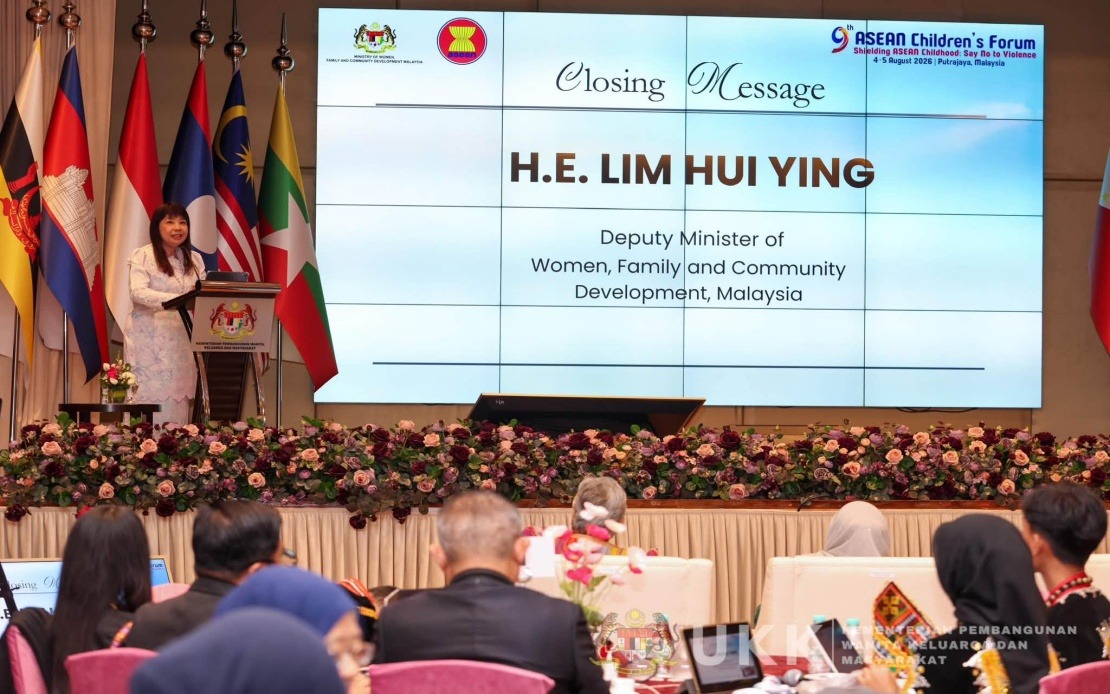
ASEAN member states are being pressed to fortify child protection frameworks following concrete recommendations emerging from the 9th ASEAN Children's Forum in Putrajaya, where young participants from across the region articulated urgent needs for legislative reform and institutional change. Deputy Women, Family and Community Development Minister Lim Hui Ying underscored the significance of these proposals, emphasising that the voices of child participants deserve serious consideration from both national governments and regional policymaking bodies.
The recommendations collectively address violence against children in multiple dimensions—physical, emotional, psychological, and sexual—reflecting the lived realities and concerns of young people across the diverse socioeconomic and cultural contexts of Southeast Asia. Rather than being treated as abstract policy suggestions, Lim stressed that these proposals embody the authentic experiences and aspirations of children themselves, granting them substantial weight in deliberations among policymakers. This framing represents a shift toward child-centred governance, where the perspectives of affected populations directly shape institutional responses to protection failures.
The forum identified four critical environments where child protection must be strengthened: the home, schools, digital spaces, and broader community settings. Each domain presents distinct challenges and requires tailored interventions. Within households, for instance, patterns of domestic violence and abuse often remain hidden behind closed doors, necessitating stronger legal frameworks that can reach beyond the private sphere. Schools face mounting pressures around bullying and peer-related violence, while the online environment introduces novel vectors for exploitation and harm that many existing laws have yet to adequately address. Community-level protection involves both institutional safeguards and social norms that either enable or prevent violence.
Among the substantive recommendations forwarded by participants, strengthening child protection legislation stands as foundational. Current laws across ASEAN nations vary considerably in scope and enforcement capability, creating gaps that leave vulnerable children without adequate recourse. The call for enhanced legislative frameworks suggests the need for comprehensive review of existing statutes, potentially harmonising minimum standards across the region while respecting national legal traditions. Such harmonisation could facilitate cross-border cooperation in cases involving trafficking, migration, and abuse that transcend national boundaries.
Equally important is the expansion of child-friendly reporting channels. Many children who experience abuse or witness violence fail to report it through formal mechanisms due to fear, shame, or lack of awareness about available pathways for seeking help. Creating accessible, trauma-informed reporting systems that accommodate children's developmental stages and communication preferences could significantly increase disclosure rates and enable earlier intervention. These channels must operate both within institutional settings and community spaces, requiring coordination between government agencies, schools, and civil society organisations.
The enforcement of anti-bullying policies emerged as another priority area, reflecting the pervasive nature of bullying across schools and digital platforms in the region. Merely enacting policies proves insufficient without genuine institutional commitment to implementation and accountability. This requires training for educators and administrators, clear protocols for responding to incidents, and mechanisms for redress that protect both victims and prevent retaliatory harm. The intersection between in-person and cyberbullying complicates enforcement, as behaviour originating online frequently manifests in physical school environments and vice versa.
Psychosocial support represents a critical but often underfunded dimension of child protection. Beyond preventing abuse, ensuring that affected children receive counselling, therapeutic services, and emotional support is essential for recovery and integration. Many ASEAN nations face significant shortages of trained mental health professionals equipped to work with children, particularly in rural areas. Broadening access to psychosocial services requires investment in training, infrastructure, and community-based support systems that complement clinical interventions.
The forum's recognition of diverse stakeholder roles reflects understanding that child protection cannot be achieved through government action alone. Parents, teachers, private sector entities, media organisations, civil society groups, and peer networks all influence the environments in which children develop and interact. Creating safe spaces for children necessitates coordination across these actors and cultivation of shared commitment to protection principles. Media's role is particularly significant, as responsible reporting on child abuse can raise awareness and drive accountability while sensational coverage may inadvertently cause further harm to victims.
For Malaysia and other ASEAN nations, these recommendations carry particular salience given increasing public concern about child safety. The push for stronger laws aligns with Malaysia's own trajectory toward enhanced child protection mechanisms, though implementation challenges persist in reaching marginalised and remote communities. Regional coordination through ASEAN frameworks can facilitate best-practice sharing and prevent gaps that enable offenders to operate across borders. The recommendations also signal growing recognition that child protection is not primarily a welfare concern but a fundamental human rights issue embedded in economic development and social stability.
The pledge by forum participants to support one another and cultivate cultures of care and mutual respect suggests that sustainable protection emerges not merely from top-down legislation but from grassroots shifts in social values and peer dynamics. This child-led dimension offers an alternative to paternalistic approaches, positioning young people as active agents in creating safer communities. For policymakers, the challenge now involves translating these aspirations into concrete legislative proposals, budgetary allocations, and institutional reforms that can demonstrate measurable progress in protecting children across the region.

