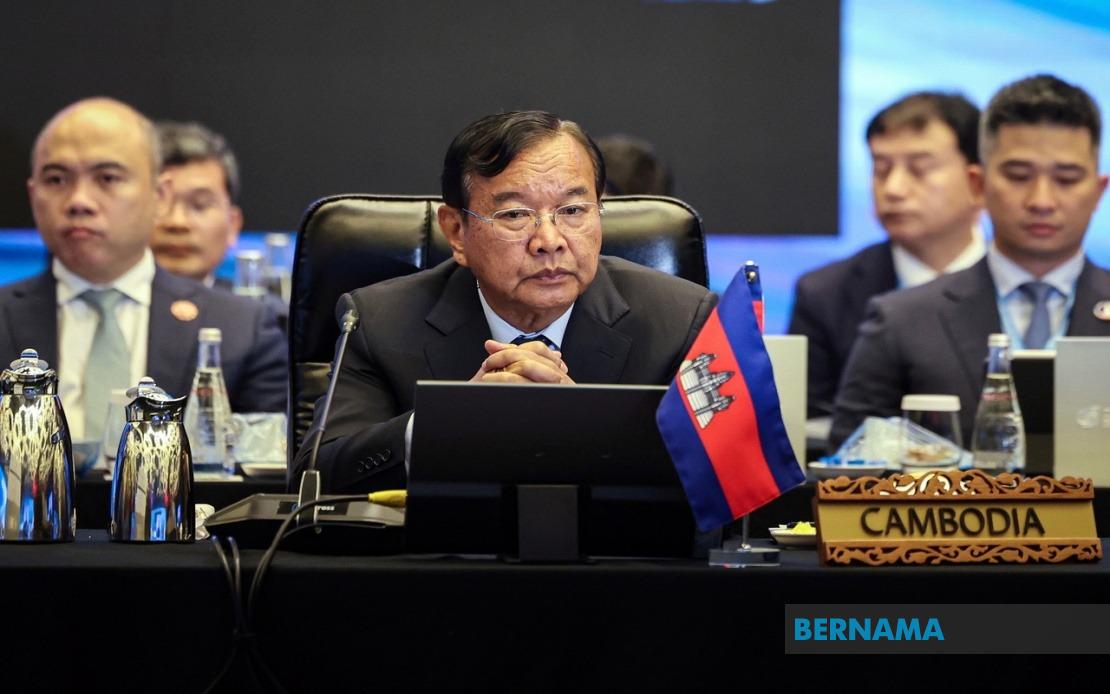
In marking the 59th anniversary of the Association of Southeast Asian Nations, Cambodia's Foreign Affairs and International Cooperation Minister Prak Sokhonn has reaffirmed the bloc's indispensable role as an anchor for regional peace and stability. Speaking in an official message released in Phnom Penh on Friday, Sokhonn underscored that ASEAN's founding principles, enshrined in its Charter and the Treaty of Amity and Cooperation, remain as relevant today as when the ten-member group was established nearly six decades ago.
The minister highlighted ASEAN's remarkable transformation of Southeast Asia from a region fractured by political divisions and uncertainty into a zone increasingly characterised by constructive dialogue, coordinated development initiatives, and mutual economic benefit. This shift, he argued, represents one of the organisation's most significant achievements and demonstrates the practical value of sustained multilateral engagement in resolving regional differences. For Malaysian policymakers and business leaders, this continuity provides important reassurance regarding the institutional framework that underpins regional commerce, investment flows, and diplomatic relations across the ten member states.
However, Sokhonn's remarks also acknowledge the dramatic shifts in the global landscape that complicate ASEAN's traditional approach to consensus-building and non-interference. He pointed to the resurgence of armed conflicts in multiple theatres, the intensification of great-power competition with direct implications for Southeast Asia, and growing challenges to the rules-based international order that has enabled the region's post-Cold War development. These pressures create a complex environment where ASEAN members must balance their historical commitment to avoiding bloc politics with the practical need to respond to security challenges that transcend traditional notions of sovereignty.
Recognising that passive management of external pressures is no longer adequate, Sokhonn called for ASEAN to adopt a more proactive posture in shaping regional outcomes rather than merely reacting to developments initiated by external powers. This represents a significant rhetorical shift, suggesting that member states increasingly recognise the limitations of the organisation's traditional restraint when confronted with major geopolitical disruptions. The implication for Malaysia and other mid-sized ASEAN economies is that the bloc may need to develop stronger institutional capacities and coordinated policy responses to protect shared interests while preserving the non-aligned principles that have historically been central to ASEAN identity.
Sokhonn, who also holds the position of deputy prime minister in Cambodia's government, explicitly emphasised that ASEAN's unity and central role in regional affairs remain prerequisites for successfully navigating contemporary geopolitical challenges. This emphasis on unity carries particular weight given periodic tensions among member states over South China Sea disputes, Myanmar's internal situation, and divergent economic and security relationships with external powers. Maintaining this balance—between preserving institutional coherence and accommodating legitimate differences among members—represents perhaps ASEAN's greatest ongoing challenge.
Cambodia itself has been a member of ASEAN since 1999, joining nearly three decades after the organisation's founding by Indonesia, Malaysia, the Philippines, Singapore, and Thailand. In his statement, Sokhonn expressed pride in Cambodia's contributions to regional development and stability since its accession, while reaffirming Phnom Penh's commitment to strengthening the organisation's internal cohesion and enhancing its capacity to project influence internationally. For Cambodia, which has transitioned from being viewed as a source of regional instability to a constructive participant in ASEAN affairs, this positioning reflects its stakes in maintaining a functioning regional order.
The minister reiterated Cambodia's dedication to upholding both the ASEAN Charter and the Treaty of Amity and Cooperation, pledging that these foundational documents would continue to guide Cambodian positions in all regional matters. The TAC, which enshrines principles of mutual respect for sovereignty, peaceful settlement of disputes, and non-interference in internal affairs, remains theoretically binding on all ASEAN members and their dialogue partners. However, maintaining fidelity to these principles while adapting to new security realities—particularly regarding transnational challenges like maritime security, terrorism, and cyber threats—requires careful interpretation and creative institutional development.
ASEAN now encompasses eleven members following the admission of Timor-Leste, extending the organisation's reach across the entire Southeast Asian region from the Indian Ocean to the Pacific. The expanded membership brings additional perspectives and interests to ASEAN deliberations, complicating consensus-building but also broadening the organisation's representative legitimacy. For Malaysia, this enlarged bloc offers both opportunities and challenges, as consensus requirements become more demanding while the organisation's potential relevance to regional affairs expands.
The founding date of ASEAN on August 8, 1967, through the ASEAN Declaration signed in Bangkok, now marks an annual commemoration that has evolved into a moment for member states to reflect on the organisation's trajectory and reassess its contemporary relevance. Current anniversaries have taken on added significance as the region grapples with unprecedented challenges including the Myanmar military's seizure of power, tensions over the South China Sea, and the structural impacts of great-power rivalry. In this context, Sokhonn's defence of ASEAN's value proposition serves not merely as ceremonial reaffirmation but as substantive positioning on the organisation's continued utility as a forum for managing regional tensions and coordinating responses to transnational challenges that no member state can adequately address alone.

