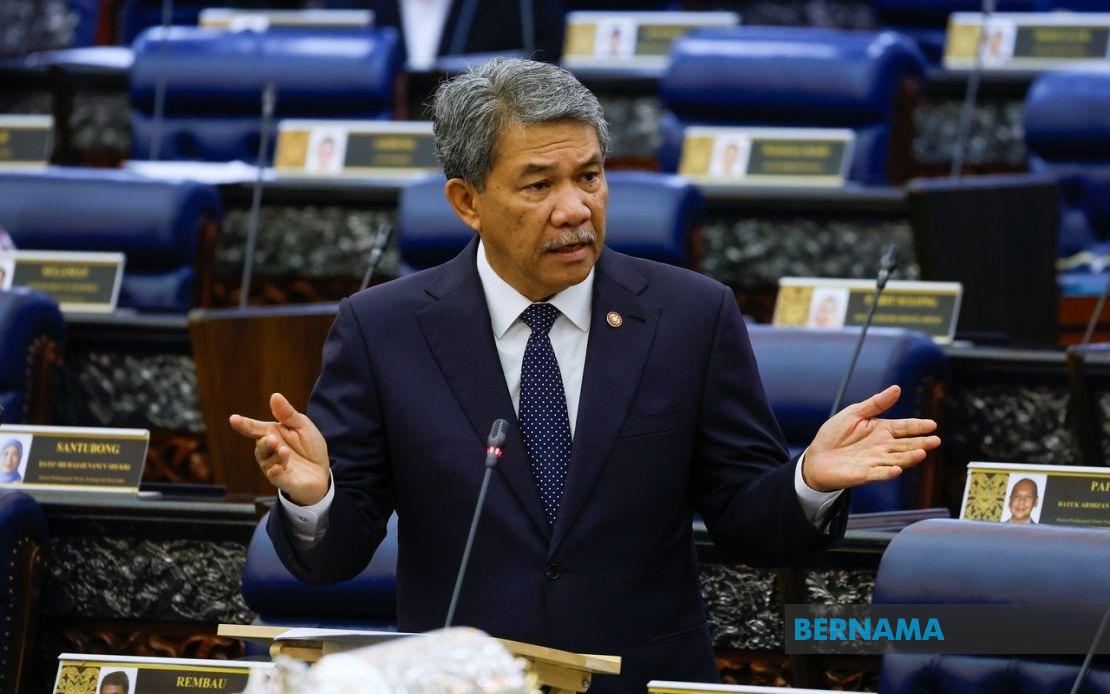
ASEAN is searching for fresh diplomatic strategies to revitalise its peace framework for Myanmar, acknowledging that existing mechanisms have fallen short of achieving the objectives set by regional leaders. Foreign Minister Datuk Seri Mohamad Hasan revealed this reassessment during parliamentary proceedings, signalling a strategic pivot in how the bloc manages its most pressing internal crisis. The acknowledgment represents a candid assessment from Malaysia's top diplomat that the Five-Point Consensus, adopted following the February 2021 military coup, has struggled to translate political commitments into concrete outcomes on the ground.
The Five-Point Consensus, formally endorsed by ASEAN leaders, was designed as the foundational framework for stabilising Myanmar and creating pathways toward democratic restoration. Yet nearly three years on, implementation has faced persistent obstacles, with Myanmar's military junta demonstrating limited willingness to comply with regional directives. Mohamad's comments suggest that ASEAN recognises the need to move beyond symbolic gestures and rhetorical affirmations, instead developing more pragmatic mechanisms that acknowledge the complex realities of Myanmar's political fracture. The framework remains officially intact, but senior regional officials now privately question whether incremental adjustments or wholesale restructuring may be necessary.
At the 48th ASEAN Summit held in Cebu during May, regional heads of state collectively decided that foreign ministers should conduct informal bilateral and multilateral engagements with Myanmar's leadership to take stock of developments and chart a recalibrated course. This decentralisation of Myanmar engagement to the ministerial level represents a departure from the earlier approach, which had concentrated decision-making authority at the highest political echelon. By tasking foreign ministers with diagnostic missions and exploratory conversations, ASEAN effectively distributes responsibility and creates space for candid dialogue that may prove difficult in more formal summit settings. The strategy implicitly acknowledges that Myanmar's crisis requires sustained, patient engagement rather than periodic summits where positions become entrenched.
Mohamad emphasised that any substantive modifications to the Five-Point framework would require explicit approval from ASEAN heads of state, underscoring the bloc's reluctance to appear to abandon its original consensus. This caveat reflects internal sensitivities within ASEAN, where member states harbour divergent views on how assertively to pressure Myanmar. Some nations prioritise engagement and constructive dialogue, fearing that isolation might drive Myanmar closer to China or other external powers, while others advocate more stringent conditionality. By framing potential revisions as requiring top-level authorisation, Mohamad signals that any redesign will be a collective decision rather than unilateral imposition by individual actors or the ASEAN Secretariat.
Malaysia has specifically advocated for extending the six-month ceasefire that Myanmar implemented, which was scheduled to conclude at the end of July. The proposal to convert this temporary pause into a second phase of conflict management aims to create extended space for negotiation while maintaining reduced violence on the ground. Extended ceasefires, while imperfect, provide breathing room for civil society, allow humanitarian access, and theoretically create conditions favourable to dialogue. Yet Malaysia's proposal also implicitly recognises that Myanmar's military leadership has shown limited appetite for fundamental political change, making incremental stabilisation measures perhaps the most achievable goal in the near term.
Crucially, Mohamad articulated Malaysia's insistence that Myanmar provide a transparent roadmap outlining how the peace process would evolve beyond temporary measures. This demand reflects growing frustration within ASEAN that Myanmar's junta has offered vague commitments without detailed implementation plans. Without such clarity, regional and international actors lack benchmarks against which to measure progress or determine when negotiations have genuinely stalled. The call for inclusive dialogue with all stakeholders—encompassing ethnic armed organisations, the shadow National Unity Government, and the People's Defence Force—acknowledges that Myanmar's conflict transcends the simple binary of military versus civilian, instead involving multiple armed actors with distinct interests and territorial claims.
Underlying ASEAN's recalibration is acute concern about geopolitical vacuums. Mohamad directly articulated the bloc's anxiety that excluding or marginalising Myanmar creates space for external powers to exploit the situation. This concern reflects regional experience with great power competition, particularly involving China and the United States. China already maintains substantial economic and strategic interests in Myanmar, including infrastructure investments and military cooperation. Should ASEAN appear ineffectual or withdraw from engagement, China could expand its influence, potentially establishing military or strategic footholds that could shape Myanmar's trajectory for decades. From ASEAN's perspective, remaining engaged—even with limited success—preserves the bloc's centrality and prevents Myanmar from becoming a theatre of external competition.
Malaysia's broader engagement strategy demonstrates flexibility in navigating Myanmar's fractured political landscape. By maintaining channels with the junta, the National Unity Government exile administration, the People's Defence Force resistance movement, and ethnic armed organisations, Kuala Lumpur positions itself as a credible interlocutor capable of facilitating communication across entrenched divides. This multi-stakeholder approach contrasts sharply with countries that have imposed sanctions or withdrawn recognition of the junta, which limits their diplomatic leverage while sometimes reinforcing hardline positions within Myanmar. Malaysia's strategy assumes that sustained dialogue, even with actors whose actions regional powers find troubling, remains preferable to complete estrangement.
The evolution of ASEAN's Myanmar policy reflects broader tensions within the bloc between competing principles. The organisation's founding charter emphasises non-interference in members' internal affairs, yet Myanmar's civil conflict increasingly affects neighbouring states through refugee flows, cross-border armed activity, and regional destabilisation. ASEAN faces recurring pressure from Western governments and international human rights organisations to adopt more forceful positions, yet member states remain reluctant to breach the tradition of consensus-based decision-making or appear to impose solutions on a member state. This dilemma has no clean resolution; ASEAN's new exploratory approach represents an attempt to navigate between principled non-interference and practical responsibility.
The practical implications for Myanmar remain uncertain. The junta shows few signs of fundamental political concessions, while resistance movements question whether negotiations offer genuine pathways to change or merely provide the military breathing room to consolidate control. ASEAN's reframed approach may generate marginal improvements—extended ceasefires, humanitarian access, reduced violence—without addressing the core political deadlock. Yet from ASEAN's perspective, marginal stabilisation in Myanmar remains preferable to state collapse, international intervention, or geopolitical competition between global powers. The organisation's recalibration thus represents pragmatism born of necessity, acknowledging that perfect solutions remain elusive while imperfect engagement beats the alternatives.

