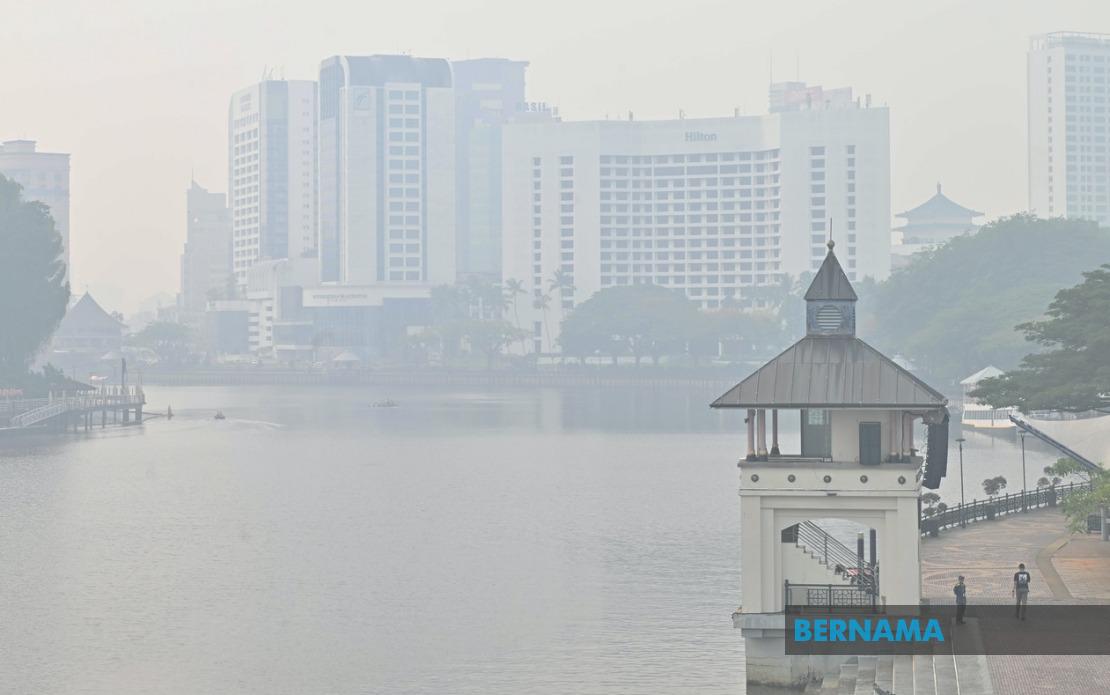
The recurring transboundary haze crisis plaguing Southeast Asia demands a fundamental shift in how ASEAN addresses the problem, according to prominent social activist Tan Sri Lee Lam Thye, who has urged regional leaders to conduct an urgent high-level review of the existing ASEAN Agreement on Transboundary Haze Pollution and adopt a substantially stronger, time-bound and enforceable regional action plan. Speaking in Kuala Lumpur on August 25, Lee stressed that the current approach of responding to seasonal haze outbreaks has demonstrably failed to protect the region's citizens and environment, and that ASEAN must fundamentally reorient its strategy toward prevention rather than crisis management.
More than two decades have elapsed since ASEAN member states signed the agreement in Kuala Lumpur on June 10, 2002, with the pact formally entering into force in 2003. Yet despite this considerable timespan and the legal framework it established, Southeast Asia continues to battle recurring fire outbreaks, smoke that routinely crosses national borders, and air quality degradation that regularly reaches hazardous levels in multiple countries. This persistent failure to resolve the crisis despite the existence of a regional treaty underscores what many observers view as a systemic weakness in ASEAN's commitment to cooperative environmental governance and enforcement mechanisms.
Lee rejected the notion that haze should be accepted as an inevitable seasonal phenomenon or that the problem represents merely a meteorological challenge beyond human control. Instead, he characterized the recurring crisis as fundamentally a governance, environmental stewardship, and public health issue that demands serious political will and institutional reform. The framing is significant for Malaysian audiences, as it emphasizes that solutions lie not in resignation to weather patterns but in robust implementation of regional policies and holding member states accountable for their environmental responsibilities.
While meteorologists at the ASEAN Specialised Meteorological Centre have cautioned that strengthening El Niño conditions, reduced rainfall patterns, and prevailing wind systems could increase the likelihood of additional hotspots and transboundary pollution in southern ASEAN, Lee cautioned against allowing climate phenomena to become convenient explanations for inadequate governance. He argued that natural weather cycles, while relevant, cannot serve as the primary excuse for an ongoing regional disaster, since human activities—including deliberate open burning and illegal land clearing operations—deliberately ignite fires that turn naturally dry conditions into a multinational emergency affecting air quality across multiple nations.
Lee's proposed remedies encompass a comprehensive overhaul of ASEAN's haze management architecture. Central to his recommendations is the establishment of clearly defined, measurable targets aimed at preventing forest and land fires, reducing the number of identified hotspots, and systematically eliminating persistent sources of transboundary pollution. This approach contrasts sharply with the current framework, which observers argue lacks specific benchmarks and timelines that would enable objective assessment of whether ASEAN's collective efforts are actually achieving meaningful environmental improvements.
Accounting and enforcement mechanisms represent another critical pillar of Lee's proposed reforms. He advocated for the establishment of stronger institutional accountability mechanisms that would hold corporations and individuals responsible for open burning and unauthorized land-clearing activities, coupled with robust investigation procedures, mechanisms for cross-border evidence-sharing, and enforcement protocols that can impose consequences when fires deliberately or negligently cause damage extending across national boundaries. Such provisions would represent a significant strengthening of the current agreement, which critics argue lacks sufficient teeth to deter violations or effectively punish violators.
To operationalize rapid response capabilities, Lee proposed establishing a permanent regional haze response mechanism featuring real-time satellite surveillance infrastructure, expedited information-sharing protocols for communicating hotspot detection, coordinated firefighting resources and capabilities deployable across borders, and explicitly defined institutional responsibilities during episodes of severe transboundary haze pollution. This preventive infrastructure would represent a qualitative upgrade from the current reactive posture, transforming ASEAN from an organization that primarily responds to emergencies after they develop into one capable of detecting and suppressing fire threats before they generate significant regional impact.
The activist further recommended that ASEAN establish joint fire prevention and early-warning systems designed to activate before the onset of seasonal dry periods, substantially strengthen collaborative efforts regarding peatland conservation and sustainable forest management practices, and substantially enhance transparency in communicating information regarding hotspots, fire sources, and enforcement actions taken by individual member states. Enhanced information-sharing would enable affected nations to track progress and hold each other accountable while also enabling populations to understand governmental actions and hold their own leaders responsible.
For Malaysia and other significantly impacted nations, Lee advocated an assertive diplomatic approach at the highest echelons of ASEAN decision-making bodies. He stressed that elevating the haze issue to senior political leadership need not constitute interference in other nations' domestic affairs or constitute accusations of blame, but rather represents a legitimate expression of shared responsibility for protecting the health and welfare of all Southeast Asian populations. This framing addresses a diplomatic sensitivity that has historically complicated ASEAN responses to transboundary environmental challenges, as some members have resisted external scrutiny of their environmental policies as potential violations of the principle of non-interference in internal affairs.
The underlying tension in Lee's advocacy reflects a broader challenge confronting ASEAN's regional governance model. The organization's founding principle of non-interference in member states' internal matters has traditionally constrained robust collective action on issues like environmental management, which typically requires significant intrusion into domestic industrial practices, agricultural methods, and land-use policies. However, transboundary haze demonstrates that strict adherence to non-interference becomes untenable when one nation's internal decisions generate measurable harm to neighboring populations' health and environment, creating a situation where genuine regional cooperation necessitates oversight of domestic practices.
For Malaysian readers particularly, the haze issue carries immediate relevance as Malaysia frequently ranks among the most severely affected nations during major pollution episodes. The country's geographical position, population density, and economic development concentrate vulnerable populations in areas that absorb significant smoke and particulate matter during regional fire seasons. Medical research has consistently documented elevated respiratory illness, cardiovascular complications, and premature mortality associated with haze exposure, making air quality not merely an environmental concern but a direct public health crisis affecting millions of Malaysians annually.
Lee's call for institutional reform also resonates within Malaysia's broader policy conversations regarding regional leadership and environmental stewardship. As a developed Southeast Asian economy and a nation particularly affected by transboundary pollution, Malaysia possesses both the capacity and the moral standing to push for stronger regional environmental governance frameworks. The activist's framing positions Malaysia not as a victim passively suffering external environmental damage, but as a stakeholder with legitimate authority to demand institutional mechanisms that adequately protect its citizens from preventable transboundary harm.
The feasibility of implementing Lee's proposed reforms depends substantially on whether ASEAN member states can reconcile competing priorities between national sovereignty and regional cooperation, and whether they can reach political consensus that environmental protection justifies meaningful constraints on the non-interference principle that has historically defined ASEAN's operational philosophy. Success would require not merely negotiating new treaty language but establishing functioning institutions with genuine enforcement authority and political support from all member states—a considerable undertaking given ASEAN's historical consensus-based decision-making and mixed environmental track records.

