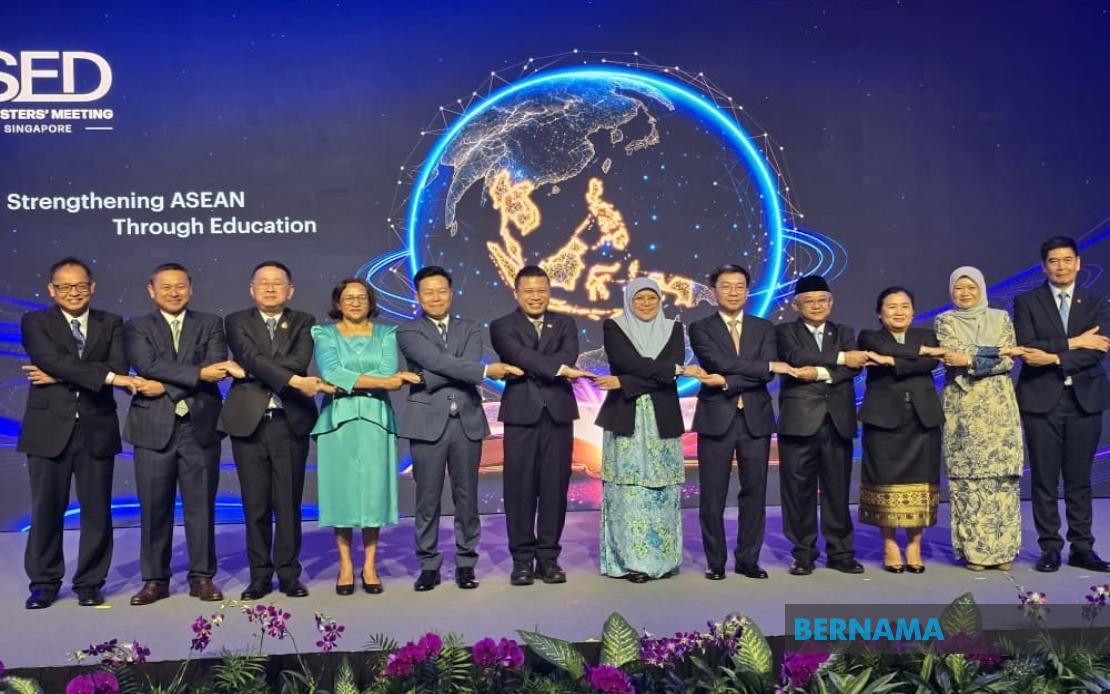
ASEAN's education ministers have set in motion an ambitious regional strategy aimed at transforming how the bloc's ten nations approach learning and skill development. Unveiled in Singapore on Wednesday, the Five-Year Work Plan on Education 2026-2030 represents a coordinated effort to reshape education systems across Southeast Asia in response to rapid technological change and evolving workforce demands. The initiative reflects a growing recognition that individual national efforts, while important, must be complemented by strategic regional cooperation to ensure equitable access and maintain competitive advantage in an increasingly interconnected world.
The plan establishes a comprehensive framework built around the dual imperative of nurturing well-rounded, emotionally resilient individuals while simultaneously cultivating a highly skilled and competitive workforce capable of meeting 21st-century challenges. This represents a deliberate departure from narrow, employment-focused curricula toward a more holistic vision of education that balances technical expertise with character development and social responsibility. For Malaysia and its regional neighbours, this reorientation addresses a critical gap where rapid economic development has sometimes outpaced efforts to build broader competencies and values among young people entering professional life.
Singapore Education Minister Desmond Lee articulated three foundational pillars that will guide implementation across the region: artificial intelligence integration in classrooms, STEM subject advancement, and holistic human development. The emphasis on AI reflects the sector's acknowledgment that digital transformation is no longer a distant prospect but an immediate reality reshaping everything from job markets to pedagogical methods. Rather than treating AI as an external threat to traditional education, ASEAN is positioning itself to harness these tools proactively, ensuring that students across the region gain competency with emerging technologies while understanding their implications and limitations.
The STEM focus carries particular significance for Southeast Asia, a region with growing technical ambitions but persistent skills shortages in engineering, computer science, and advanced manufacturing. By elevating STEM as a regional priority rather than leaving it to individual nations' discretion, ASEAN aims to establish shared standards and collaborative approaches to teacher training, curriculum development, and resource allocation. This coordination becomes especially important for smaller member states that may lack the resources or critical mass to develop world-class STEM programmes independently.
Equally noteworthy is the commitment to equitable access and student well-being, principles that acknowledge the region's significant disparities in educational infrastructure and opportunity. Southeast Asia encompasses wealthy city-states alongside less developed rural areas and nations still building foundational educational capacity. An ASEAN-wide work plan provides a framework for knowledge-sharing about inclusive practices, helping member states learn from one another about affordable solutions to common challenges such as reaching remote populations or supporting disadvantaged students.
The Singapore Centre for Character and Citizenship Education will spearhead a regional research network dedicated to advancing values education across ASEAN. This initiative addresses a dimension of education that often receives insufficient attention in policy discussions: the systematic cultivation of shared civic values and ethical frameworks. By creating a platform where nations share how values education is designed and embedded within their curricula, ASEAN is acknowledging that strong societies require both economic productivity and moral coherence. For Malaysia, with its multicultural society and diverse educational traditions, participation in this network offers opportunities to benchmark approaches and identify best practices in values education.
The 14th ASEAN Education Ministers Meeting, themed "Strengthening ASEAN through Education," brought together ministers from all ten member states, including Malaysia's Education Minister Fadhlina Sidek, alongside key ASEAN leadership including the Deputy Secretary-General for the ASEAN Socio-Cultural Community. This high-level participation signals the political importance attached to education as both a national and regional priority, elevating it beyond routine bureaucratic coordination into strategic planning territory.
Singapore's assumption of the ASEAN Education Sector chairmanship for 2026-2027 positions the city-state to drive implementation of these initiatives during a critical period. As a nation with advanced education infrastructure and significant research capacity, Singapore can contribute technical expertise while benefiting from regional diversity of perspectives and approaches. This arrangement typifies ASEAN's collaborative model, where member states rotate leadership responsibilities based on capacity while maintaining commitment to collective outcomes.
For Malaysian policymakers, the work plan offers both opportunities and expectations. Malaysia's own education system, currently undergoing reform initiatives, can draw insights from regional peers tackling similar challenges around modernisation, equity, and skill alignment with labour market needs. Conversely, Malaysia's experience managing education in a multicultural context and its growing technology sector position it to contribute meaningfully to regional discussions on AI integration and STEM advancement.
The plan's emphasis on responsiveness to global and technological developments reflects a maturation of ASEAN's strategic thinking. Rather than viewing education primarily through a national lens, member states increasingly recognise that preparing young people for success requires understanding regional economic integration and global employment patterns. Students educated in one ASEAN nation may work in another, creating incentives for harmonised standards and transferable competencies.
The commitment to strengthening ASEAN identity while building individual resilience and competitiveness addresses a perennial tension in regional integration: how to maintain distinct national and cultural identities while fostering genuine regional community. Education proves the natural vehicle for this work, as schools and universities shape not only what young people know but also how they conceive of themselves and their place in the world. By making identity formation an explicit objective of education cooperation, ASEAN acknowledges that economic integration alone cannot create genuine regional solidarity.
Implementation challenges undoubtedly lie ahead. Translating a five-year plan into concrete improvements in classroom practice across ten diverse nations requires sustained political commitment, adequate funding, and careful coordination. Yet the establishment of this plan represents significant progress, moving ASEAN from aspirational statements toward more concrete mechanisms for achieving educational transformation. How effectively member states operationalise these priorities over the coming years will substantially influence the region's economic competitiveness and social cohesion throughout the 2030s.

