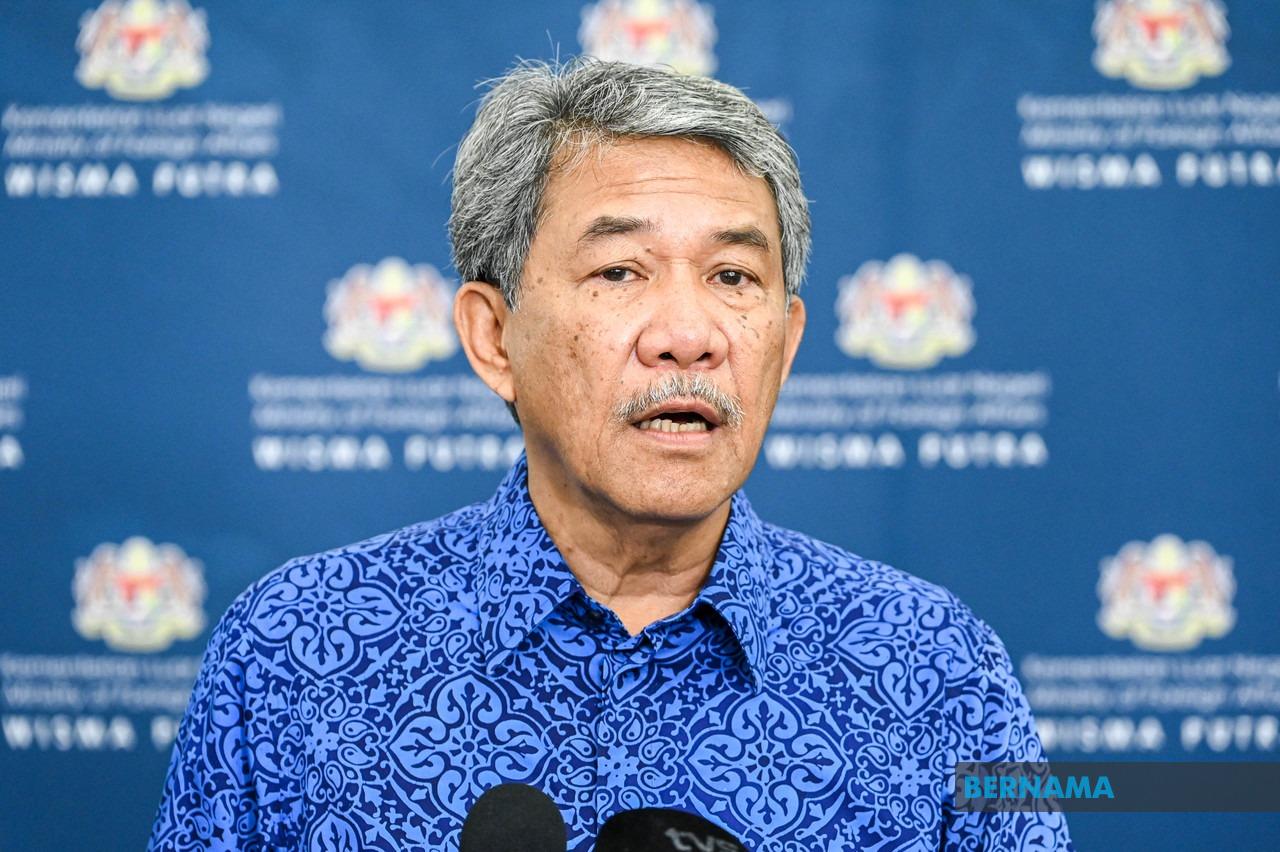
Datuk Seri Mohamad Hasan, Malaysia's Foreign Minister, has issued a forceful call for ASEAN to uphold its regional centrality as a stabilising force in an increasingly fractured international system. Speaking at the 59th ASEAN Day celebration in Putrajaya on Monday, Mohamad framed the bloc's autonomy not as an entitlement but as a hard-won privilege that demands constant vigilance and collective commitment to preserve in the face of rapidly shifting geopolitical and economic realities.
The minister's remarks underscore growing anxieties within the region about the durability of the post-Cold War international architecture. He characterised the current global environment as one experiencing "unprecedented levels of fragmentation," where major powers are locked in persistent strategic rivalry, nations pursue competing geo-economic interests, and the norms of multilateral cooperation that once underpinned international relations have become substantially weakened. This assessment reflects widespread concern among Southeast Asian capitals that the comfortable assumptions governing regional stability over the past three decades are eroding, forcing policymakers to recalibrate strategies for maintaining prosperity and peace.
Mohamad's central proposition is that ASEAN's collective unity and commitment to regional centrality have become more vital precisely because the external environment has grown more hostile and unpredictable. Rather than viewing fragmentation as a reason to pursue narrow national interests, he argues the bloc must consolidate its influence and speak with increasing clarity about its own interests and values. The implicit warning is that if ASEAN allows internal divisions to fester or permits member states to be drawn into competing camps aligned with external powers, the bloc risks becoming marginalised or instrumentalised in great power competition.
The Foreign Minister emphasised that ASEAN's legitimacy and utility rest on its commitment to regionalism and multilateralism as structural pillars of collective stability. He stressed that the organisation must function as an active agent shaping global rules and norms, rather than passively accepting frameworks established by more powerful actors. This framing reflects a deliberate strategy to position ASEAN not merely as a forum for managing regional disputes but as a consequential voice in constructing the emerging international order, particularly on questions of openness, inclusivity, and justice that affect smaller and mid-sized economies.
Deeply embedded in Mohamad's remarks is recognition that ASEAN's strategic weight depends critically on the bloc's ability to leverage partnerships across the globe without subordinating itself to any single power or alignment. He cautioned that while broadening and deepening partnerships with major economies such as China, India, and the Republic of Korea remains strategically essential, ASEAN must negotiate from a position of equality and independence. The phrasing that member states should be "speakers and not the spoken" signals determination to resist pressure from any direction to abandon ASEAN's non-aligned tradition or to choose sides in escalating great power contests.
The issue of internal cohesion emerged as perhaps the most pointed concern in the Foreign Minister's address. He warned plainly that a fragmented ASEAN would be a weakened ASEAN, unable to defend collective interests or maintain the diplomatic space necessary to manage great power competition constructively. This message carries particular weight given ongoing tensions within the bloc, including diplomatic friction with Myanmar following the 2021 coup, persistent disagreements over responses to the South China Sea disputes, and divergent views on how closely individual member states should align with Washington or Beijing. Mohamad's insistence that national fortunes are inextricably linked to regional stability represents both statement of fact and appeal for solidarity.
Looking forward, Mohamad identified the digital economy as a critical engine for ASEAN's next phase of development. He signalled that the bloc is actively advancing the ASEAN Digital Economy Framework Agreement and undertaking modernisation of existing trade arrangements with major partners. This positions Southeast Asia to capture value from the ongoing structural shift toward digital commerce and advanced manufacturing, areas where the region possesses significant competitive advantages if it can act collectively. The emphasis on digital frameworks also reflects determination to establish regional rules and standards before external powers impose them unilaterally.
Sustainability emerged as another strategic priority, with Mohamad arguing that embedding environmental considerations at the centre of ASEAN's economic agenda is no longer optional. He highlighted acceleration of the ASEAN Power Grid as an exemplar of how the bloc can advance energy security, attract green investment, and transition away from fossil fuel dependency simultaneously. This framing connects climate action, energy independence, and economic development into a unified strategic vision, acknowledging that Southeast Asia's long-term prosperity depends on managing the green transition skillfully.
The 59th ASEAN Day celebration itself carries symbolic weight, marking the bloc's evolution from its 1967 founding by five members into a ten-member body that was expanded to eleven following Timor-Leste's admission in October 2023. This trajectory reflects both ASEAN's success as a model of regional integration and the expanding responsibilities that accompany enlarged membership. The ceremony included participation from multiple Malaysian government representatives alongside heads of foreign diplomatic missions, underscoring the significance Kuala Lumpur attaches to ASEAN cohesion during a period of global uncertainty.
The theme selected for this year's celebration, "Navigating Our Future Together," and carried forward into the 2026 ASEAN chairmanship under the Philippines, frames the bloc's challenge not as defending against external threats but as collectively charting a course through uncharted waters. This language acknowledges that passive maintenance of the status quo is insufficient; ASEAN must actively shape its future through deliberate strategic choices, deepened integration, and sustained commitment to the principles of non-interference and consensus decision-making that have defined the association since its inception.
For Malaysia specifically, Mohamad's remarks reflect the country's traditional advocacy for a strong, unified ASEAN that can operate as a genuine third force in great power relations. As a founding member and one of the bloc's more diplomatically active participants, Malaysia has consistently argued that regional stability and prosperity are mutually reinforcing, and that ASEAN's autonomy must be jealously guarded. The Foreign Minister's emphasis on equality in partnerships and resistance to external pressure to choose sides aligns with longstanding Malaysian foreign policy preferences and its experience navigating US-China strategic competition.

