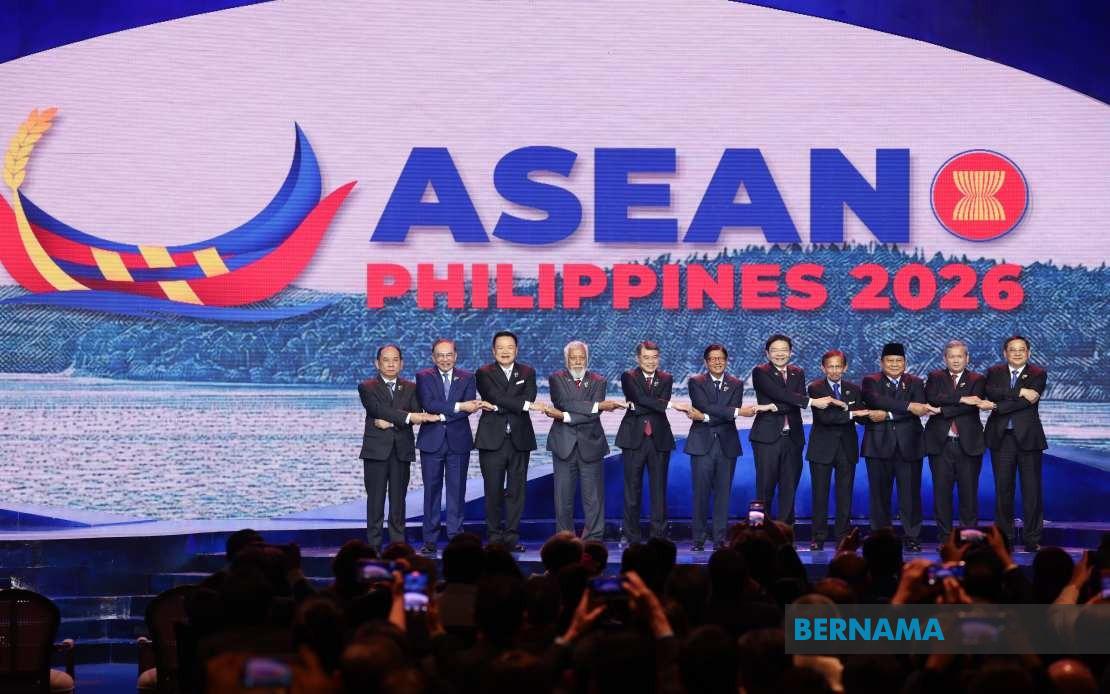
The Association of Southeast Asia Nations turned 59 this week, a milestone that arrives at a particularly consequential moment for the region. Founded in 1967 by five countries—Indonesia, Malaysia, the Philippines, Singapore, and Thailand—the bloc has since grown to encompass eleven members, most recently welcoming Timor-Leste. Yet the organization faces a fundamentally different challenge from the one its founders confronted nearly six decades ago. No longer does ASEAN need to prove its relevance to the world; instead, analysts emphasize that the organization must now look inward, consolidating the unity among its own members while simultaneously deepening the regional integration that will determine its influence in an increasingly contested regional order.
The geopolitical landscape surrounding Southeast Asia has grown markedly more complicated in recent years. The escalating tensions between the United States and China, coupled with instability in West Asia stemming from the US-Iran conflict, have created ripple effects throughout the region. Energy security has become an acute concern for Southeast Asian economies, while global supply chains—vital to the region's manufacturing sectors—face recurring disruption. These external pressures underscore why ASEAN's internal strength matters more than ever. With a combined population of 700 million people and significant economic potential, the bloc possesses considerable leverage, yet only if it can present a unified voice and coordinate its responses to regional challenges.
Professor Phar Kim Beng from the International Islamic University Malaysia's Institute of International and ASEAN Studies, himself a former official at the ASEAN Secretariat, articulates the core challenge facing the organization. ASEAN's centrality, he argues, cannot rely solely on external recognition from major powers or their acknowledgment of the bloc's regional role. Rather, member states themselves must be the primary architects of ASEAN's prominence, consistently insisting on the organization's centrality in regional affairs while simultaneously delivering on its promises to become a genuinely integrated economic community. This requires moving beyond the rhetorical level and addressing concrete obstacles to integration.
The practical barriers to deeper ASEAN unity remain substantial. Professor Phar identifies three critical areas demanding intensive effort: enhancing labour mobility across borders, strengthening digital connectivity infrastructure, and fostering more robust government-to-government cooperation. For a region that aspires to function as a single economic community, these gaps represent significant shortcomings. Labour mobility, in particular, remains constrained by varying regulatory frameworks and credential recognition issues, preventing the free movement of skilled workers that characterizes more integrated economic blocs. Digital connectivity, essential in an increasingly technology-driven global economy, remains unevenly developed across member states, creating efficiency losses and limiting the region's competitiveness.
From an external perspective, Associate Professor Rahul Mishra of Jawaharlal Nehru University's Centre for Indo-Pacific Studies raises a complementary concern. While ASEAN has accumulated considerable diplomatic soft power—evident in its ability to attract dialogue partners—this diplomatic influence has not consistently translated into substantive practical outcomes. Mishra contends that ASEAN must now bridge the gap between its growing diplomatic engagement and the actual delivery of cooperative results with its various partners. The bloc has recently expanded its circle of dialogue partners to twelve countries, following Turkey's elevation to full dialogue partner status, and the Treaty of Amity and Cooperation in Southeast Asia, celebrating its own 50th anniversary this year, now counts 62 High Contracting Parties, up from 58 following accessions by Sweden, Poland, Romania, and Lithuania.
Yet this expanding external engagement creates a paradox: as ASEAN multiplies its international relationships, it risks diluting focus on the priority areas that matter most for regional stability. The South China Sea dispute, which pits ASEAN members' maritime claims against Chinese assertiveness, exemplifies the kind of challenge requiring unified ASEAN action. The great power competition between the United States and China places Southeast Asian states under pressure to align themselves, yet ASEAN's principle of non-alignment and consensus-based decision-making provides the mechanism through which the bloc can navigate between these superpowers without sacrificing its independence. However, this mechanism only functions effectively if member states remain committed to ASEAN's centrality and to resolving disputes through multilateral rather than bilateral channels.
Mishra emphasizes that ASEAN must transition from exchanging dialogues and expressing good intentions with its partners to actually implementing concrete cooperation initiatives. Several domains require urgent attention: intra-regional and regional security matters, the development of seamless physical and digital infrastructure, economic integration initiatives, mechanisms for peaceful dispute resolution, and the management of relations with major powers. Without demonstrable progress in these areas, ASEAN risks becoming a talking shop rather than an influential actor shaping regional outcomes. The organization's relevance ultimately depends on its capacity to produce tangible benefits for its citizens and member states.
Two pressing issues demand particularly urgent and coordinated ASEAN attention. The ongoing Myanmar crisis, which has created humanitarian emergencies, refugee flows affecting neighbouring states, and regional instability, has exposed the limits of ASEAN's conflict resolution mechanisms. Despite ASEAN's engagement with Myanmar through its ASEAN Regional Forum and other channels, the situation has deteriorated rather than improved, raising questions about the organization's ability to influence member state behaviour. Equally troubling is the proliferation of transnational cyber scams originating from Southeast Asia, which has become a significant regional problem affecting multiple countries and threatening the region's reputation and security architecture.
These challenges, Mishra argues, require ASEAN to abandon its traditionally non-interventionist stance in certain contexts and adopt more assertive, time-bound, and coordinated approaches. The principle of non-interference in internal affairs has long been central to ASEAN's identity, allowing diverse political systems to coexist within the organization. However, circumstances such as the Myanmar crisis and transnational criminal networks demonstrate instances where strict adherence to non-interference actually undermines ASEAN's regional security objectives. Navigating this tension—between respecting sovereignty and responding to cross-border threats—represents one of ASEAN's most fundamental tests.
The organization's 2026 agenda, to be led by the Philippines under the theme "Navigating Our Future Together," provides an opportunity to recalibrate priorities. Vision 2045, which outlines ASEAN's long-term strategic direction, must be accompanied by concrete implementation roadmaps with measurable milestones and accountability mechanisms. This year's ASEAN Day celebration employed the same theme as the upcoming Philippine presidency, suggesting a deliberate effort to frame the bloc's future journey as a collective navigation of complex geopolitical waters.
Ultimately, ASEAN's path forward depends on resolving a fundamental tension. The organization cannot simply expect external parties—whether the United States, China, India, or other dialogue partners—to recognize and respect its centrality. Member states must actively construct and defend ASEAN's role through substantive integration efforts and unified positions on major regional questions. This requires investing in the institutional capacity of the ASEAN Secretariat, developing better mechanisms for conflict prevention and resolution, and creating genuine economic integration that benefits ordinary citizens across the region. Without such internal strengthening, ASEAN risks becoming increasingly marginalized as major powers pursue bilateral arrangements and regional issues are resolved through ad-hoc coalitions rather than through the bloc's institutions. The next decade will be decisive in determining whether ASEAN fulfills its potential or gradually becomes a lesser actor in regional affairs.

