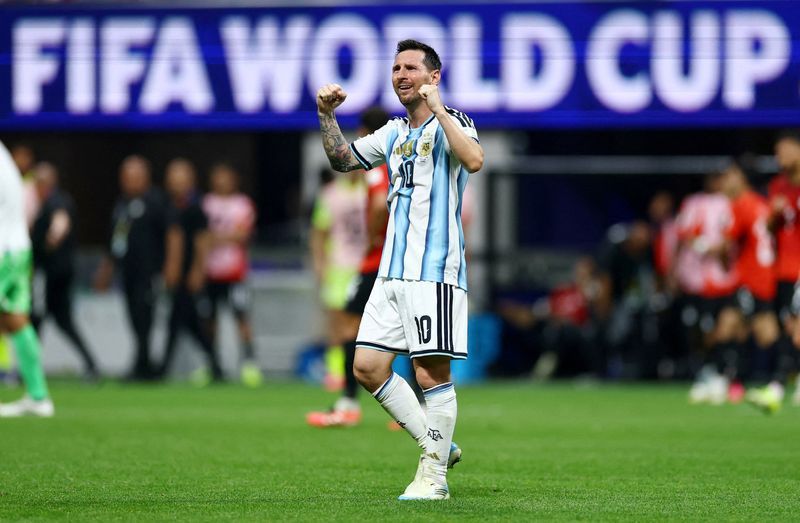
The defending World Cup champions have defied expectations again, clawing back from what seemed like certain elimination to claim a 3-2 victory over Egypt in Atlanta on Tuesday evening. The dramatic turnaround, orchestrated largely through the brilliance of Lionel Messi, came after Argentina trailed 2-0 with just 11 minutes remaining—a scoreline that would have spelled the end for most teams at this stage of the tournament. Yet for Argentina, now preparing for a quarter-final meeting with Switzerland in Kansas City on Saturday, the match represents something far more significant than another three points. Should the squad eventually complete their title defence, this comeback may well be remembered as the pivotal moment when character and determination trumped technical deficiency.
The path to this point has proven starkly different from the group stage, where Argentina's dominance appeared almost inevitable. Against Algeria, Austria, and Jordan, Lionel Scaloni's side demonstrated the attacking prowess and control that had made them favourites heading into the knockout rounds. That commanding early campaign now feels almost like a distant memory following consecutive narrow escapes. The extra-time requirement against Cape Verde raised eyebrows across the football world, but the Egypt fixture—featuring an improbable two-goal deficit from which they emerged victorious—has fundamentally altered perceptions of how this team operates under genuine pressure.
What is perhaps most striking about Argentina's knockout progression is the contrast in defensive performance. During the group stage, the team conceded merely a single goal across three matches, a remarkable statistic that came despite Scaloni rotating his lineup and providing rest for key personnel in the final group fixture against Jordan. The defensive discipline that characterised those early performances has evaporated entirely in the knockout phases, where Argentina has shipped four goals across two matches. This defensive brittleness, though temporarily papered over by offensive firepower, represents a genuine structural vulnerability that could prove devastating against Switzerland, a team known for its organised, efficient style of play and capacity to capitalise on opponents' mistakes.
Yet in the immediate aftermath of the Egypt victory, the narrative within the Argentine camp and among supporters has centred not on defensive shortcomings but on the resilience and unwillingness to surrender that has defined this group. Carlos Tevez, the former striker with intimate knowledge of Argentina's mentality, highlighted this distinction in his post-match analysis, emphasising that what truly matters at this stage is not polished performances but the psychological fortitude to fight back when circumstances appear hopeless. Messi himself articulated this philosophy succinctly, noting that World Cup football inherently demands the capacity to endure adversity and that his teammates have repeatedly demonstrated exactly that quality.
The midfielder Leandro Paredes reinforced this message from the pitch, stressing that the squad never felt genuinely beaten even when facing a two-goal deficit with minimal time remaining. This collective mindset—a refusal to accept defeat until the final whistle—represents an intangible asset that conventional analysis struggles to quantify. In knockout football, where margins are inevitably thin and momentum can shift within minutes, such psychological resilience often proves as valuable as tactical sophistication or individual skill. Argentina's players repeatedly referenced their collective belief and determination, suggesting that Scaloni has cultivated a team culture where surrender is simply not contemplated regardless of circumstances.
Scaloni's own assessment of the Egypt performance struck a notably different tone than his evaluation of the Cape Verde encounter. Despite the eventual three-goal victory margin, the coach suggested that Argentina's underlying display against Egypt was considerably superior, particularly in the first half when the team generated numerous clear-cut opportunities. The most glaring of these came when Messi squandered a penalty kick, a miss that could have shifted the entire trajectory of the match. This perspective matters significantly because it suggests that had marginal moments broken differently, Argentina might have built a commanding position. The implication is that the team's fundamental approach and technical execution remain sound, even if late defensive lapses nearly proved fatal.
The defensive vulnerabilities exposed during the knockout rounds cannot be entirely dismissed despite the philosophical focus on character and determination. Switzerland brings to Saturday's quarter-final a formidable tournament tradition and a squad filled with players possessing extensive high-level experience across multiple World Cups. The Swiss have built their modern football identity around defensive solidity and the capacity to frustrate opponents, traits that could create significant difficulties for an Argentine side evidently susceptible to conceding soft goals during moments of pressure or carelessness. Scaloni has acknowledged the calibre of the test ahead, describing Switzerland as possessing both an exceptional World Cup pedigree and an array of individually accomplished players.
Argentina's preparation for this quarter-final will occur in Kansas City, where the team returns to training on Wednesday evening following the Egypt match. The brief recovery period offers limited opportunity for significant tactical adjustment or defensive restructuring, suggesting that Scaloni will instead focus on maintaining the positive momentum and psychological confidence that has carried his team through two increasingly difficult knockout encounters. The challenge facing the Argentine coaching staff involves balancing the need to address defensive frailties with maintaining the attacking momentum and belief that has enabled the comeback victories.
The broader context for Argentina's performance across this tournament reflects the unpredictability that increasingly characterises modern international football at the highest level. No longer can defending champions or tournament favourites be assured of smooth passage through to later stages; instead, the compression of playing schedules, the improved overall quality across international football, and the inherent variance in knockout competition mean that even elite teams must navigate genuine tests and occasional scares. For Argentina, those scares have come directly in the knockout rounds, yet their progression thus far demonstrates that resilience and the capacity to produce moments of individual brilliance under pressure can, at least temporarily, compensate for systemic vulnerabilities.
As Argentina prepares to face Switzerland, the fundamental question facing the defending champions involves whether their demonstrated character and determination can overcome the defensive fragility that has become increasingly apparent. The Egypt comeback will provide confidence, but it also exposed weaknesses that a methodical, well-organised opponent like Switzerland will certainly attempt to exploit. The next 90 minutes will reveal whether Argentina's mental fortitude proves sufficient against an opponent unlikely to afford them the opportunities for dramatic late comebacks.

