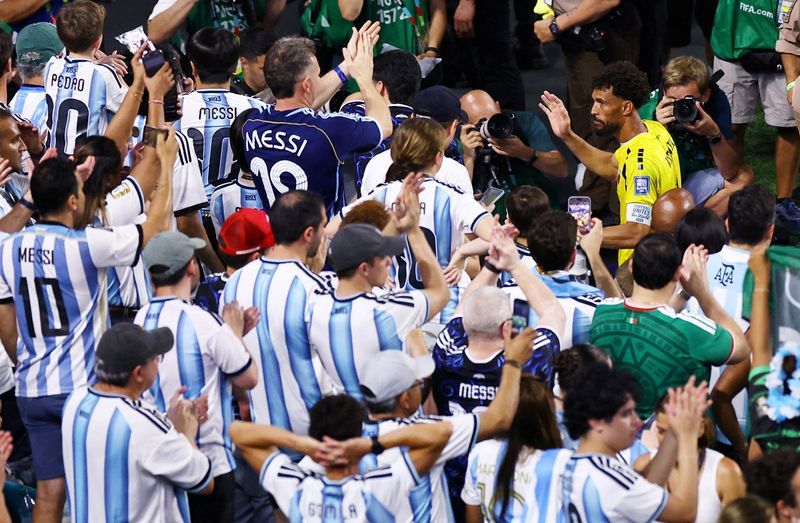
Argentina's progression to the World Cup knockout rounds came at a steeper cost than many anticipated when the reigning champions were taken to extra time by Cape Verde in Kansas City, Missouri on July 4. The South Americans eventually prevailed 3-2, with defender Cristian Romero's header—deflected into the net by Cape Verde's Diney Borges—providing the decisive moment in a match that laid bare several tactical vulnerabilities the defending champions will need to address before facing Egypt on Tuesday in Atlanta.
The narrative of this encounter represents a dramatic shift from Argentina's group-stage dominance, during which they dismantled Algeria 3-0, Austria 2-0, and Jordan 3-1 to emerge as one of the tournament's most formidable sides. Yet Cape Verde, making their inaugural World Cup appearance, exposed weaknesses that had remained largely hidden against inferior opposition. The African nation's ability to recover from trailing on two occasions demonstrated both tactical acumen and physical resilience that forced Argentina into increasingly desperate measures as regulation time expired.
Coach Lionel Scaloni had publicly flagged Cape Verde as a threat before the match, noting their respectable showings against Spain and Uruguay in group play, but his warning appeared to carry limited impact on his players' approach. The reigning champions' inability to maintain possession dominance and execute their preferred pressing strategy created openings that a more clinical opponent might have exploited with greater consequence. This represented a troubling trend given that Argentina's preparation period had featured limited exposure to genuine European-standard opposition, with Iceland in June serving as their most significant test before the tournament began.
Lionel Messi, now 39 years old, underscored the physical and tactical difficulties his side faced by extending his World Cup goal-scoring record to 20 in the opening period, yet finished the encounter visibly fatigued. The veteran captain's post-match assessment revealed uncomfortable truths about Argentina's midfield spacing and inability to compress play effectively. His candid admission that the team "couldn't press them properly" and that "the lines were too far apart" suggested fundamental organisational issues rather than isolated lapses. For a side built on controlling possession and suffocating opponents through coordinated defensive positioning, this represented a significant departure from their established patterns.
The defensive questions surrounding Argentina extend beyond mere tactical adjustments. Against higher-calibre opposition in subsequent matches, the gaps that Cape Verde exploited could prove catastrophic. Egypt, while not among the tournament favourites, possesses athletes capable of transitioning rapidly and punishing defensive disorganisation. The potential absence of consistent high pressure meant Argentine attackers were drawn deeper into defending, disrupting the attacking rhythm that has defined their best performances throughout the competition and in qualifying campaigns.
Yet Argentina's resilience in adversity cannot be dismissed, particularly given the remarkable circumstances of two key defensive contributors. Lisandro Martinez, returning from an anterior cruciate ligament injury sustained in early 2025, scored his side's second goal and demonstrated that his rehabilitation had progressed sufficiently for high-level international competition. Similarly, Cristian Romero's involvement in the winning moment carried symbolic weight given his recent recovery from knee problems that had limited his involvement earlier in the tournament. Both players embodied Argentina's capacity to summon determination during critical junctures, a quality Scaloni emphasised in defending his side's performance despite the obvious technical shortcomings.
Martinez's emotional reflection on his recovery journey—describing himself as "on cloud nine" despite the gruelling rehabilitation process—highlighted the human dimension often obscured in tactical analysis. The defender's gratitude toward the club, national team medical staff, and coaching personnel underscored the collective investment in ensuring players returned to peak condition. His contribution proved decisive, suggesting that Argentina's depth and adaptability remain formidable assets even as technical concerns mount.
Scaloni's post-match commentary reflected a manager emphasising process over aesthetics, a diplomatic approach that acknowledged shortcomings while highlighting his team's capacity to respond when circumstances demanded. His assertion that "this team doesn't shy away from taking charge of the match" countered the narrative of a side struggling against inferior opposition, though such claims ring somewhat hollow when the defending champions required extra time to overcome debut tournament participants. The manager's focus on the team's character rather than their technical execution suggests he recognises the need for meaningful adjustments before confronting stronger opponents.
Former River Plate coach Marcelo Gallardo, whose World Cup pedigree spans the 1998 and 2002 tournaments, interpreted the Cape Verde result as a necessary warning rather than a mere stumble. His observation that "there will be a reaction, there has to be a reaction" captured the sentiment of many analysts who view the narrow escape as potentially beneficial psychological preparation for knockout football. Such matches, while uncomfortable, often catalyse the tactical clarity and defensive organisation required when the margin for error disappears entirely.
Argentina's training schedule in Miami on Saturday preceding the Egypt match provides limited time for comprehensive defensive reorganisation, yet the coaching staff will presumably employ the interval to reinforce pressing triggers and shape spacing geometry. The defensive vulnerabilities exposed by Cape Verde—particularly regarding the distance between defensive lines and the timing of collective pressure—represent correctable issues provided the players retain the focus and discipline demonstrated during their earlier group-stage performances.
The broader trajectory of Argentina's tournament remains encouraging despite this stumble. Reaching the knockout phase as group winners, combined with the emergence of defensive reinforcements from injury, provides a foundation upon which to build. However, the illusion of an unbeaten tournament marred by defensive frailties has been shattered, forcing the defending champions to confront uncomfortable truths about their organisational standards. Whether this proves the catalyst for elevated performance or a harbinger of deeper structural problems will become clearer against Egypt and beyond.

