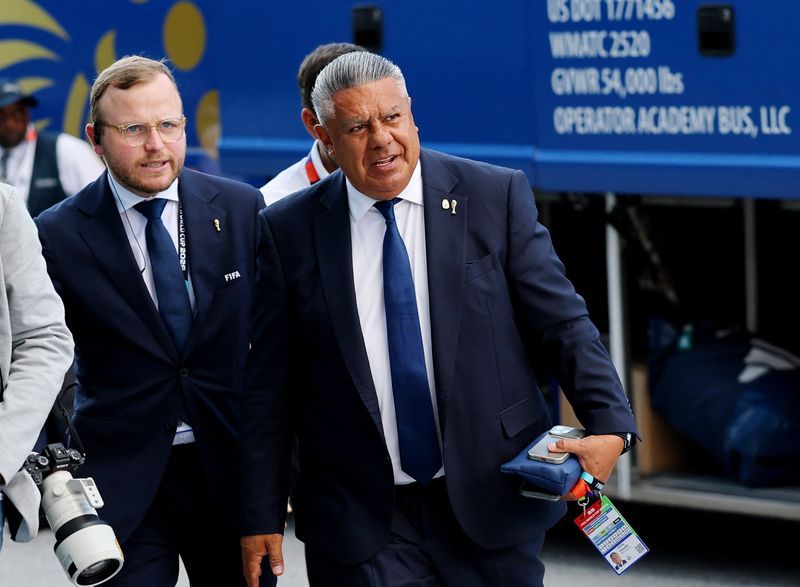
Argentina's football association moved swiftly to counter mounting speculation about its leadership facing legal action in the United States, issuing a categorical denial on Wednesday that president Claudio Tapia or treasurer Pablo Toviggino had been ordered to give testimony before American judicial authorities. The AFA's statement sought to extinguish claims that had rippled through local media outlets following an incident at New York's John F. Kennedy Airport on Monday morning, when federal agents were reported to have detained both officials during the Argentine squad's departure following the World Cup final.
The nature of the AFA's response, however, revealed a more nuanced reality underlying the blanket denial. While the association forcefully rejected allegations that its two most senior officials had been directly targeted, it simultaneously acknowledged that a third party—whose identity remained carefully unspecified—had indeed received a grand jury summons and potentially faced expectations to provide evidence concerning several individuals, including AFA officials. This distinction between a direct summons to the organization's leadership and a summons to an unnamed external party represents a crucial clarification that shaped the association's legal posture.
Accounts from witnesses present at Kennedy Airport painted a picture of an encounter between federal agents and the two officials that appeared far more cordial than a formal legal summons might entail. According to those who observed the scene, Tapia and Toviggino engaged in questioning aboard a bus parked on the airport tarmac for approximately thirty minutes as the Argentine national team prepared to board a charter aircraft. The relatively brief duration and informal setting of this interaction contrasted sharply with the gravity that formal court orders would typically carry, though the precise legal status of such airport conversations remains ambiguous.
The investigation now drawing attention from US authorities represents a significant escalation in scrutiny of Argentine football's financial operations. According to reporting by Infobae, federal investigators are examining more than $300 million in commercial contracts linked to the AFA, a sum that underscores the substantial financial stakes involved in contemporary professional football administration. This American inquiry builds upon existing concerns that had already prompted action by domestic authorities, as evidenced by raids conducted in December targeting suspected money-laundering activities within Argentine football's financial ecosystem.
The timing and scope of the US investigation carry particular significance for Southeast Asian football governance, as they illustrate how international financial crimes and corruption in sports administration increasingly transcend borders and attract coordinated enforcement attention. The involvement of US federal law enforcement suggests that investigations may implicate American financial institutions, commercial partners, or other entities within the US jurisdiction that have connections to the AFA's business dealings. Such international enforcement cooperation has become increasingly common in sports-related financial crimes, particularly when substantial sums cross multiple jurisdictions.
For the AFA's leadership, the distinction between being detained for questioning and being formally summoned for testimony carries profound implications for their legal exposure and operational authority. The association's carefully worded statement emphasized repeatedly that neither Tapia nor Toviggino had been subjected to personal measures, ordered to appear, or faced procedural obligations stemming from the US investigation. The explicit denial regarding seizure of electronic devices contradicted earlier reports suggesting that federal agents had requested access to Tapia's cellular telephone and related technology.
The broader context of financial irregularities within Argentine football extends beyond the immediate question of individual accountability for the two senior officials. The December raids referenced in the AFA's own acknowledgement indicate that domestic authorities had already identified concerning patterns in how money flows through Argentine football's commercial apparatus. The emergence of a parallel US investigation suggests that the alleged improprieties may have created exposure that extends beyond Argentina's borders, potentially implicating international financial transfers or foreign commercial partners.
The AFA's insistence that the unidentified third party summons contains no implications for its president or treasurer raises questions about the actual scope and targets of the American inquiry. If the investigation genuinely focuses on other individuals or entities while steering clear of the organization's most prominent figures, it would suggest compartmentalization of the alleged misconduct or perhaps identification of intermediaries who may have facilitated questioned transactions. Conversely, if the distinction represents a legal technicality rather than a substantive protection, it could indicate that the AFA's leadership faces potential exposure through indirect culpability or organizational liability rather than through personal prosecution.
The political implications for Argentine football administration remain significant regardless of the precise legal mechanisms involved. The AFA operates within a deeply politicized environment where control of the world's most popular sport carries substantial influence and resources. Any investigation touching the organization's financial operations inevitably invites scrutiny of governance structures, commercial decision-making, and the relationships between football administrators and political figures. The involvement of US authorities adds an international dimension that could affect the AFA's relationships with foreign football organizations, commercial sponsors, and broadcasting partners.
For regional football administrators across Southeast Asia and beyond, the Argentine case underscores the growing intersection between sports governance and international financial crime enforcement. Governing bodies increasingly operate within frameworks where their commercial transactions, broadcasting deals, and sponsorship arrangements attract scrutiny from authorities well beyond their domestic jurisdictions. This reality necessitates heightened attention to financial controls, transparency in contract administration, and compliance with international anti-corruption standards that may significantly exceed what domestic regulation mandates.
The AFA's statement, while categorical in its denials regarding direct legal action against Tapia and Toviggino, implicitly acknowledges the legitimacy of the underlying investigation and the organization's entanglement in matters that have attracted federal attention. The careful parsing of language—distinguishing between the officials themselves and other parties, between direct summons and subpoenas to third parties, and between seizure of personal devices and other investigative measures—reflects the sophisticated legal advice these organizations typically receive when facing international enforcement scrutiny.
As the situation develops, the precise nature of the third party's summons and the eventual scope of the US investigation will likely determine whether the AFA's leadership faces actual legal jeopardy or merely reputational consequences from association with questioned financial practices. The organization's immediate priority appears focused on establishing clear separation between its senior officials and any alleged misconduct, a positioning that may prove difficult to maintain should evidence emerge suggesting organizational culpability that implicates those in positions of ultimate authority and responsibility.

