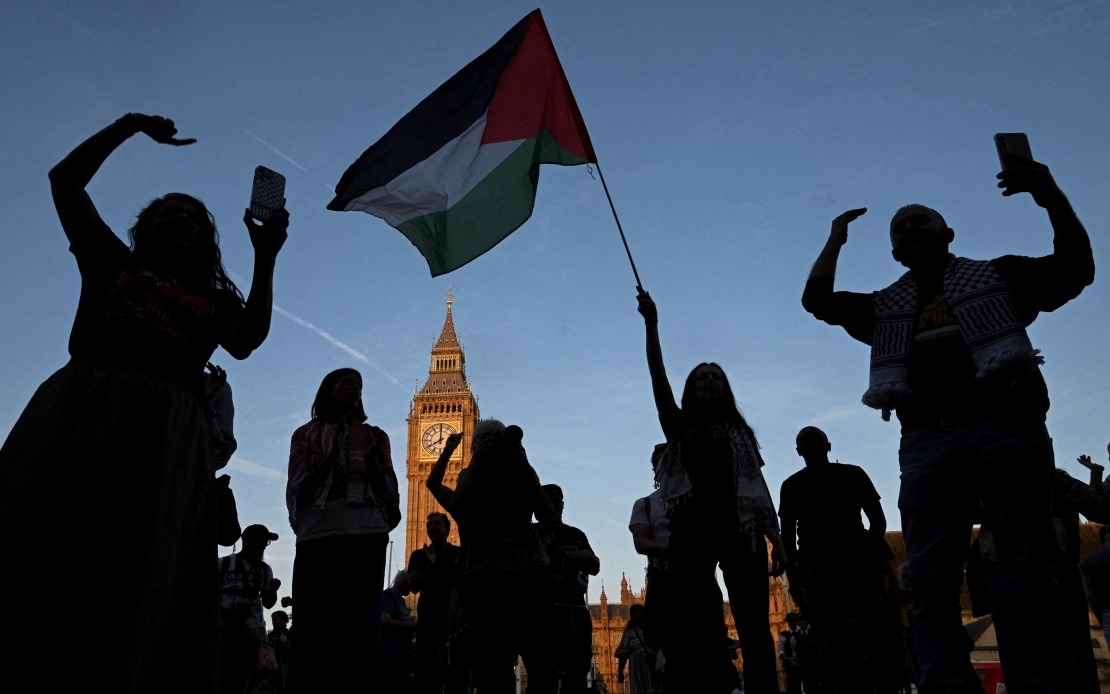
The Arab League has placed the Palestinian question squarely at the heart of its agenda under new leadership, with Secretary-General Nabil Fahmy using his inaugural press conference to signal unwavering commitment to the issue. Speaking at the organisation's Cairo headquarters, Fahmy declared that supporting Palestinian rights and opposing occupation would remain core pillars of the League's mission, marking a clear statement of intent as he settles into one of the Arab world's most influential diplomatic positions.
Fahmy's comments underscore the Arab League's traditional stance on Palestinian affairs, yet they carry particular weight given the current security environment across the Middle East. The Secretary-General framed the League's approach not merely as symbolic solidarity but as requiring concrete action and accountability, positioning the organisation as an active player in regional diplomacy rather than a passive observer of geopolitical events.
One of Fahmy's most pointed remarks centred on Jerusalem's status, which remains deeply contested. He emphasised that preserving the city's Arab identity and preventing unilateral changes to its political status would be non-negotiable priorities. This reflects longstanding Arab League doctrine but also speaks to persistent Israeli settlement expansion and administrative measures that Palestinian representatives argue systematically alter the city's character. The League's framing suggests it views such developments as requiring a coordinated Arab response.
The Secretary-General used particularly strong language regarding military operations in Gaza and the West Bank, characterising them as genocide and arguing that such accusations warrant international legal action. This rhetorical stance represents the Arab League's willingness to escalate its language on Israeli actions, connecting current events to broader frameworks of international law and establishing a foundation for potential legal proceedings. Fahmy's invocation of the principle that genocide carries no statute of limitations appears designed to signal that accountability could extend far into the future.
Fahmy extended the League's concerns beyond the Palestinian territories proper, drawing explicit connections between Israeli military operations and broader threats to regional stability. His references to attacks on Lebanon and violations of Lebanese airspace illustrate how the Arab League perceives Israeli security operations as part of a pattern affecting multiple states. This geographic expansion of the conflict narrative may reflect efforts to build a wider coalition of Arab support around a shared security concern rather than isolating the Palestinian question.
The mention of Syria's Golan Heights, occupied since 1967, signals that the Arab League views unresolved territorial disputes as interconnected challenges requiring unified responses. By linking Palestinian, Lebanese, and Syrian grievances, Fahmy appears to be constructing an argument that the region faces a coordinated threat requiring coordinated Arab action. This approach potentially strengthens the League's bargaining position by framing multiple grievances as facets of a single systemic problem.
Fahmy's remarks about regional stability carry implications for Malaysia and other Southeast Asian nations with significant Arab populations and diaspora communities. Arab League positions often resonate across Muslim-majority countries, and strong statements from the organisation can influence public opinion and diplomatic positions throughout Asia. Malaysia, with its own foreign policy emphasis on Palestinian rights, may find the League's renewed focus aligned with its existing stance.
The Secretary-General's call for an authentically Arab solution to regional problems, independent of external pressure, represents a subtle but significant assertion of the League's autonomy. His emphasis that sustainability requires Arab consensus suggests he views regional problems as requiring indigenous solutions rather than externally imposed frameworks. This positioning reflects historical tensions within the Arab world between those who favour independent action and those who maintain ties with external powers.
Fahmy's framing of the current moment as a critical phase for the Arab region underscores how seriously the League views contemporary security dynamics. The language suggests that existing frameworks and previous approaches may be insufficient for current challenges, potentially signalling openness to new mechanisms or strategies. This could prove significant for how the League engages with the Palestine question in coming months.
The emphasis on protecting Arab interests rather than abstract principles reflects a shift toward pragmatic nationalism within League discourse. Fahmy appears to be arguing that Arab unity should be based on shared material interests and regional security concerns rather than ideology alone. This approach may prove more effective in mobilising consistent Arab state participation, though it could also be vulnerable to divergent national interests among member states.
For regional observers including Malaysian policymakers, Fahmy's statements suggest the Arab League intends to maintain diplomatic pressure on Israel while pursuing accountability mechanisms. The emphasis on legal prosecution and international law provides an alternative pathway to military confrontation, potentially indicating the League's preference for institutional responses to regional conflicts.
The new Secretary-General's inaugural remarks ultimately project continuity with traditional Arab League positions while suggesting determination to translate rhetoric into action. Whether this translates into coordinated Arab diplomatic initiatives, support for Palestinian institutions, or pressure through international legal mechanisms remains to be seen, but Fahmy's language indicates the Palestinian cause will remain central to the organisation's identity and activities.

