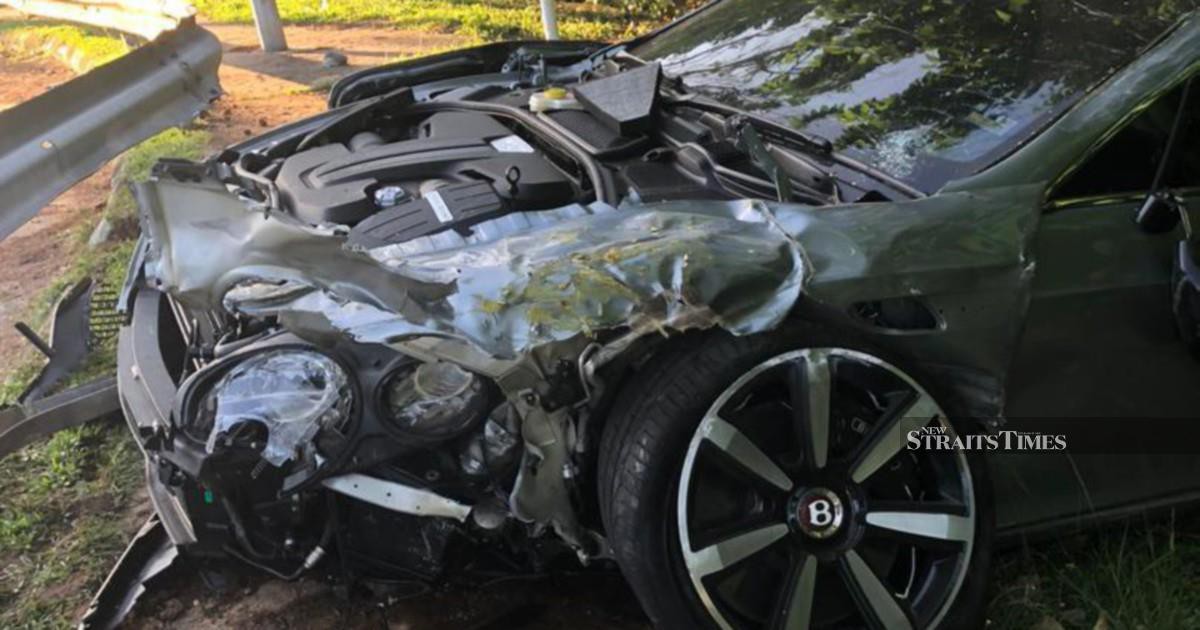
The Court of Appeal in Putrajaya has confirmed a High Court decision requiring an insurance company to settle a RM900,000 indemnity claim brought by a businessman whose luxury automobile sustained significant damage in an accident. The appellate court's ruling, delivered today, reaffirms the lower court's determination that the insurer bears liability for the full amount sought by the claimant, effectively closing a protracted dispute that has spanned six years since the incident occurred.
At the centre of this legal contest is a Bentley Continental GTS V6 MDS, a premium vehicle whose repair costs became the subject of considerable disagreement between the vehicle owner and his insurance provider. The accident that triggered this dispute took place six years ago, but resolution of the resulting claim has required navigation through Malaysia's court system, underscoring the sometimes lengthy timelines involved in motor insurance litigation, particularly when substantial sums and luxury vehicles are involved.
The appeal court's decision to uphold the High Court's judgment represents a significant victory for the businessman, whose legal team argued that the insurance company had underestimated or improperly assessed the extent of damage requiring rectification. Insurance disputes of this nature often hinge on disagreements over valuation methodologies, the scope of necessary repairs, and the appropriate benchmarks for determining compensation amounts. The claimant's persistence in pursuing this claim through multiple court tiers reflects the substantial financial interests at stake when high-value vehicles are involved.
For the insurance industry and policyholders alike, this decision carries implications regarding how insurers evaluate damage claims on luxury motor vehicles. The case highlights the importance of transparent assessment procedures and the potential consequences when insurers resist claims that courts ultimately find to be justified. Industry observers note that such rulings can influence future claims handling practices, particularly for high-value vehicles where repair costs and valuation disputes tend to be more contentious.
The businessman's path to recovery through the courts illustrates a broader pattern within Malaysia's civil litigation landscape, where insurance disputes frequently occupy court dockets. The six-year timeline from accident to final appeal court resolution underscores the resource-intensive nature of contested claims, with both parties bearing legal costs throughout the extended process. For policyholders, this emphasises the importance of thorough documentation immediately following accidents and the potential value of obtaining independent assessments when initial insurance valuations appear inadequate.
Insurance experts point out that the Bentley Continental GTS, as a high-performance luxury vehicle with specialised components, typically commands substantial repair costs that may exceed those of conventional vehicles. Replacement parts for such vehicles often must be sourced internationally, and specialist technicians capable of executing repairs to manufacturer specifications can be limited in availability. These factors invariably complicate the claims assessment process and can lead to significant discrepancies between insurer estimates and actual repair expenses.
The appeal court's confirmation of the RM900,000 payout affirms the High Court's assessment that this quantum represented a fair and appropriate measure of compensation for the damage sustained. The decision essentially validates the businessman's position that the insurance company's initial or revised assessment fell short of what was genuinely required to restore the vehicle to its pre-accident condition. Such judgments establish precedents that inform how insurers and claimants approach similar disputes moving forward.
From a broader consumer protection perspective, this case demonstrates that Malaysia's court system provides a mechanism through which policyholders can contest what they believe to be unfair insurance settlements. While pursuing claims through appellate stages is neither swift nor inexpensive, the availability of this recourse remains important for maintaining accountability within the insurance sector. The ruling sends a signal that courts will scrutinise insurer conduct and impose appropriate remedies when evidence supports claimant positions.
Insurance professionals emphasise that prompt and adequate settlement of legitimate claims serves the interests of both insurers and policyholders. Protracted disputes generate additional legal costs, damage insurer-customer relationships, and occupy court time that might otherwise address other matters. The resolution of this particular case, while vindicating the claimant, also represents six years during which capital remained tied up in litigation rather than being deployed productively.
Moving forward, the appeal court's decision may prompt insurers to revisit their assessment protocols for luxury vehicle damage claims, ensuring that initial valuations adequately account for the specialised nature of high-end vehicles and their repair requirements. Policyholders holding comprehensive coverage for premium automobiles may derive reassurance from the court's willingness to enforce full compensation when initial settlements prove inadequate. The case ultimately reinforces the principle that insurance contracts carry enforceable obligations and that courts will not countenance unreasonable resistance to legitimate claims.

