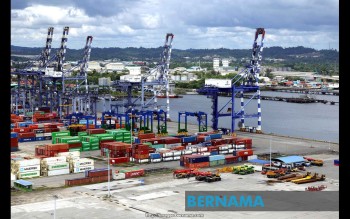
Apex Securities Bhd has dramatically revised upwards its projection for Malaysia's export performance in 2026, lifting the forecast to 26.2 per cent growth from an earlier estimate of 16.3 per cent. The pronounced upgrade reflects the resilience demonstrated across Malaysia's export sectors during the opening seven months of the year, signalling sustained momentum heading into the latter half. This optimism aligns with the firm's broader assessment of the Malaysian economy, which it expects to expand at 5.0 per cent this year—a trajectory that underscores confidence in both external demand and domestic dynamism.
The electronics and electrical goods sector remains the principal engine driving this export acceleration, and Apex Securities anticipates its momentum will persist throughout the second half of 2026. What distinguishes this outlook from previous cycles is the structural underpinning from emerging high-technology segments. The semiconductor industry, which anchors Malaysia's electronics cluster, continues to benefit from expanding artificial intelligence deployment globally, while the transition towards electric vehicles creates sustained demand for components and manufacturing services in which Malaysian firms hold competitive advantages. These medium-term tailwinds suggest the current export surge reflects not merely cyclical recovery but genuine shifts in global supply chains.
Commodities remain another pillar supporting the revised export forecast. Crude oil and natural gas shipments are expected to gain from persistently elevated global oil prices, a dynamic that reflects tightening supply conditions and geopolitical premia. Critically, potential trade disruptions centring on the Strait of Hormuz could trigger further diversification of energy sourcing among major importers, potentially redirecting some demand towards alternative suppliers such as Malaysia. For a country heavily dependent on hydrocarbon exports, such geographic reallocation of trade flows could prove particularly advantageous.
Palm oil deserves particular scrutiny within this export narrative, as it represents a distinctive vulnerability and opportunity. Apex Securities points to anticipated intensification of the El Niño weather phenomenon between October and December, which typically produces hotter and drier conditions across Southeast Asia. Such meteorological patterns historically constrain palm oil production, tightening global supplies and supporting prices. Additionally, demand for biodiesel feedstock from Indonesia—a major neighbouring buyer of Malaysian palm oil—is expected to remain robust, providing steady offtake. The sector has already demonstrated resilience, with prices rising 16.8 per cent to RM4,596 per metric tonne since the calendar year's start as of mid-August.
However, Apex Securities acknowledges that export momentum faces material headwinds as 2026 progresses. A significant constraint stems from the unwinding of front-loaded demand that was pulled forward earlier in the year through stockpiling activities. Many importers and distributors have already accumulated inventory, reducing the urgency to replenish stocks in subsequent months. Furthermore, the export comparison base strengthens substantially in the final quarter relative to the corresponding period in 2025, meaning that growth rates will mechanically decelerate even if absolute export volumes remain firm. This statistical effect presents a technical challenge to sustaining the headline growth figures observed in the first half.
Geopolitical risks loom as persistent threats to the export outlook. Escalation of tensions in the Middle East carries the potential to disrupt global trade flows, curtail investment activity, and depress demand across multiple sectors simultaneously. For an economy as open and trade-dependent as Malaysia, such external shocks transmit rapidly into domestic activity. Similarly, the evolution of United States trade policy introduces considerable uncertainty. The ongoing Section 301 investigation by Washington into excess capacity in manufacturing—a mechanism historically employed to justify targeted tariff increases—directly threatens Malaysian exporters of semiconductors, electronics, and related goods.
Malaysia's particular vulnerability to US tariff action reflects its position as a significant supplier to American markets and supply chains. Over recent years, Malaysian electronics firms have attracted substantial foreign direct investment partly because they serve as alternative manufacturing hubs to China within the US-centric supply ecosystem. Should Washington broaden or intensify tariff measures against excess capacity, the competitive calculus for these investments could shift markedly. Apex Securities' flagging of this risk suggests that the upside scenario of 26.2 per cent export growth carries genuine downside optionality that could rapidly erode should political circumstances change.
The firm's analysis ultimately paints a picture of Malaysia's export sector at an inflection point. The structural shifts in global technology demand and the geographic reorientation of energy trade create authentic opportunities for above-trend growth. Simultaneously, cyclical pullbacks from front-loaded demand, a tougher year-on-year comparison base, and policy uncertainties in key trading partners imply that sustaining such elevated growth rates beyond the third quarter will require either fresh external demand impulses or effective policy management of trade relationships. For policymakers in Kuala Lumpur, the revised forecast underscores both the upside potential in existing sectors and the paramount importance of maintaining open trade channels, particularly with Washington, as negotiations over trade policy intensify throughout the remainder of 2026.

