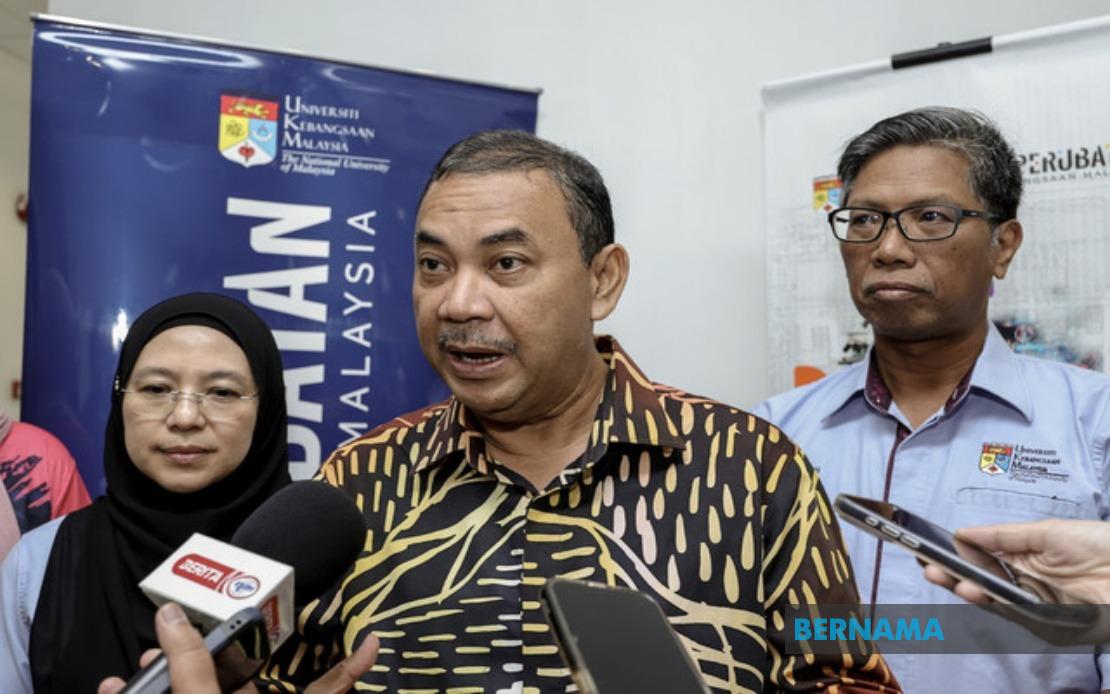
The MADANI Government's track record under Prime Minister Datuk Seri Anwar Ibrahim has garnered recognition across multiple sectors for its achievements in investment promotion, economic management and currency strengthening, according to Datuk Azman Abidin, the Prime Minister's political secretary. Speaking following his officiating of a science and technology education programme at Universiti Kebangsaan Malaysia, Azman underscored that these demonstrable accomplishments provide compelling evidence of Anwar's capability to steer the administration through sustained leadership.
Azman's assertions reflect broader assessments from political observers who have acknowledged the government's strong performance trajectory since taking office. These analysts have suggested that the administration warrants continued support to pursue its reform agenda and excellence initiatives in a subsequent electoral mandate. The framing of the government's achievements as widely recognised across diverse stakeholder groups—from international investors to economic commentators—suggests an attempt to consolidate public confidence ahead of what could be a significant political moment.
The political secretary outlined plans for the administration to intensify efforts ensuring that the fruits of its policies permeate across all segments of Malaysian society. He indicated that several initiatives and policy announcements would be unveiled by the Prime Minister in the lead-up to National Day and Malaysia Day observances, with the tabling of Budget 2027 expected to provide additional detail on the government's economic direction and priorities. This sequencing of announcements is strategically designed to maintain momentum and demonstrate ongoing commitment to tangible improvement.
Beyond the narrow realm of partisan politics, Azman's remarks touched on the critical importance of science, technology, engineering and mathematics education in positioning Malaysia competitively within the global technological ecosystem. Addressing participants at the STEM Exploration 2.0 programme, he characterised the initiative as instrumental in uncovering latent talent among younger cohorts and cultivating sustained interest in scientific disciplines and medical professions. The programme, which engages 200 Form Three students from the Klang Valley and Negeri Sembilan, represents a targeted intervention aimed at early exposure to career pathways in these high-value sectors.
The expansion of STEM education beyond its current voluntary framework to a mandatory component of the national curriculum constitutes a significant institutional shift that Azman advocated for explicitly. His emphasis reflects growing international consensus that technological literacy and scientific thinking form foundational pillars for sustained economic competitiveness and innovation capacity. For Malaysian policymakers, this position aligns with broader efforts to position the nation as a regional knowledge hub and to retain talent that might otherwise migrate to jurisdictions with stronger research and development ecosystems.
Azman's characterisation of scientific accomplishment as a process commencing with foundational learning resonated with the broader developmental arc he outlined to the students. His invocation of the notion that statecraft and scientific breakthroughs alike demand sustained commitment from their inception underscores an implicit theory of national development wherein educational investment in young people constitutes a cornerstone of long-term societal advancement. This messaging attempts to connect immediate educational engagement with prospects for individual achievement and national progress.
The STEM programme itself incorporated hands-on experimentation spanning microbiology, immunology, circulatory physiology and cutting-edge medical applications including three-dimensional bioprinting technology. This curricular approach prioritises experiential learning and exposure to frontier technologies, potentially addressing persistent challenges within Malaysian secondary education where abstract theoretical instruction has traditionally dominated over applied, project-based learning methodologies. The pedagogical framework demonstrated at UKM represents an attempt to model alternative educational approaches that might be scaled more widely.
Azman's expression of confidence that voters would assess the government's performance objectively and render their electoral judgment judiciously signals an underlying confidence in the administration's record. Implicitly, this framing presupposes that transparent presentation of accomplishments, coupled with continued delivery of tangible benefits, constitutes a sufficient foundation upon which to construct an electoral coalition. It remains noteworthy that such appeals to performance-based evaluation represent a deliberate strategic positioning, particularly in a political environment where narratives of institutional transformation and reform have featured prominently in recent electoral contestation.
For Malaysian observers tracking government performance, the explicit enumeration of achievements in investment attraction, macroeconomic management and currency stability warrants scrutiny against independently verified economic data. Foreign direct investment flows, gross domestic product growth trajectories, and ringgit exchange rate movements provide objective metrics against which political claims may be assessed. The tendency of political figures to emphasise positive indicators whilst downplaying less favourable statistics is a recurring feature of competitive electoral environments, making dispassionate evaluation essential.
The coordination of educational initiatives, policy announcements and symbolic activities across a compressed timeframe suggests deliberate political choreography designed to maintain public attention and reinforce a narrative of purposeful, forward-looking governance. The sequencing of announcements surrounding national commemorative occasions and budget presentations reflects understanding that such moments command heightened media attention and public engagement. This strategic deployment of the political calendar represents standard practice within mature democratic systems where communications discipline and message coherence significantly influence electoral outcomes.

