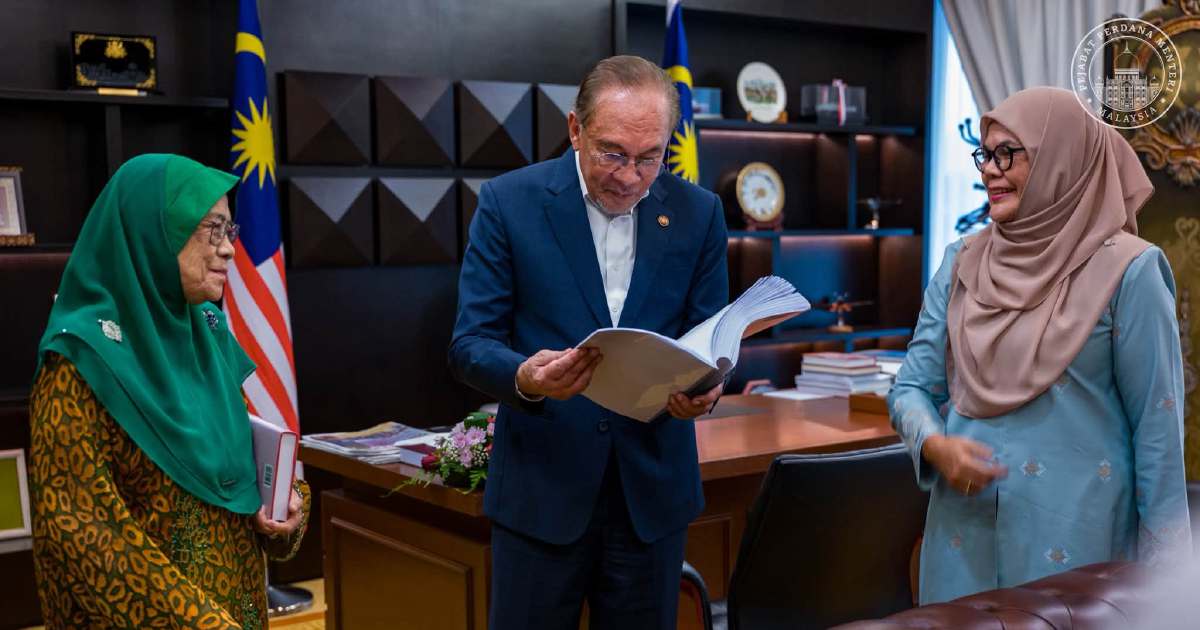
Prime Minister Datuk Seri Anwar Ibrahim has embarked on an ambitious project to preserve and transmit his political and philosophical thinking to posterity through the publication of a substantial volume titled Gagasan Anwar Ibrahim Dalam Peradaban Budaya Bangsa. The compilation represents an effort to institutionalise the Prime Minister's ideas within Malaysia's public discourse, moving beyond the temporary nature of political speeches and media statements to create a lasting intellectual record that can be studied and referenced long after his active tenure in office.
The book project reflects a broader strategic approach among established political figures to cement their ideological legacy. By documenting his views systematically, Anwar seeks to influence not merely current policymaking but the intellectual frameworks through which future political leaders, administrators, and civil society figures will approach governance challenges. This practice of formalising one's political thought into published form has become increasingly common among Southeast Asian leaders who recognise that written texts carry authority and permanence that spoken remarks often lack.
Within the Malaysian context, such philosophical documentation serves multiple purposes. It provides clarity on a leader's fundamental positions on issues ranging from economic management to cultural identity, matters that have historically provoked intense debate in Malaysian politics. For a multiethnic and multireligious nation like Malaysia, where consensus on foundational values remains contested, such explicit articulation of a leader's thinking can either bridge divides or crystallise ideological differences, depending on the reception it receives among various communities and political constituencies.
Anwar's emphasis on character development as a central theme of the book underscores a particular vision of nation-building that extends beyond purely technical or economic considerations. In Malaysian political discourse, character and moral development have been invoked by leaders across the political spectrum, often in reference to Islamic values, traditional Malaysian concepts of honour and responsibility, or universal principles of integrity in public service. By highlighting this dimension, the Prime Minister positions his legacy around questions of how citizens and leaders ought to conduct themselves, not merely what policies should be implemented.
The document's focus on nation-building speaks to fundamental preoccupations that have animated Malaysian politics since independence. Questions about how to maintain national unity, balance development across regions and communities, and forge a cohesive national identity despite significant internal diversity remain perpetually relevant. By committing his thoughts on these matters to a published record, Anwar is participating in the ongoing national conversation about what Malaysia is and what it should become—a conversation that will continue long after current political figures have left office.
For younger generations of Malaysian policymakers, scholars, and civic leaders, the availability of such a comprehensive text could prove instructive in understanding one approach to these perennial challenges. Educational institutions, think tanks, and civil society organisations frequently draw upon the published writings and speeches of significant political figures when examining governance philosophy and policy development. A formally compiled volume ensures broader accessibility than fragmented speeches or scattered interviews, making it more likely to influence intellectual formation and policy thinking across multiple sectors and institutions.
The timing of such a publication carries significance within Malaysia's current political context. The country continues to navigate complex economic transitions, reforms in the judicial and anti-corruption spheres, and persistent questions about federal-state relations and constitutional governance. By publishing his ideas now, while serving as Prime Minister, Anwar is making his thinking available to colleagues, critics, and analysts who can immediately assess how philosophical commitments translate into actual governance choices. This transparency—or at least the appearance of it—can either strengthen public understanding of his administration's direction or expose gaps between stated principles and implemented policies.
Regionally, Malaysia's intellectual leaders and policymakers have long engaged in cross-border dialogue about governance, development, and national identity. A published comprehensive work by a serving Malaysian Prime Minister could contribute to this regional conversation, offering Southeast Asian counterparts and scholars an articulate statement of one approach to the challenges of managing diverse democracies in a context of rapid social and economic change. This regional dimension potentially expands the intended audience and influence of the compilation beyond Malaysia's borders.
The archival value of such a document should not be underestimated. Historical researchers studying Malaysian politics and governance in future decades will find such contemporaneous published reflections invaluable for understanding the intellectual currents animating decision-making at the highest levels. Rather than relying solely on external analysis or reconstructed intentions, scholars will have access to Anwar's own framing of his principles and priorities, however incomplete or self-serving such accounts may inevitably be.
The hope that the book will serve as a reference for future generations suggests an expectation that the ideas contained within will possess enduring relevance rather than temporary applicability. This implies confidence in the universality or timelessness of the principles discussed—that problems of character development, nation-building, and governance will remain substantially recognisable challenges for future Malaysian leaders, albeit in altered circumstances. Whether the book achieves this aspiration will depend partly on how robustly the ideas are formulated and partly on whether subsequent generations find them genuinely useful when confronting their own political realities.

