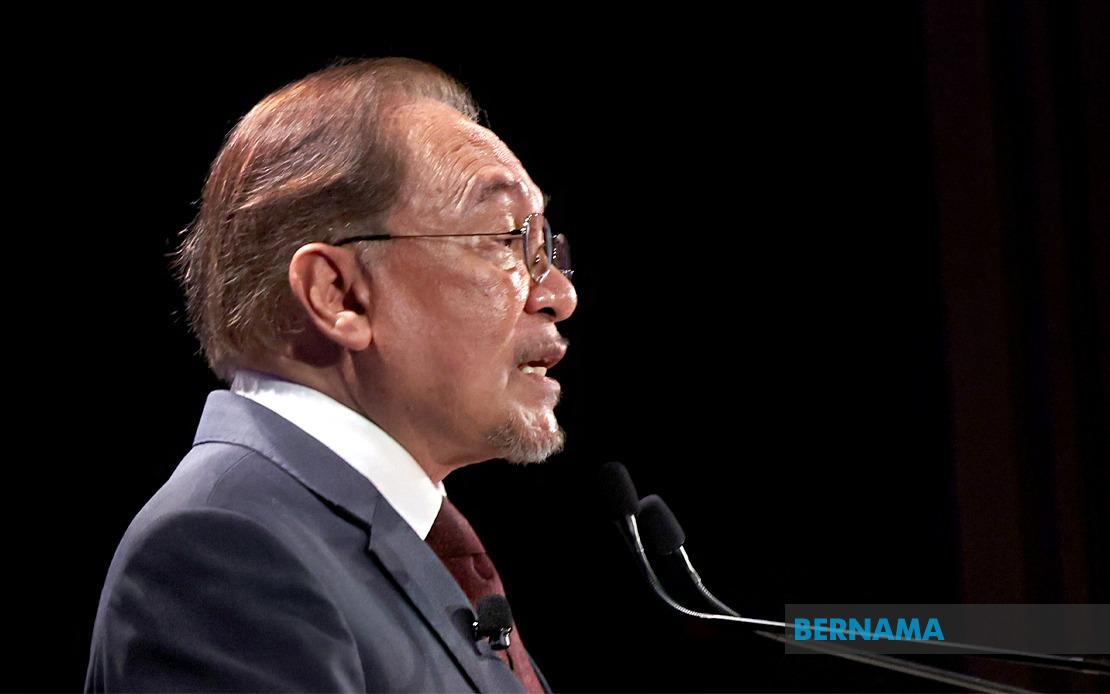
Prime Minister Datuk Seri Anwar Ibrahim's official engagement in Turkmenistan reaches its culmination with an intensive programme of high-level diplomatic meetings and ceremonial functions scheduled throughout the final day of his visit to the Central Asian nation. The itinerary reflects Malaysia's growing strategic interest in strengthening institutional and commercial links with Turkmenistan, a resource-rich country positioned along the Caspian Sea's eastern coastline.
The day begins with formal ceremonies at the Presidential Palace, where Anwar will be received by Turkmenistan President Serdar Berdimuhamedov. Following the welcoming formalities, the two leaders will engage in a private bilateral discussion before convening for expanded talks that are expected to cover the full spectrum of Malaysia-Turkmenistan relations. These conversations represent a significant diplomatic moment, as both nations seek to elevate their partnership from historical ties to a more comprehensive and institutionalised framework.
The substantive bilateral meeting will culminate in the signing of a joint statement and the exchange of multiple agreements and memoranda of understanding that address key areas of mutual interest. These documents are expected to cover maritime aviation connectivity through an Air Services Agreement, institutional collaboration between the two nations' foreign affairs research bodies, and transport sector cooperation. Additionally, Malaysia's Academy of Sciences will formalise its relationship with Turkmenistan's counterpart institution, signalling broader intent to develop scientific and technological partnerships that extend beyond government-to-government engagement.
Beyond the formal diplomatic instruments, the discussions themselves will probe opportunities across sectors critical to both economies. Trade and investment form the foundation of these conversations, reflecting Malaysia's desire to deepen commercial presence in Central Asia and Turkmenistan's openness to enhanced economic cooperation. The energy sector holds particular significance given Turkmenistan's substantial hydrocarbon reserves and Malaysia's established expertise in petroleum extraction and processing. Agricultural and commodity trade also feature prominently, as both nations recognise mutual benefits in food security and resource exchange. Tourism development, education partnerships, and the digital economy represent emerging frontiers where innovation and knowledge-sharing can generate value for both populations.
The bilateral agenda extends beyond commercial considerations into the broader geopolitical landscape. Regional developments within ASEAN and Central Asia will be examined, allowing both leaders to exchange perspectives on stability, multilateral cooperation, and the evolving international order. This conversation holds relevance for Malaysia's positioning within Asia-Pacific frameworks and its efforts to maintain balanced relationships across diverse regional actors. Turkmenistan's strategic location and unique foreign policy orientation—rooted in permanent neutrality—makes these exchanges particularly valuable for Malaysia's diplomatic intelligence and regional strategy.
Following the formal deliberations, Anwar will partake in a presidential luncheon before performing Friday prayers at the Turkmenbashi Ruhy Mosque, a gesture that underscores Malaysia's respect for local customs and Islam's significance across both nations. The prime minister will then jointly inaugurate the Malaysia-Turkmenistan Forum alongside President Berdimuhamedov at the Chamber of Commerce and Industry of Turkmenistan. This business-focused forum represents a practical mechanism for continued dialogue between private sector representatives, investors, and government officials, potentially catalysing commercial projects that extend beyond state-level agreements.
Anwar's delegation includes substantial representation from Malaysia's economic policymaking apparatus. Minister of Investment, Trade and Industry Datuk Seri Johari Abdul Ghani brings investment portfolio oversight, while Minister of Economy Akmal Nasrullah Mohd Nasir contributes macroeconomic perspective. This composition signals serious Malaysian commitment to extracting tangible economic outcomes from the visit, rather than treating it as ceremonial engagement alone.
Ashgabat's status as the 'White Marble City' carries symbolic resonance beyond architectural distinction. The capital's distinctive landscape, defined by over 500 white marble-clad structures and extensive gold-leaf ornamentation, reflects Turkmenistan's projection of modernity and stability. For Malaysian observers and investors, this physical manifestation of development signals a nation actively constructing contemporary infrastructure and institutions, potentially offering opportunities for Malaysian companies in construction, technology transfer, and urban development sectors.
Turkmenistan's geographic positioning warrants attention from Malaysian strategic planners. Bordered by Kazakhstan and Uzbekistan to the north, Afghanistan to the southeast, Iran to the south and southwest, and the Caspian Sea to the west, the country occupies a crossroads of Central Asian geopolitics. This location situates Turkmenistan as both a corridor for regional trade and a significant player in energy markets, particularly given the Caspian Sea's status as the world's largest inland water body.
Commercial metrics illustrate the trajectory of bilateral relations. In 2025, Turkmenistan ranked as Malaysia's fourth largest trading partner among Central Asian nations, with total bilateral trade reaching RM75.80 million. Malaysian exports commanded RM75.50 million of this volume, reflecting a 9 per cent year-on-year increase that demonstrates growing Malaysian commercial confidence in the market. These figures, while modest in absolute terms compared with Malaysia's broader trade portfolio, indicate accelerating momentum and expanding market penetration.
Petroliam Nasional Bhd (Petronas) deserves particular recognition in this bilateral relationship. The national oil company has invested cumulatively RM52.73 billion in Turkmenistan since 1996, establishing itself as a major player in Turkmenistan's hydrocarbon sector and transforming bilateral relations from diplomatic formality into substantive economic partnership. Petronas's sustained commitment demonstrates the confidence Malaysian energy companies hold in Turkmenistan's investment climate and resource base, and this corporate presence provides tangible foundation for government-level engagements.
Anwar's visit culminates with a press conference addressed to Malaysian media, providing opportunity to articulate the strategic importance of Malaysia-Turkmenistan engagement to domestic audiences. The concluding statement will likely emphasise long-term partnership vision, economic opportunity, and Malaysia's expanding engagement across Central Asia. This final public appearance frames the visit's significance within broader narratives of Malaysian economic diversification and diplomatic footprint extension into regions less traditionally prominent in Malaysian foreign policy discourse.
%22%2F%3E%3C%2Fpattern%3E%3C%2Fdefs%3E%3Crect%20width%3D%22100%25%22%20height%3D%22100%25%22%20fill%3D%22url(%23phy91pg)%22%2F%3E%3Crect%20width%3D%22100%25%22%20height%3D%22100%25%22%20fill%3D%22url(%23phy91pp)%22%2F%3E%3Ctext%20x%3D%2250%25%22%20y%3D%2250%25%22%20text-anchor%3D%22middle%22%20dominant-baseline%3D%22central%22%20fill%3D%22rgba(255%2C255%2C255%2C0.95)%22%20font-family%3D%22Georgia%2C%20'Times%20New%20Roman'%2C%20serif%22%20font-weight%3D%22700%22%20font-size%3D%22272%22%20letter-spacing%3D%22-0.02em%22%3EAnwar%3C%2Ftext%3E%3C%2Fsvg%3E)