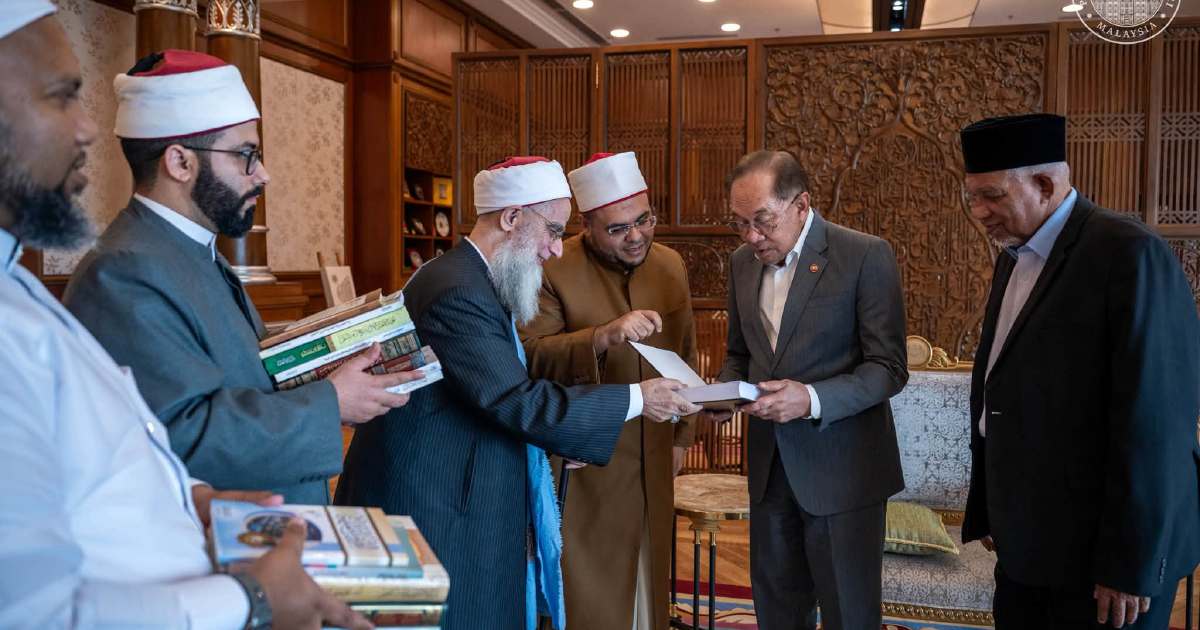
Prime Minister Datuk Seri Anwar Ibrahim has received renowned Egyptian Islamic scholar Sheikh Dr Mustafa An-Nadwi Al-Hasani Mansurah at his official residence in Putrajaya, underscoring Malaysia's commitment to maintaining diplomatic and intellectual ties with leading figures in the Arab Islamic world. The meeting reflects the growing importance of cross-cultural dialogue and scholarly exchange within Malaysia's broader foreign policy framework, particularly as the country seeks to position itself as a bridge between the Muslim-majority nations of Southeast Asia and the Middle East.
Sheikh Dr Mustafa An-Nadwi, who carries considerable intellectual influence across Islamic academic circles, represents a significant strand of contemporary Islamic thought that balances traditional scholarship with modern interpretations of Islamic jurisprudence. His visit to Malaysia comes at a time when the government has been actively strengthening institutional relationships with international Islamic scholars and organisations. The Prime Minister's willingness to make time for such engagements demonstrates the administration's prioritisation of cultural and religious dialogue as a complement to economic and political relations.
The reception in Putrajaya signals Malaysian interest in the perspectives of established Islamic intellectuals on contemporary challenges facing Muslim societies. Given the diversity of Islamic thought and practice across different regions, interactions between Malaysian leadership and prominent Arab scholars contribute to a more nuanced understanding of how Muslim-majority nations address common issues ranging from education and social development to interfaith relations. Sheikh Dr Mustafa's background as a respected interpreter of Islamic knowledge makes him particularly relevant to Malaysian audiences grappling with questions of modernisation and religious authenticity.
Malaysia's engagement with Egyptian intellectual and religious figures carries particular historical weight, given Egypt's dominant role in Arab and Islamic intellectual circles. Cairo has long been recognised as a centre of Islamic scholarship, producing influential thinkers whose works are studied in religious institutions throughout the Muslim world, including Southeast Asia. The prominence of Egyptian Al-Azhar University and other Cairo-based academic institutions means that scholars emerging from this context carry considerable credibility across Islamic learning networks that extend into Malaysia.
The timing of this diplomatic interaction may also reflect Malaysia's broader strategic interests in maintaining strong relations with key Arab nations. Economic partnerships, investment opportunities, and regional cooperation frameworks between Malaysia and Arab countries depend partly on the strength of cultural and intellectual bridges between their respective societies. High-level meetings between government officials and visiting scholars often precede or accompany more formal institutional partnerships in education, research, and cultural exchange.
For Malaysian Islamic institutions and universities, visits by internationally recognised scholars like Sheikh Dr Mustafa create opportunities for knowledge transfer and collaborative research. Many Malaysian educational establishments maintain connections with leading centres of Islamic learning in the Middle East, and such visits can catalyse new partnerships, visiting professorships, or joint academic initiatives. The presence of such distinguished figures also elevates the intellectual profile of discussions around Islamic thought and its application in contemporary Asian contexts.
The visit also signals Malaysia's openness to receiving diverse perspectives on Islamic practice and thought. While Malaysia has its own rich tradition of Islamic scholarship rooted in the Southeast Asian context, exposure to leading Arab scholars helps maintain what some observers describe as intellectual cosmopolitanism within Malaysian Islamic circles. This exchange of ideas can influence how Malaysian scholars and educators approach contemporary challenges, from sustainable development to technological innovation within an Islamic framework.
Bilateral cultural and educational initiatives between Malaysia and Egypt have grown over recent years, with numerous Malaysian students pursuing Islamic studies in Egyptian institutions and Egyptian scholars increasingly invited to Malaysian platforms. Such visitor arrangements serve to formalise and elevate these connections at the governmental level, providing visibility to academic cooperation and signalling that both nations value these intellectual partnerships as integral to their national development strategies.
For the broader Southeast Asian region, Malaysia's cultivation of relationships with prominent Middle Eastern scholars reinforces the peninsula's historical role as a meeting point between Arab and Asian Islamic traditions. This geographical and cultural positioning has long given Malaysia a distinctive voice in international Islamic forums, and maintaining robust exchanges with leading Arab thinkers helps sustain this regional influence. As Southeast Asian nations increasingly assert their own interpretations of Islamic governance and modernisation, engagement with established Arab scholars provides important comparative context and intellectual grounding.

