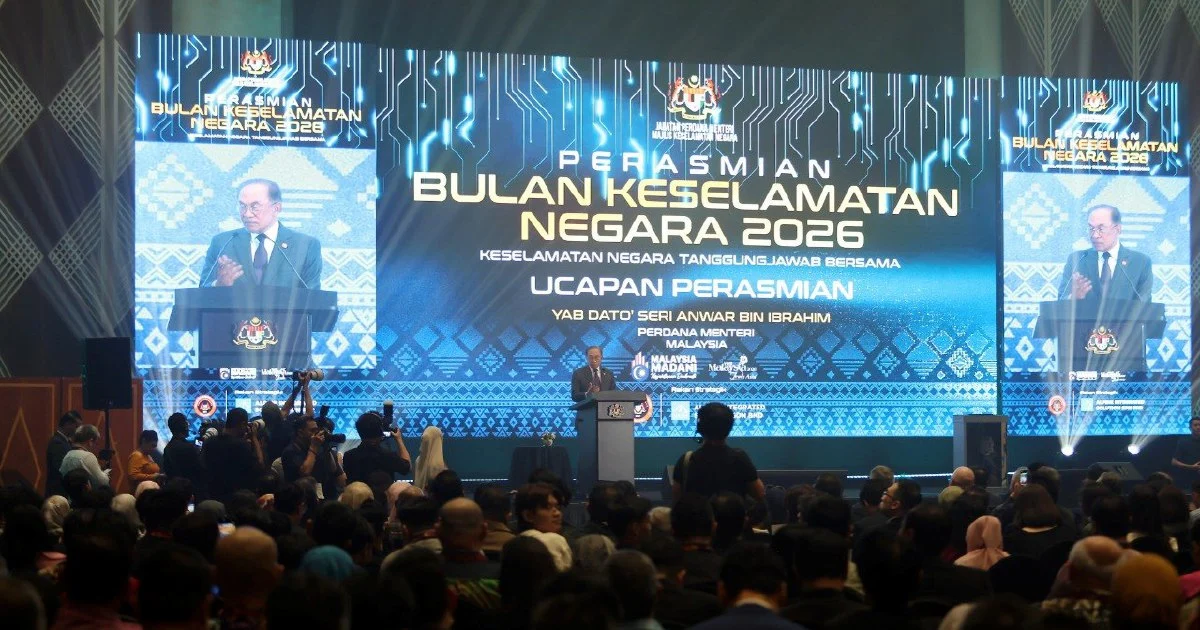
Prime Minister Datuk Seri Anwar Ibrahim has sounded the alarm over the re-emergence of racial divisions dominating political discourse, expressing deep concern that Malaysia appears to be sliding back into entrenched communal narratives at a critical electoral juncture. Speaking from Putrajaya, the Prime Minister underscored the risks of allowing outdated tribal politics to shape the conversation as Johor prepares for its upcoming state elections, warning that such polarising rhetoric threatens the nation's trajectory toward stability and inclusive governance.
Anwar's intervention reflects a broader tension within Malaysia's political establishment regarding the direction of campaign messaging during high-stakes state elections. The emphasis on racial and regional divisions has historically been a potent electoral tool in Malaysian politics, but the Prime Minister's warning suggests growing alarm within government circles that such tactics risk undermining national cohesion and potentially derailing efforts to rebuild institutional trust. His comments carry particular weight given his position at the apex of federal authority and his repeated calls since assuming office to steer the nation toward a more progressive, merit-based political culture.
The Johor polls have emerged as a significant battleground for competing visions of Malaysian governance. As one of the nation's largest and most economically dynamic states, Johor's electoral outcome carries implications well beyond its borders, influencing perceptions of federal government strength and regional political momentum heading into subsequent electoral contests. The state's diverse demographic composition, spanning multiple ethnic communities with distinct economic interests and historical grievances, creates fertile ground for divisive narratives if left unchecked.
Anwar's concern touches on a persistent challenge in Malaysian electoral politics: the tendency for campaigns to crystallise along communal lines rather than policy substance or administrative performance. By invoking the spectre of "old narratives," the Prime Minister appears to be advocating for a deliberate recalibration of how political parties frame their messages, positioning substantive debate around development, service delivery, and inclusive prosperity as preferable to identity-based appeals that fragment the electorate.
The timing of these remarks is strategically significant, arriving as state governments and federal authorities coordinate their messaging for the campaign period. Anwar's public intervention signals that the federal administration intends to actively discourage rhetoric that exploits racial or regional sensitivities, though the mechanisms for enforcing such expectations remain unclear. Given the decentralised nature of Malaysian politics and the autonomy state-level parties retain over their campaign strategies, the Prime Minister's words function more as a moral exhortation than a binding directive.
Johor's electoral dynamics have historically reflected broader peninsular political patterns, with competition between Barisan Nasional and opposition coalitions playing out alongside state-specific considerations around infrastructure development, land administration, and inter-communal relations. The state's substantial Malay-Muslim majority, alongside significant Chinese and Indian populations, necessitates coalition-building across ethnic lines for any party seeking to secure a durable governing mandate. Campaigns that prioritise narrow sectarian appeals risk alienating crucial swing voters whose support determines electoral outcomes in competitive constituencies.
The emphasis on transcending racial narratives also reflects Anwar's stated commitment to repositioning Malaysia as a modern, forward-thinking nation capable of competing effectively in the regional and global economy. This vision stands in tension with campaign strategies rooted in communal grievances and historical disputes, which the Prime Minister appears to view as relics of Malaysia's political past that now impede the country's development and international standing. His intervention suggests he believes electoral success need not depend on inflaming dormant tensions or reviving settled controversies.
For Malaysian voters, particularly younger cohorts who have not personally experienced the nation's most intense communal conflicts, messages grounded in identity politics may ring increasingly hollow compared to campaigns addressing contemporary concerns around employment, education quality, healthcare access, and housing affordability. Anwar's warning implicitly acknowledges this generational shift, suggesting that effective political competition might increasingly centre on demonstrable government performance and credible policy proposals rather than appeals to communal loyalty.
The broader Southeast Asian context adds another dimension to these concerns. As regional democracies grapple with polarisation and the resurgence of identity-based populism, Malaysia's efforts to resist such trends carry significance beyond its borders. A successful campaign in Johor that prioritises substantive debate could provide a regional model for how established democracies manage electoral competition without sacrificing communal harmony, whereas a descent into racial rhetoric would signal the limits of institutional resistance to polarising forces.
Anwar's warning also reflects anxieties within the federal administration regarding the capacity of local political actors to respect unspoken norms governing acceptable campaign discourse. Previous electoral cycles have occasionally witnessed breaches of communal restraint, with inflammatory statements provoking backlash and occasionally triggering law enforcement intervention. The Prime Minister's public admonition appears designed to pre-emptively establish expectations about boundaries for acceptable political speech during the Johor campaign period.
Ultimately, the success of Anwar's appeal depends on whether political parties competing in Johor can be persuaded that their interests align with elevating campaign discourse beyond racial and regional frameworks. This requires demonstrating that inclusive, policy-centred campaigns can generate electoral victories while contributing to the broader national objective of building a more cohesive society. Whether the electoral incentives genuinely favour such approaches remains an open question that Johor's campaign will help answer.

