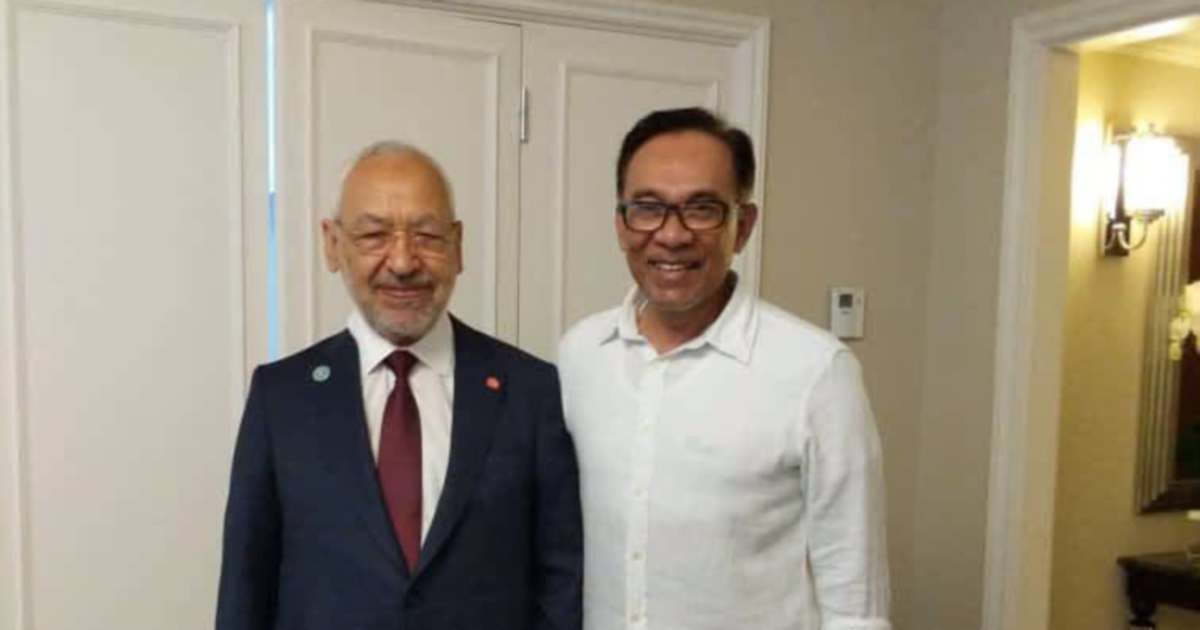
Prime Minister Datuk Seri Anwar Ibrahim has personally appealed to Tunisian President Kais Saied for the freedom of prominent Tunisian political figure Sheikh Rached Ghannouchi, framing the request on compassionate and humanitarian grounds. The Malaysian leader transmitted his appeal through a formal letter directed at the North African nation's head of state, signalling Kuala Lumpur's concern over the circumstances surrounding Ghannouchi's continued incarceration.
The intervention by Anwar underscores Malaysia's growing diplomatic engagement with fellow Muslim-majority nations on matters affecting Islamic political figures and civil liberties. As a leader who has himself navigated complex detention and release proceedings during his own political journey, Anwar's decision to champion Ghannouchi's case reflects his understanding of the human toll of prolonged imprisonment and the broader implications for political pluralism in the Islamic world.
Ghannouchi, who co-founded Tunisia's Ennahda Movement and previously served as speaker of parliament, has become a symbolic figure whose fate resonates across the broader Muslim world. His detention carries particular weight in Malaysia, where civil society organisations and Islamic political movements have maintained close ideological and institutional ties with Tunisian counterparts. The country's own history of incarceration of political leaders makes Kuala Lumpur a natural voice advocating for his release.
Tunisia's domestic political landscape has undergone profound turbulence in recent years, with President Saied consolidating executive power through extraordinary measures. The detention of Ghannouchi occurs within this broader context of deepening political polarisation, where questions of governance, constitutional authority, and the proper role of Islamist movements remain bitterly contested. Malaysia's intervention positions it as a sympathetic intermediary seeking to ameliorate tensions through quiet diplomacy.
The humanitarian angle presented by Anwar in his petition reflects international best practices for advocating prisoner releases without directly challenging the sovereignty of the detaining state. By emphasising compassion and universal principles of human dignity rather than demanding Tunisia alter its judicial proceedings, Malaysia pursues a diplomatic strategy calculated to maximise receptiveness in Tunis while maintaining cordial bilateral relations.
For Malaysian stakeholders, Ghannouchi's case carries broader significance beyond Tunisia's borders. The detention of Islamist politicians in other Muslim nations affects how Islam-based movements perceive their security and prospects for political participation throughout the region. Malaysia's position as a relatively stable democracy with Islamic principles embedded in its constitutional framework gives its voice particular credibility when advocating on such sensitive matters.
The appeal arrives as Tunisia continues grappling with severe economic difficulties, political fragmentation, and questions about its democratic trajectory following the military-style interventions of 2021. The country's international relationships, including with Malaysia and other Organisation of Islamic Cooperation members, remain important for economic support and geopolitical positioning. Anwar's diplomatic initiative may thus find reception at a moment when Tunisia requires constructive engagement from friendly nations.
Malaysia's careful handling of the Ghannouchi matter demonstrates Anwar's diplomatic sophistication in advancing human rights concerns while avoiding the impression of interfering in Tunisia's internal affairs. Rather than public denunciation, the private letter allows Tunisia's government space to respond positively without appearing to yield to external pressure. This measured approach respects national sovereignty while still advocating for the release on grounds that transcend politics.
The timing and nature of Anwar's intervention also reflect Malaysia's broader commitment to advancing the interests of Muslim-majority nations and Islamic political movements across international forums. As a prime minister with personal experience of political imprisonment and judicial processes, Anwar brings both moral authority and pragmatic understanding to such advocacy, enabling him to frame appeals in language that acknowledges legitimate security concerns while emphasising fundamental humanity.
Within Southeast Asia, Malaysia's diplomatic initiative may establish precedents for how the region's major Islamic nations approach the detention of prominent political figures elsewhere. The intervention suggests an emerging consensus that civil liberties and humanitarian considerations merit attention within the Muslim world, even when particular cases involve controversial figures whose political ideologies generate heated debate.

