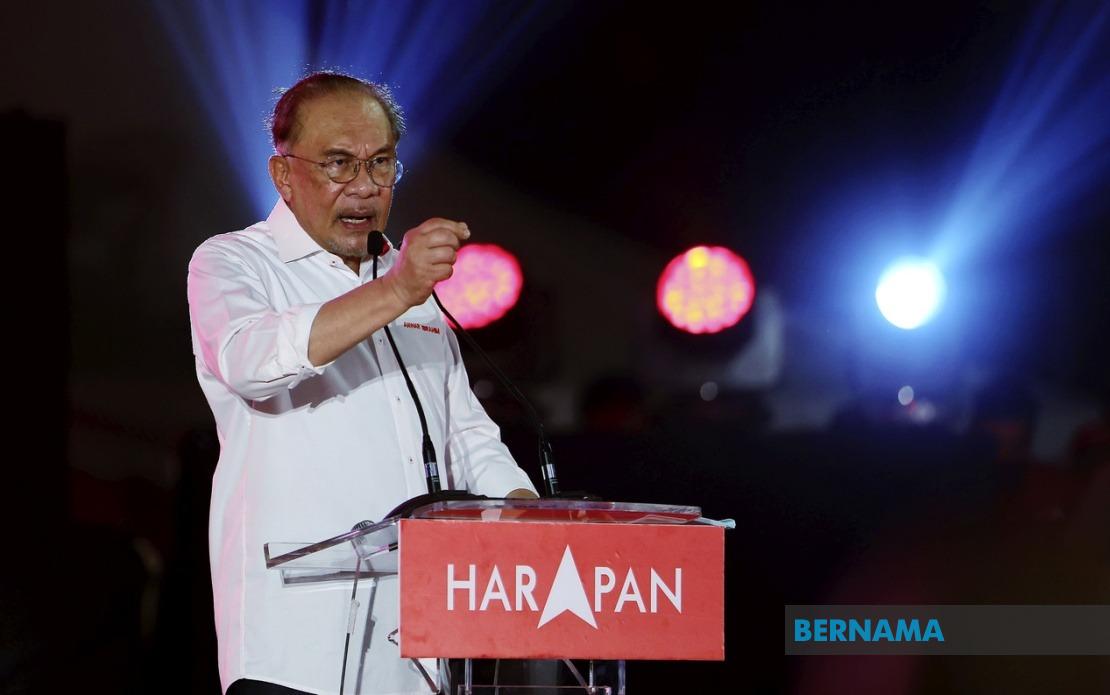
Prime Minister Datuk Seri Anwar Ibrahim has delivered a stern message to all contenders in the upcoming 16th Negeri Sembilan State Election, urging them to avoid weaponising sensitive matters related to the monarchy and the Federal Constitution. Speaking at a candidate announcement ceremony in Kuala Pilah on July 14, the Pakatan Harapan chairman stressed that while electoral competition forms a natural part of democratic governance, it must be conducted with integrity and foresight rather than through incendiary tactics that could fracture social cohesion.
The Prime Minister's remarks underscored a delicate balance between fostering vibrant political discourse and maintaining respect for constitutional structures that underpin Malaysia's governance framework. His emphasis on institutional safeguards reflects growing concerns about how campaign rhetoric in state elections can sometimes drift into territory that threatens national unity. Anwar articulated this nuance by distinguishing between legitimate political disagreement and irresponsible conduct that crosses ethical boundaries, signalling that his administration expects higher standards from elected representatives regardless of party affiliation.
Anwar's call for restraint carries particular weight given the composition of Malaysia's political landscape, where questions surrounding royal prerogatives and constitutional interpretation occasionally become flashpoints in electoral contests. By framing this appeal as a matter of national responsibility rather than partisan advantage, he positioned the federal government as guardian of institutional stability even as it campaigns for state-level gains. This approach reflects a governing philosophy that seeks to advance political objectives without destabilising the constitutional order that all parties depend upon for legitimacy.
The catalyst for these remarks was the formal unveiling of Pakatan Harapan's slate of 36 candidates for the Negeri Sembilan contest, representing a blend of newcomers and seasoned political operatives drawn from the coalition's three component parties: PKR, DAP, and Amanah. Among the nominees were incumbent Menteri Besar Datuk Seri Aminuddin Harun, who will defend the Linggi state seat, and DAP secretary-general Anthony Loke, who will contest the Chennah state seat. The announcement itself proceeded against a backdrop of mounting electoral preparations, with senior figures including Amanah president Datuk Seri Mohamad Sabu and PH Communications Director Datuk Seri Fahmi Fadzil in attendance to underscore the coalition's organisational readiness.
Anwar's confidence in Aminuddin's stewardship signals continuity in the state administration and reflects his assessment that the incumbent Menteri Besar has demonstrated the collaborative qualities necessary for synchronising state-level policy with federal priorities. By publicly endorsing Aminuddin's leadership style, particularly his capacity to work constructively with the federal government, Anwar provided substantial political capital to the sitting administration ahead of what promises to be a closely watched election. This endorsement also implicitly signals that developmental gains achieved through state-federal coordination deserve consideration from voters evaluating the incumbent's performance record.
The Prime Minister articulated an explicit vision for Negeri Sembilan that emphasises inclusive growth and protection from economic marginalisation within the federation. His assertion that the state must not be left behind reflects sensitivity to regional disparities and the perception among some constituencies that peripheral states receive inadequate investment and attention. By framing PH's campaign around forward momentum and meaningful developmental outcomes, Anwar attempted to redirect electoral discourse away from divisive identity politics toward material improvements in living standards and economic opportunity.
Anwar's emphasis on clean governance and institutional integrity speaks to broader reforms that his administration has sought to champion since taking federal office. He presented these themes not as abstract virtues but as prerequisites for attracting investment, building public confidence, and enabling the sustained growth necessary to improve quality of life across Negeri Sembilan's diverse communities. The implicit message to voters is that political credibility and administrative competence represent prerequisites for delivering the tangible benefits that electoral competition ultimately should be about.
The composition of PH's candidate list, blending fresh political voices with established performers, suggests a strategy aimed at signalling renewal while maintaining experienced stewardship. This balance responds to distinct voter constituencies: those seeking generational change and novel perspectives find representation among newcomers, while those prioritising proven administrative capacity can point to candidates with established track records. The diversity of the slate also reflects coalition politics, with proportional representation among PKR, DAP, and Amanah designed to maintain equilibrium within the broader Pakatan Harapan partnership.
Anwar's framing of electoral competition as an instrument for national development rather than factional advantage represents an attempt to establish normative boundaries around acceptable campaign conduct. By appealing to all parties simultaneously rather than directing criticism exclusively toward opposition rivals, he created space for establishing shared standards that transcend partisan division. Whether opposing parties will heed this message remains uncertain, but the rhetorical move itself signals federal government expectations regarding the tenor and substance of state-level electoral contests.
The Negeri Sembilan election takes place against a backdrop of ongoing efforts by the federal Pakatan Harapan administration to consolidate its political position while advancing legislative and institutional reforms. Success in the state contest would reinforce the coalition's authority to claim a contemporary mandate for continued governance, while setbacks would create openings for opposition parties to challenge its legitimacy at the federal level. The stakes thus extend considerably beyond Negeri Sembilan's borders, with implications for the broader political trajectory that Malaysia will follow in coming years.
For Malaysian voters and regional observers, the Negeri Sembilan election represents a significant test of whether state-level democratic contests can focus on governance quality and developmental outcomes rather than becoming proxies for constitutional conflicts or challenges to institutional legitimacy. Anwar's cautionary message suggests that the federal government recognises risks inherent in campaigns that exploit sensitivities around the monarchy and constitutional frameworks, and that his administration wishes to model a form of political competition calibrated to protect what he characterised as foundational institutional structures.

