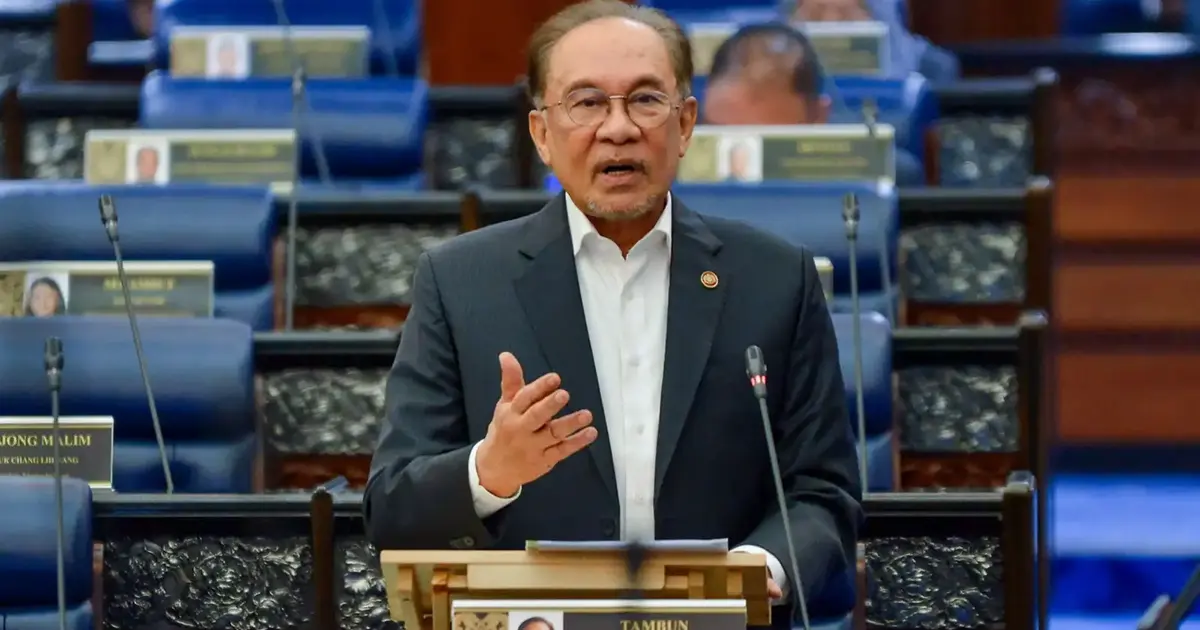
Prime Minister Anwar Ibrahim has once more pushed back against mounting pressure to hold an early general election, reaffirming his government's commitment to completing its full mandate and delivering tangible results for the Malaysian public. Speaking with characteristic firmness on the matter, Anwar asserted that the electorate's genuine priorities lie not in frequent votes but in sustained economic progress and political certainty—a positioning that underscores the coalition's focus on governance over electoral gamesmanship during a period of fragile regional and global economic conditions.
The repeated rejection of early election proposals reflects growing internal and external pressure on the administration as it navigates competing demands from coalition partners, opposition forces, and the broader Malaysian public. Yet Anwar's stance signals confidence that the government retains sufficient parliamentary support to govern for its full term without jeopardising policy implementation or economic momentum. This calculation matters significantly for Southeast Asia's third-largest economy, where investor confidence and policy continuity remain vital for attracting foreign direct investment and stabilising the ringgit's performance against global currencies.
Anwar's comments underscore a strategic pivot within Malaysian politics: away from the perpetual election cycles that characterised the previous decade and towards a governance model prioritising legislative stability. The government has been in place for just over a year, a period insufficient to demonstrate major policy transformation or economic recovery. Premature dissolution of parliament would interrupt initiatives ranging from digital economy expansion to efforts at narrowing urban-rural income disparities, programmes requiring multi-year commitment to yield measurable outcomes.
The timing of these remarks is particularly significant given Malaysia's macroeconomic position. Inflation pressures, currency volatility, and slowing regional growth have combined to create a delicate operating environment for policymakers. An election campaign would consume government attention and ministerial bandwidth, potentially delaying crucial decisions on fiscal policy, trade negotiations, and infrastructure development. The prime minister's insistence on completing the administration's full term reflects recognition that Malaysia's economic recovery depends less on political novelty and more on consistent policy execution.
Opposition forces and certain civil society actors have periodically called for early elections, arguing that the government lacks a strong popular mandate or that current political coalitions do not truly represent voter preferences. These arguments, while politically resonant in some quarters, underestimate the exhaustion many Malaysians experience with incessant campaigning and the opportunity costs it imposes. Years of electoral contests have depleted public coffers, diverted bureaucratic resources, and created decision paralysis within the civil service. A government operating without the sword of Damocles hanging over every major decision arguably has greater capacity to undertake necessary but politically difficult reforms.
The coalition dynamics supporting the government remain complex and require careful management. Various parties within the ruling alliance harbour distinct policy preferences and constituency interests, creating tensions that early elections might exacerbate rather than resolve. By maintaining the current timeline, the government provides coalition partners with breathing room to negotiate departmental allocations, development priorities, and legislative agendas without the pressure cooker of a compressed campaign season. This structural stability, though less dramatic than electoral upheaval, may ultimately prove more conducive to substantive governance.
An early election would also risk amplifying polarisation at a moment when Malaysia's plural society requires cohesion. Recent years of intense political contestation have frayed social bonds and elevated communal sensitivities. An extended campaign season could reignite divisive debates around religious affairs, identity politics, and resource distribution—precisely the issues most damaging to national unity and investor perception of political stability. Anwar's emphasis on allowing the government space to work suggests implicit acknowledgment that Malaysia benefits from periods of political consolidation rather than constant competitive mobilisation.
The prime minister's framing—that citizens want economic security over electoral novelty—reflects a reading of public sentiment that aligns with broader Southeast Asian trends. Across the region, voters have shown willingness to trade certain democratic participation opportunities for promises of growth, infrastructure development, and rising living standards. Malaysia's economic recovery narrative, however nascent, offers a counterweight to demands for early elections that might temporarily satisfy certain constituencies but could complicate medium-term policy implementation.
Looking forward, Anwar's reiterated resistance to early elections suggests the government intends to govern for its constitutionally allocated term unless unprecedented circumstances force dissolution. This commitment will be tested repeatedly as coalition partners jockey for position and opposition forces seek to exploit any governance stumble. Yet if the administration can deliver modest but credible improvements in employment figures, infrastructure readiness, and digital sector expansion, the political calculation supporting Anwar's position becomes progressively more defensible. The electorate will ultimately judge whether stability and patient governance proved preferable to the perpetual campaign cycles that have characterised recent Malaysian political history.

