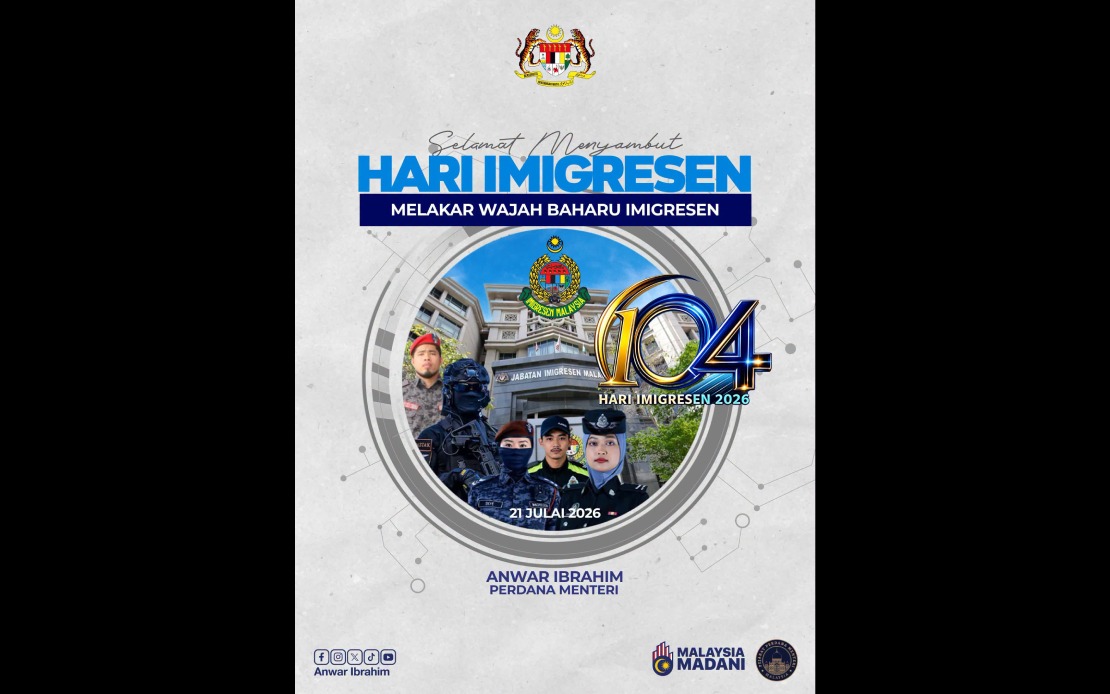
Prime Minister Datuk Seri Anwar Ibrahim has issued a direct appeal to the Immigration Department's workforce to discharge their duties with unwavering integrity whilst firmly rejecting any form of misconduct or unlawful activity. His remarks, delivered on Immigration Day on July 21, underscore the government's commitment to strengthening institutional accountability within one of Malaysia's most critical frontline agencies. The call represents a deliberate effort to reinforce ethical standards at a department tasked with managing the nation's borders and population movement.
The Prime Minister's message, shared via social media in conjunction with the annual observance, extends beyond merely condemning corruption. Anwar stressed that Immigration Department personnel must simultaneously cultivate compassion when engaging with the public, maintaining a balance between rigorous security protocols and courteous service delivery. This dual emphasis reflects a broader governmental philosophy that sees integrity and public-facing professionalism as complementary rather than competing objectives within the civil service framework.
Corruption within immigration systems represents a particularly acute vulnerability for developing nations across Southeast Asia. Border agencies worldwide face persistent challenges from organised syndicates seeking to exploit officials for document fraud, illegal entry facilitation, and trafficking operations. By explicitly addressing this issue during a ceremonial occasion, Anwar signals that tackling institutional corruption remains a priority despite the competing demands facing his administration. The timing and visibility of the statement suggest an intentional reinforcement of anti-corruption messaging to both internal audiences and the broader public.
The 2026 Immigration Day celebration carries the thematic designation "Charting a New Face for Immigration," signalling an attempt to rebrand and modernise the department's public perception. This framing implies recognition that immigration administration in Malaysia requires evolution beyond traditional paradigms. Whether through technological innovation, process reform, or cultural shift within the workforce, the theme suggests ambitions to enhance the department's operational effectiveness and public standing simultaneously.
For Malaysian citizens and residents, the integrity of immigration personnel directly impacts their experiences navigating bureaucratic processes, from visa applications to passport renewals. Corruption within the system creates parallel unofficial channels that disadvantage honest applicants whilst enriching unscrupulous officials and intermediaries. By publicly championing institutional cleanliness, Anwar attempts to rebuild confidence in these critical services and signal that the government recognises the population's legitimate frustrations with administrative inefficiency and malpractice.
The regional context amplifies the significance of Anwar's message. Malaysia functions as a major destination for regional migration, hosting millions of foreign workers and attracting significant expatriate communities. The integrity of immigration administration directly affects investor confidence, skilled worker recruitment, and Malaysia's competitive positioning within ASEAN labour markets. A department perceived as corrupt or unprofessional may deter quality applicants and create reputational damage that affects broader economic considerations beyond immediate immigration concerns.
Anwar's invocation of both sovereignty safeguarding and international reputation management reflects competing pressures faced by modern immigration agencies. These institutions must simultaneously maintain robust border security and project an image of professionalism that facilitates legitimate travel and commerce. The Prime Minister's framing acknowledges this tension by emphasising that excellence in immigration administration serves multiple national interests simultaneously rather than representing a zero-sum trade-off between security and efficiency.
The appeal to embrace "the value of compassion" in service delivery distinguishes this approach from purely enforcement-oriented frameworks that characterise some regional immigration models. This language suggests receptiveness to humanising immigration administration whilst maintaining security standards. For asylum seekers, vulnerable migrants, and ordinary citizens navigating procedures, this messaging potentially signals a softer institutional posture than might have prevailed previously, though actual implementation remains contingent upon operational-level changes and resource allocation.
Institutional messaging around corruption and integrity typically presages specific enforcement actions or policy reforms. Anwar's public statement may foreshadow investigations into departmental conduct, revised oversight mechanisms, or enhanced transparency protocols. The timing on a ceremonial occasion provides a platform for announcing systemic improvements whilst simultaneously celebrating the department's contributions to national security and governance. Stakeholders observing the announcement may anticipate corresponding announcements regarding operational reforms or personnel accountability measures.
For Malaysian business interests dependent on smooth immigration processing—including tourism operators, construction firms reliant on foreign labour, and multinational corporations with expatriate workforces—clear signals regarding departmental integrity and professionalism directly impact operational planning and cost projections. Corruption or unpredictability in immigration procedures creates hidden transaction costs that influence investment decisions and operational efficiency calculations. The Prime Minister's public emphasis on these standards therefore carries economic implications beyond symbolic gesture.
The specific invocation of "safeguarding the nation's sovereignty" contextualises immigration work within broader security frameworks. This language connects routine immigration administration to national security imperatives, potentially justifying enhanced vetting procedures and stricter enforcement protocols. By tying integrity demands to sovereignty protection, Anwar frames anti-corruption efforts not merely as administrative housekeeping but as fundamental to Malaysia's security interests. This framing may prepare public opinion for stricter immigration measures or expanded departmental powers justified on security grounds.
Moving forward, the substance of Anwar's appeal will be measured against actual institutional outcomes. Personnel transfers, disciplinary actions against corrupt officials, enhanced vetting procedures, and technological implementations aimed at reducing discretionary decision-making would constitute tangible manifestations of the stated commitment. Public perception of departmental integrity ultimately depends on cumulative experiences across thousands of daily interactions between immigration officials and citizens, emphasising that systematic institutional reform must follow rhetorical commitment for meaningful impact on public confidence and operational effectiveness.

