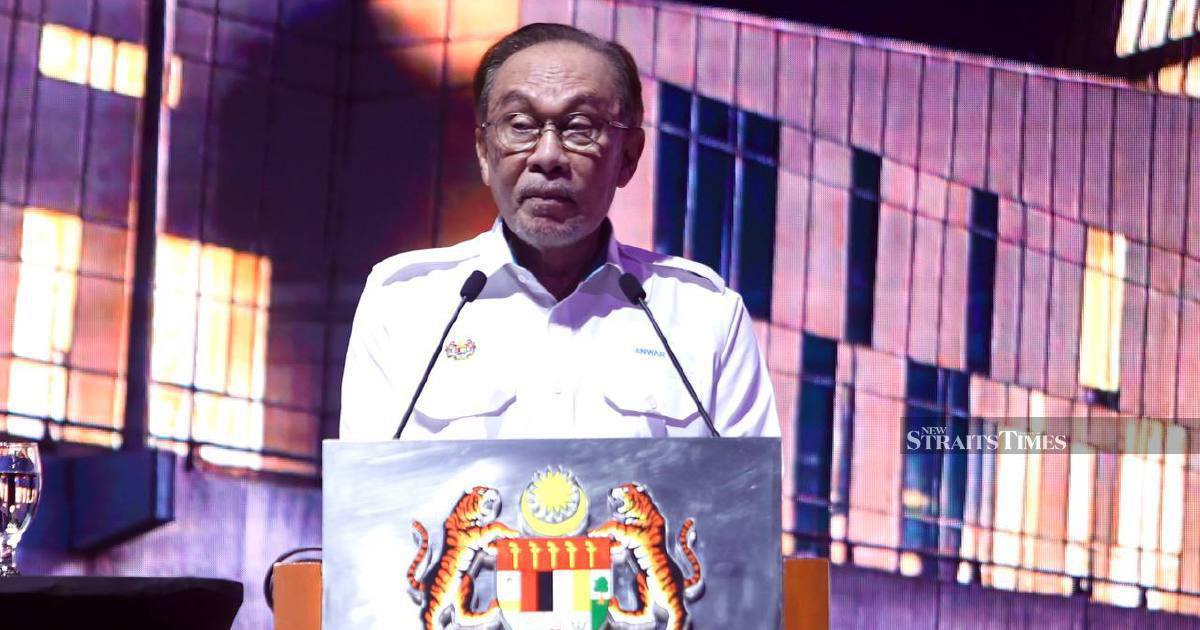
Prime Minister Datuk Seri Anwar Ibrahim has articulated a vision for Malaysia's creative industries that seeks to expand the boundaries of artistic expression while maintaining fidelity to the nation's foundational principles. Speaking in Petaling Jaya, Anwar identified creative freedom as essential to the development of a robust and internationally competitive filmmaking sector, yet acknowledged that this liberation must operate within a framework rooted in Malaysian identity and ethical considerations.
The prime minister's intervention reflects growing recognition within government circles that Malaysia's film industry requires policy adjustments to remain competitive in an increasingly dynamic Southeast Asian media landscape. Creative professionals have long contended that overly restrictive regulatory frameworks constrain storytelling possibilities and limit Malaysia's cultural exports, a concern that appears to have resonated with the top echelon of the administration. By positioning himself as an advocate for filmmakers, Anwar signals openness to reviewing mechanisms that may have previously functioned as impediments to artistic ambition.
However, Anwar's remarks underscore a deliberate balancing act that will define any potential liberalisation. Rather than endorsing unfettered creative freedom, the prime minister has framed expanded space as contingent upon maintaining alignment with Malaysia's religious plurality, multicultural heritage, and established social norms. This formulation acknowledges persistent sensitivities around content that touches religious matters, sexuality, or challenges to social hierarchies, concerns that have historically shaped Malaysia's regulatory approach to cinema.
The timing of Anwar's statement carries particular significance for Malaysia's creative economy. The region has witnessed remarkable growth in film and television production across Vietnam, Thailand, and Indonesia, jurisdictions that have either liberalised content regulations or operated under less stringent oversight. Malaysian filmmakers have increasingly cited cumbersome approval processes and content restrictions as reasons for relocating productions or seeking international financing and distribution outside domestic channels. Anwar's remarks suggest awareness that regulatory paralysis poses an economic risk.
Malaysia's film censorship apparatus has been a contentious issue for years, with the Film Censorship Board tasked with balancing artistic merit against community concerns. The board's decisions have occasionally drawn criticism from film festivals, production companies, and civil society actors who argue that certain rulings reflect outdated standards or unnecessary caution. By calling for greater openness, Anwar implicitly acknowledges that some existing constraints may warrant reconsideration, even as he stops short of endorsing wholesale deregulation.
The relationship between creative freedom and cultural values remains philosophically complex within Malaysia's specific context. Unlike secular democracies where artistic freedom often receives maximal constitutional protection, Malaysia's Federal Constitution grants Islam a special position, whilst recognising religious pluralism. This constitutional arrangement has historically influenced policy decisions across multiple sectors, including media and entertainment. Anwar's articulation seeks to navigate this constitutional reality whilst simultaneously expanding practical creative space.
From an economic perspective, the prime minister's position aligns with broader modernisation objectives. Malaysia aspires to develop high-value creative industries capable of generating employment, foreign exchange, and technological spillovers. A more permissive film production environment could attract international productions, develop local talent, and establish Malaysia as a regional creative hub. Such aspirations have economic multiplier effects extending beyond cinema itself into tourism, hospitality, technology, and education sectors.
Yet implementation will prove challenging. The Film Censorship Board operates within a statutory framework that requires ministerial input on sensitive matters, and informal social pressure from conservative constituencies remains influential. Clear distinctions between acceptable creative expression and material that violates established norms will require articulation and consensus-building. Without such clarity, filmmakers may continue operating in uncertainty, and regulators may struggle to distinguish principled gatekeeping from obstructive bureaucracy.
International film festivals and co-production arrangements present practical mechanisms through which greater creative flexibility might emerge organically. Malaysian films distributed internationally or produced in partnership with regional neighbours already navigate multiple regulatory regimes, effectively gaining exposure to different creative standards. By facilitating such collaborations and removing local barriers to international partnerships, Malaysia could expand filmmaker opportunities without necessarily requiring wholesale legislative reform.
The prime minister's intervention also reflects generational shifts within Malaysia's political establishment. Younger filmmakers and audiences increasingly consume content across national boundaries through streaming platforms and digital networks, rendering traditional gatekeeping mechanisms less effective. Anwar's acknowledgment of this reality suggests willingness to adapt governance approaches to contemporary media consumption patterns.
Moving forward, the crucial question concerns translation of rhetorical support into institutional action. Whether film approval timelines accelerate, content guidelines become more clearly articulated, or the Film Censorship Board's composition shifts toward representation of diverse creative voices remains uncertain. Meaningful creative expansion requires concrete policy measures, not merely aspirational statements about cultural values and freedom.
Anwar's remarks ultimately represent an opening gesture toward Malaysia's creative community, signalling receptiveness to conversations about regulatory reform. Whether this translates into structural changes that genuinely expand filmmaking possibilities will depend on follow-through mechanisms and the broader political consensus around cultural liberalisation. For now, Malaysian filmmakers have a prime ministerial acknowledgment that the status quo warrants examination, a starting point from which serious institutional reform could potentially emerge.

