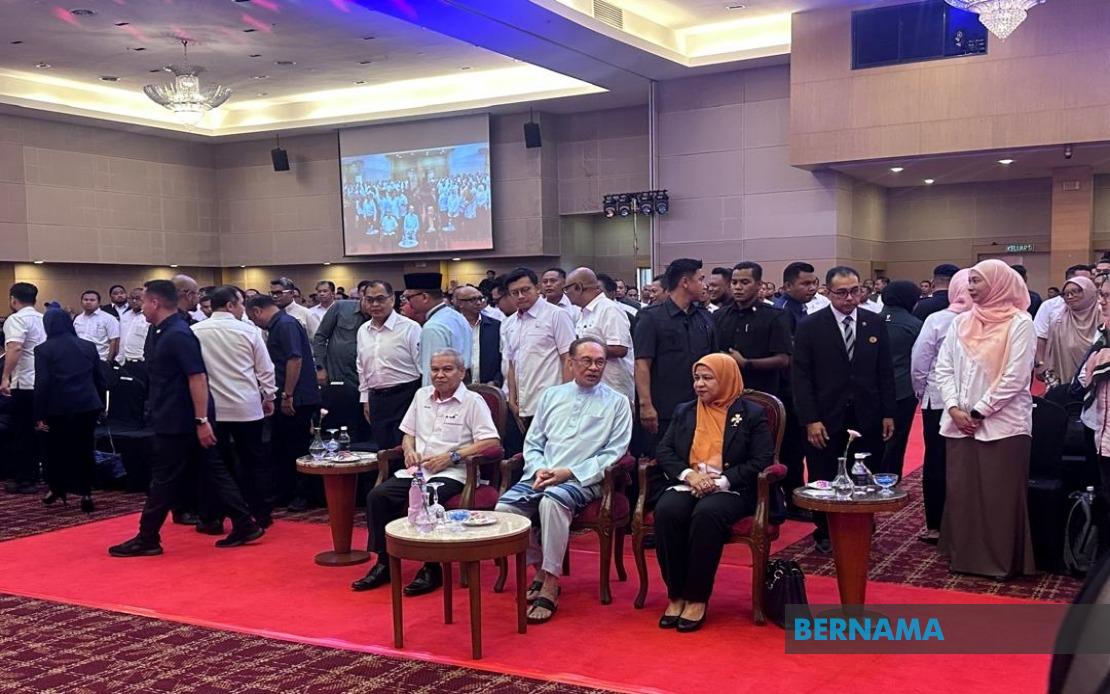
Prime Minister Datuk Seri Anwar Ibrahim has indicated that he will withhold any formal statement regarding FELDA's operations until the Special Task Force examining the Federal Land Development Authority submits its comprehensive investigation. Speaking at a management engagement session in Bangi on August 21, Anwar stressed the importance of allowing the investigative process to reach completion before discussing its outcomes, suggesting the findings would be disclosed to Malaysians shortly thereafter.
The task force examining FELDA, one of Malaysia's most significant land settlement institutions, has already commenced its work according to the Prime Minister. Initial timelines suggested the investigation would conclude within several months, though no specific deadline was publicly confirmed during Anwar's remarks. This phased approach reflects a deliberate strategy to ensure thoroughness in reviewing the authority's operations before conclusions are reached.
The investigation's scope encompasses multiple dimensions of institutional governance. Anwar outlined that the task force would examine management practices, identify weaknesses in past operations, and crucially, evaluate the current state of administration at FELDA. However, he emphasised that while historical context matters, the primary focus would be establishing better management frameworks and defining the organisation's strategic direction moving forward. This forward-looking perspective suggests the investigation is not merely a retrospective exercise in accountability but also a blueprint for institutional reform.
FELDA, which manages land schemes benefiting thousands of settler families across Malaysia, operates at a critical juncture. The federal authority has faced recurring questions about financial sustainability, land productivity, and settler welfare in recent years. By commissioning a comprehensive review, the government is signalling commitment to addressing long-standing concerns that have accumulated through different administrations. The investigation provides an opportunity to reset institutional performance and rebuild confidence among settler communities.
Anwar's comparison to the Royal Commission of Inquiry (RCI) on Tabung Haji carries significant implications. The Tabung Haji RCI report was eventually released to public scrutiny, establishing a precedent for transparency regarding major government institutions facing governance challenges. By invoking this comparison, the Prime Minister appears committed to eventual public disclosure of FELDA findings, though the timing and format remain undetermined. This approach balances the need for confidentiality during investigation with accountability to taxpayers and stakeholders.
The management officials present at the Bangi session, including FELDA Chairman Tan Sri Ahmad Badri Mohd Zahir and Director-General Datuk Dr Suzana Idayu Wati Osman, represent the institutional leadership that will implement any recommendations emerging from the investigation. Their participation in the friendly session suggests ongoing dialogue between political leadership and administrative personnel, indicating attempts to maintain institutional stability during the review process. Such engagement may also serve to build buy-in for potential reforms from within the organisation itself.
For Malaysian settlers and their families, the investigation represents both an opportunity and a source of uncertainty. FELDA settlers represent a distinct constituency within rural Malaysia, and any findings affecting their interests—from land rights to income support mechanisms—would carry political weight. The government's visible commitment to investigation signals recognition of settler concerns, though the actual outcomes remain contingent on task force conclusions and political will to implement recommendations.
The timing of this announcement occurs within Malaysia's broader governance reform agenda. Successive administrations have grappled with modernising old institutional structures designed for a different economic era. FELDA, established decades ago with specific colonial-era land settlement objectives, requires recalibration for contemporary agricultural and development realities. The investigation provides intellectual and administrative cover for potentially significant structural changes that might otherwise face political resistance.
From a Southeast Asian perspective, FELDA's situation reflects wider regional challenges surrounding state-controlled agricultural enterprises and land institutions. Several ASEAN neighbours operate analogous structures managing communal or settler lands, facing similar tensions between historical mandates and modern economic demands. Malaysia's approach to investigating and potentially reforming FELDA could offer insights into how developing nations balance institutional continuity with necessary evolution.
The investigation also intersects with Malaysia's climate and sustainability objectives. Land management practices at FELDA schemes, including agricultural methods and environmental stewardship, will likely come under scrutiny. Modernising FELDA's approach could align settler agriculture with national carbon neutrality targets and forest conservation goals, representing an intersection between institutional reform and environmental policy.
As the task force proceeds, Malaysian stakeholders including settler representatives, agricultural economists, and rural development advocates will await the findings with considerable interest. The scope and depth of investigation, coupled with the eventual recommendations and implementation mechanisms, will determine whether this exercise represents substantive institutional transformation or a more limited remedial exercise. Anwar's commitment to transparency through public release suggests openness to public debate on FELDA's future direction.
The Prime Minister's measured approach—neither rushing conclusions nor indefinitely delaying them—attempts to navigate the political sensitivity surrounding FELDA. The federal authority remains symbolically important to Malaysia's rural constituencies and historically tied to the government's legitimacy in those communities. Thorough investigation followed by transparent disclosure represents a calculated strategy to manage institutional change while maintaining political confidence and public engagement with the reform process.

