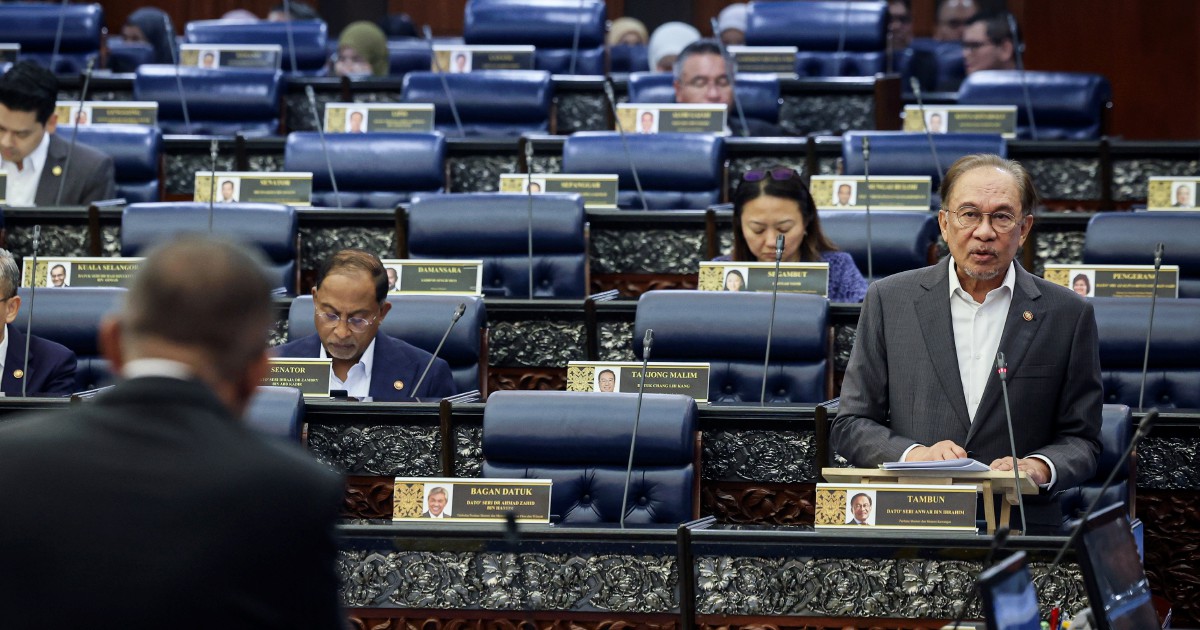
Prime Minister Datuk Seri Anwar Ibrahim has committed to addressing concerns over the alleged use of Radio Televisyen Malaysia's (RTM) official logo on promotional materials associated with a Pakatan Harapan campaign event, according to statements made during parliamentary proceedings in Kuala Lumpur. His acknowledgement of the matter signals government responsiveness to questions about proper use of state broadcaster branding and regulations governing public institutional symbols during partisan political activities.
The controversy highlights the delicate balance between Malaysia's political sphere and state media institutions, which are constitutionally bound to maintain editorial independence and impartiality. RTM, as the national broadcaster established under the Broadcasting Act, operates under specific governance frameworks that define how its logos, imagery, and branding may be deployed. The placement of the state broadcaster's logo on campaign materials risks blurring the lines between state institutions and political party activities, raising questions about institutional neutrality that authorities must carefully navigate.
Anwar's measured response—indicating that corrections would be made if the allegation proved accurate—reflects an approach that acknowledges the seriousness of the breach while avoiding immediate admission of organisational failure. This conditional framing allows space for verification while demonstrating commitment to compliance with established protocols. The statement indicates that either the party or organisers may have inadvertently used RTM branding, or that the matter requires investigation to determine the exact circumstances and responsibility.
The incident carries broader implications for how Malaysia's political ecosystem manages institutional symbols and resources. State agencies and their visual identities occupy a unique position: they represent the nation and all citizens, regardless of political affiliation. When party organisations incorporate state logos without explicit authorisation, they risk creating public perception that government institutions are endorsing particular political campaigns—a scenario incompatible with democratic principles demanding state neutrality during electoral periods.
For Pakatan Harapan specifically, the matter touches on governance credibility. As the ruling coalition, PH's handling of state resources and compliance with institutional protocols carries heightened scrutiny. Any appearance of improper use of government symbols or assets invites questions about the administration's broader respect for rules and checks. Demonstrating swift corrective action reinforces the government's commitment to institutional discipline and sets the precedent that partisan activities must operate within established boundaries.
RTM itself faces questions about logo usage oversight. The broadcaster should maintain clear procedures for authorising use of its branding by external parties, whether political organisations, corporate entities, or civil society groups. If the logo appeared on campaign materials without RTM's explicit consent, this suggests either insufficient monitoring of unauthorised use or gaps in communication between the broadcaster and party organisers who may have assumed permission was already secured.
Malaysia's regulatory framework for state media already addresses such matters, yet incidents suggest practical implementation requires strengthening. Other Commonwealth democracies have developed detailed protocols specifying contexts in which government institution logos may appear, including explicit prohibitions on use in partisan political content without formal ministerial or institutional approval. Malaysia could benefit from similarly clear guidelines circulated to all political parties and government agencies.
The correction process itself matters. Publicly acknowledging the error, identifying responsible parties, removing offending materials, and implementing preventive measures sends an important message about accountability. This approach contrasts with attempts to minimise or ignore such breaches, which would undermine public confidence in institutional integrity. Anwar's parliamentary statement—conducted in the legislature where accountability occurs—provides an appropriate forum for addressing governance concerns.
For Malaysian voters and observers, this incident exemplifies the ongoing tension between political pragmatism and institutional standards. Campaign organisations operate under time and resource pressures that sometimes lead to procedural shortcuts. However, democratic systems depend on clear separation between government institutions and partisan political activity. Even unintentional breaches require correction to maintain public trust in institutional neutrality.
The controversy also serves as a timely reminder for all Malaysian political parties about compliance obligations. As the next electoral cycle approaches, candidates, campaign managers, and party officials should review regulations governing use of government facilities, emblems, and resources. Clear internal compliance procedures and training reduce the risk of inadvertent violations that, while potentially minor, can damage political credibility and invite legitimate criticism.
Anwar's commitment to correction reflects his broader positioning as a reform-minded administrator concerned with governance standards. Whether in matters of institutional neutrality, transparency, or procedural compliance, demonstrating responsiveness to parliamentary questioning and public concerns reinforces the government's democratic legitimacy. The ultimate test, however, lies in whether corrective measures translate into systemic improvements preventing similar incidents across the federal and state administration.
Moving forward, RTM should coordinate with the government's political office to develop clearer protocols for logo usage requests from political organisations. Simultaneously, Pakatan Harapan and opposition parties should establish internal procedures ensuring campaign materials comply with institutional usage guidelines. Such proactive measures prevent recurrence of such controversies and reinforce Malaysia's commitment to the institutional discipline that democratic governance demands.

