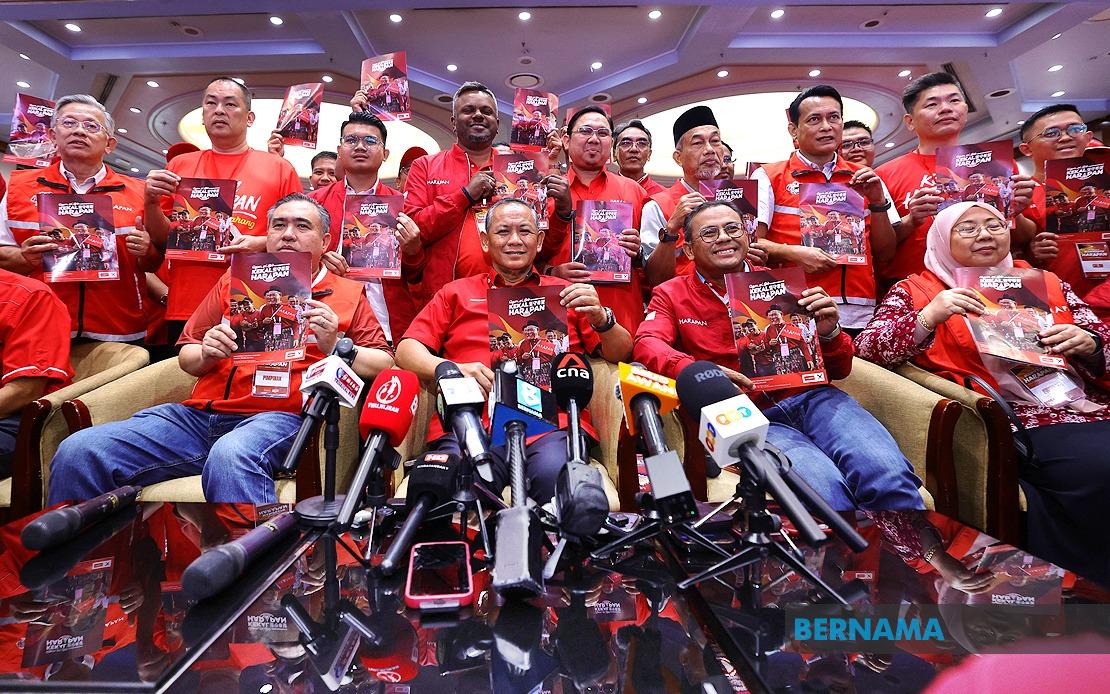
Prime Minister Datuk Seri Anwar Ibrahim is set to amplify Pakatan Harapan's campaign momentum in Negeri Sembilan this Wednesday, making his presence felt during the final stretch before the state election. According to Datuk Seri Aminuddin Harun, the coalition's state chairman, Anwar will participate in multiple campaign activities scheduled for Sikamat and Paroi, strengthening PH's grassroots push across the state.
Amiruddin's announcement came after PH launched its state election manifesto in Seremban on Sunday, with the Prime Minister's notable absence from that evening's event prompting clarification that his schedule had been prearranged. The timing of Anwar's Wednesday visit signals the national leadership's commitment to securing Negeri Sembilan, a state where coalition control remains crucial to maintaining federal political dominance.
The manifesto unveiled by Aminuddin, who represents the Linggi seat, reflects PH's multifaceted approach to state governance. The platform encompasses administrative efficiency alongside immediate concerns affecting household finances and living standards. By framing governance around tangible improvements in people's daily lives, the coalition seeks to translate national support into sustained electoral performance at state level, where implementation of promises directly shapes voter perception.
The policy agenda extends across nine key pillars that reveal PH's strategic priorities for Negeri Sembilan's development trajectory. Beyond routine governance improvements, the manifesto emphasises youth engagement and women's empowerment—demographics increasingly shaping electoral outcomes across Malaysia. Educational advancement and housing accessibility address structural concerns affecting younger voters, whilst the emphasis on customary heritage and social cohesion appeals to Negeri Sembilan's diverse communities and traditional constituencies.
Economic competitiveness features prominently, reflecting recognition that state-level governance must complement federal policy frameworks. Tourism development and modern agricultural practices indicate PH's attempts to position Negeri Sembilan within Malaysia's broader economic transformation. Strategic infrastructure investment signals the coalition's understanding that physical connectivity and development projects translate into tangible voter benefits and political credibility.
The coalition's campaign machinery includes heavy-hitters beyond Anwar's participation. Datuk Seri Amirudin Shari, the Selangor Menteri Besar serving as PH's election director, ensures cross-state coordination and resource deployment. DAP's Anthony Loke, contesting the Chennah seat, represents the multiracial dimension central to PH's identity. The presence of PKR's Datuk Dr Fuziah Salleh and Amanah's Datuk Dr Mohd Hatta Md Ramli underscores the coalition's three-party structure maintaining operational coherence during campaigning.
Negeri Sembilan represents a significant test of PH's ability to consolidate and extend electoral gains achieved during the 15th general election. State elections increasingly serve as barometers of national political sentiment, with opposition parties and independent observers scrutinising coalition performance. A strong showing would vindicate Anwar's leadership narrative and demonstrate that PH remains capable of delivering electoral promises, whilst disappointment could embolden opposition forces ahead of potential future federal contests.
The election calendar compressed into a narrow window—early voting scheduled for July 28 followed by polling on August 1—intensifies campaign activity and potentially influences voter turnout patterns. This compressed timeline demands efficient resource mobilisation and messaging discipline, explaining why senior national leadership involvement becomes strategically essential. Anwar's Wednesday campaign engagement represents a calculated deployment of political capital at a critical juncture.
Manifesto launches traditionally precede intensified campaign activity, allowing parties to set the narrative agenda before voters begin casting ballots. PH's articulation of governance priorities across administrative, economic, and social dimensions attempts to preempt opposition messaging whilst rallying the coalition's base. The emphasis on delivering promises directly addresses voter scepticism about political commitments, a persistent challenge for any incumbent administration facing electoral scrutiny.
For Malaysian voters, particularly in Negeri Sembilan, state elections provide direct opportunities to influence the composition of state legislatures that handle housing policy, education coordination, and development planning affecting daily quality of life. Unlike federal contests, state elections allow voters to assess how national political figures translate campaign promises into concrete governance outcomes at the subnational level where implementation becomes visible and measurable.
The international dimension warrants consideration: Malaysia's political stability and coalition coherence carry implications for regional dynamics. Strong PH performance in Negeri Sembilan would reinforce Southeast Asia's perception of Malaysian political predictability and institutional resilience, factors investors and regional partners monitor closely when assessing bilateral engagement. Conversely, coalition fragmentation or electoral setbacks could trigger speculation about broader federal political instability.
Anwar's campaign presence signifies his personal investment in maintaining coalition electoral viability at all governance levels. As Prime Minister navigating complex multiparty coalition dynamics, Anwar must demonstrate his ability to mobilise support across diverse constituencies and geographic regions. Negeri Sembilan thus transcends local significance, becoming a test case for whether centralized national leadership can effectively coordinate and energize state-level political machinery.

