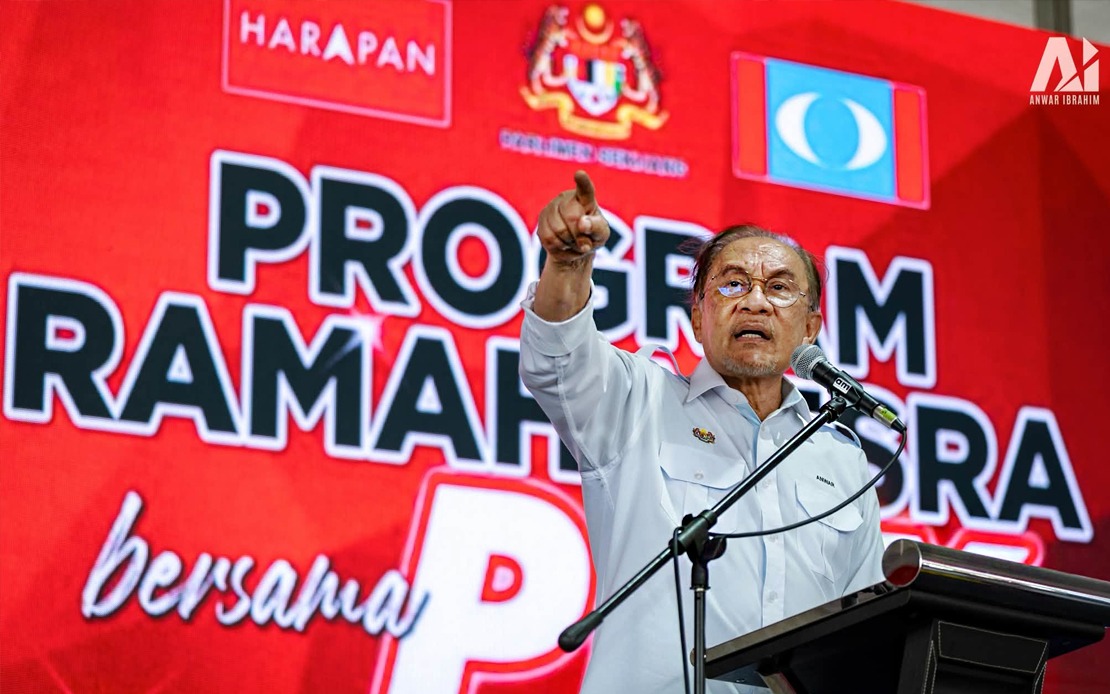
Prime Minister Datuk Seri Anwar Ibrahim has pledged to take direct action on the durian price crisis afflicting Malaysian farmers, signalling his intention to leverage bilateral relations with China to secure better market conditions. Speaking at a grassroots event in Tangkak's Gambir constituency, Anwar committed to raising the issue with Chinese Premier Li Qiang during a forthcoming visit to Beijing, framing the matter as central to supporting domestic agricultural producers struggling with depressed income as a result of simultaneous peak seasons across Peninsular Malaysia.
The timing of the Prime Minister's intervention reflects growing concern within government circles about the economic strain on durian growers facing a significant price correction. When multiple growing regions reach peak harvest simultaneously, oversupply naturally depresses market prices, squeezing profit margins for farmers who have invested substantially in cultivation and harvesting infrastructure. This cyclical challenge has long plagued Malaysia's durian sector, but the current slump appears severe enough to warrant high-level diplomatic attention, indicating the scale of farmer distress in key producing areas.
Anwar's strategy centres on unlocking greater Chinese demand for Malaysian durian, a market where penetration remains constrained by stringent import standards and regulatory requirements. China represents the world's largest consumption market for the fruit, and Malaysian producers have successfully built a significant presence there, yet barriers to entry remain substantial. The Prime Minister acknowledged these obstacles directly, noting that Chinese quality standards are exceptionally demanding, yet expressed confidence in his ability to negotiate improved terms through his personal relationship with Li Qiang. This approach reflects a broader Malaysian diplomatic strategy of using high-level bilateral engagement to resolve trade friction and create preferential market conditions.
The durian sector holds particular strategic importance for Malaysia's agricultural economy and rural development objectives. As a high-value crop commanding premium prices in international markets, successful durian farming can provide substantial income to rural communities and support local economies in producing regions. Beyond economic metrics, durian has become emblematic of Malaysian agricultural excellence and is frequently promoted as a national export brand. Supporting durian farmers therefore carries both economic and symbolic weight within government policy priorities, especially among a rural constituency that forms a significant voting bloc.
Anwar's remarks underscored his view that Malaysia-China trade relations should be systematically leveraged to create opportunities for domestic producers during periods of market stress. This reflects a mercantilist approach to bilateral economic engagement, where political leaders actively intervene to secure trading advantages for domestic industries facing external pressures. By positioning durian expansion as mutually beneficial—providing China with reliable high-quality supply while supporting Malaysian farmers—Anwar is attempting to frame the issue as a win-win proposition that should appeal to both governments' economic interests.
Alongside the durian initiative, Anwar also addressed broader economic concerns affecting Malaysian households, particularly the contentious issue of fuel pricing. The Prime Minister defended Malaysia's position as maintaining some of the world's lowest fuel prices through sustained government intervention, a claim he emphasised despite acknowledging significant global pressures on petroleum markets. With geopolitical tensions in the Middle East creating supply uncertainties and upward pressure on crude oil prices, maintaining subsidised domestic fuel rates requires substantial government expenditure that Anwar suggested reflects his administration's commitment to protecting public welfare over strict adherence to market principles.
Current retail fuel prices stand at RM3.37 per litre for RON95 and RM3.97 per litre for diesel as of early July, but consumers benefit from heavily subsidised rates of RM1.99 and RM2.10 respectively under the BUDI MADANI initiative. This disparity illustrates the magnitude of government support flowing to fuel consumers, representing a deliberate policy choice to insulate the public from international commodity price volatility. Anwar framed this as a principled decision to prioritise citizen welfare over conventional economic management, suggesting that ordinary Malaysians would bear unacceptable hardship if fuel prices reflected true market values given current global conditions.
The Prime Minister's emphasis on fuel subsidy maintenance serves multiple political purposes within the Malaysian context. It signals responsiveness to cost-of-living pressures that consistently rank among public concerns in surveys and polling data, and it positions his administration as intervening actively on behalf of ordinary citizens against impersonal market forces. For a government navigating complex coalition politics and seeking to consolidate popular support, maintaining visible commitment to fuel subsidies provides tangible evidence of concern for household welfare, even as the policy imposes fiscal constraints on government budgets that could otherwise fund alternative development priorities.
Anwar's dual focus on agricultural export expansion and fuel subsidy maintenance reflects a governing approach that attempts to simultaneously support both rural producers and urban consumers, recognising both constituencies' significance to political stability and electoral performance. The durian initiative targets farmer incomes in key producing regions, while fuel subsidy rhetoric speaks to universal consumer interests across urban and rural areas alike. This balancing act is characteristic of coalition governance in Malaysia, where competing regional and sectoral interests must be acknowledged and accommodated within policy frameworks.
The broader context of Anwar's remarks involves Malaysia's positioning within regional and global agricultural trade networks, where competition from neighbouring countries and changing consumption patterns continually reshape market conditions. Thailand and Vietnam have emerged as significant durian exporters, intensifying competition for market share in China and other Asian markets. Malaysia's strategy of emphasising quality differentiation and leveraging political relationships represents an attempt to maintain competitive advantage despite facing well-established rivals with their own government support systems and established supply chains.
Looking forward, the success of Anwar's initiative will depend on tangible outcomes from his China visit and whether any commitments extracted from Chinese counterparts translate into improved market conditions for Malaysian durian farmers. The announcement of intent, while politically valuable as a signal of government attention to farmer concerns, ultimately measures impact through actual price stabilisation and expanded export volumes. This creates accountability pressure on the Prime Minister to deliver measurable results, adding diplomatic urgency to trade discussions with Li Qiang beyond the routine courtesies typically characterising bilateral leadership meetings.

