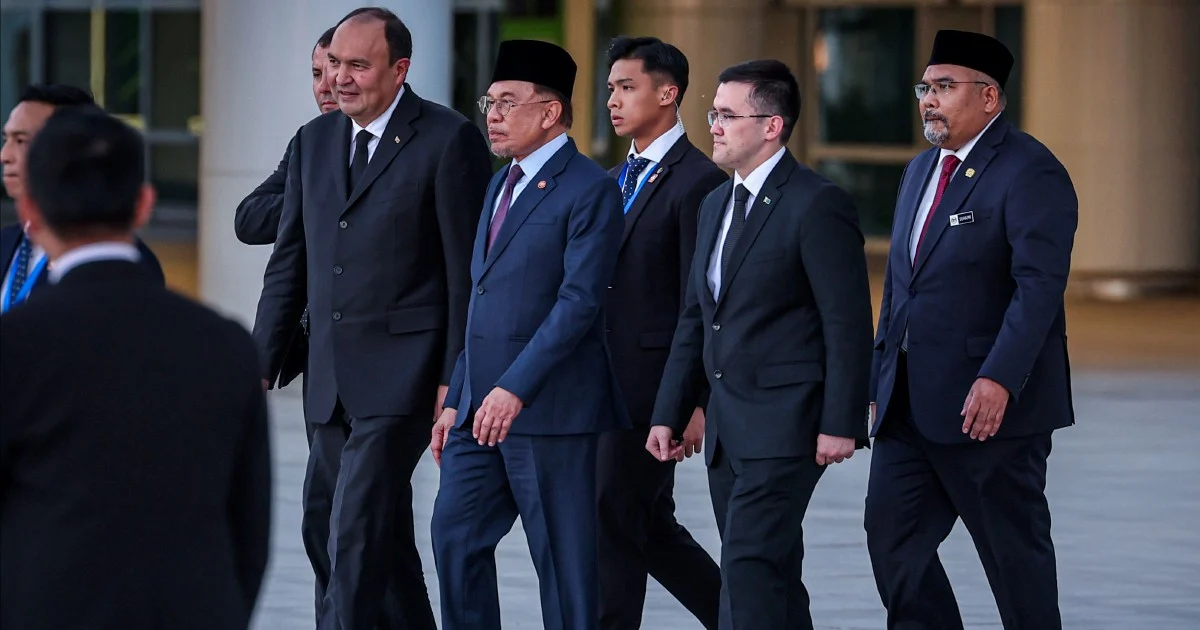
Prime Minister Datuk Seri Anwar Ibrahim is wrapping up his official visit to Turkmenistan with a series of high-level diplomatic and commercial engagements in the strategically positioned Central Asian nation. Situated along the eastern shores of the Caspian Sea, Turkmenistan occupies a crucial geopolitical position that has drawn increasing attention from trading partners across Asia, the Middle East, and Europe seeking to diversify their economic partnerships and supply chains.
The final day of Anwar's visit represents a concentrated effort to advance Malaysia's economic interests in a region where Southeast Asian nations have historically maintained limited direct presence. Turkmenistan, with its substantial natural gas reserves and energy sector prominence, presents opportunities for Malaysian businesses exploring upstream and midstream petroleum ventures, as well as downstream energy trading arrangements that could benefit domestic companies seeking alternative markets and supply sources.
The scheduled talks between Anwar and Turkmenistan's leadership will centre on expanding the bilateral trade relationship, which remains modest by regional standards but carries considerable potential for growth. Malaysia's strong banking and financial services sectors, alongside its expertise in halal certification and Islamic finance, align well with Turkmenistan's development priorities and could form the foundation for mutually beneficial commercial partnerships. Conversely, Turkmenistan's hydrocarbon exports and chemical manufacturing capacity offer Malaysian investors and energy consumers access to new commodity sources and long-term supply security.
Beyond energy sector cooperation, the discussions are expected to explore opportunities in manufacturing, telecommunications, and infrastructure development. Turkmenistan has embarked on significant modernisation initiatives as part of its broader economic transformation agenda, creating entry points for Malaysian engineering firms, technology providers, and construction companies with regional track records in Southeast Asia. These sectors represent viable channels through which Malaysian enterprises can expand geographically while contributing to Turkmenistan's development objectives.
The timing of Anwar's visit carries broader significance for Malaysia's evolving foreign economic policy. As the country navigates complex global trade dynamics and intensifying regional competition for market access, strengthening ties with non-traditional partners in Central Asia diversifies Malaysia's diplomatic and commercial portfolio. This approach reduces over-reliance on established markets whilst positioning Malaysia as a credible emerging economy partner capable of engaging constructively across diverse regions and cultural contexts.
Turkmenistan's strategic location along historical and contemporary trade corridors linking East and West creates additional advantages for Malaysian participation in regional connectivity projects. The country serves as a transit hub for energy exports, particularly natural gas pipelines supplying Central Asian and European markets. Malaysian companies with expertise in pipeline construction, maintenance, and logistics management could find lucrative opportunities supporting these infrastructure initiatives, thereby enhancing their international profiles whilst generating revenues.
From Turkmenistan's perspective, engaging with Malaysia offers access to Southeast Asian business networks and pathways into the ASEAN market. Malaysian investors and trading companies maintain established relationships throughout the region, and Turkmenistan's industries could leverage these connections to explore new customer bases for manufactured goods and energy products. Joint ventures and partnership arrangements with Malaysian entities could facilitate technology transfer and management expertise beneficial to Turkmenistan's industrial modernisation goals.
The diplomatic engagement also carries implications for Malaysia's broader Central Asian strategy. As regional powers like China and Russia maintain significant influence across Central Asia, Malaysia's independent diplomatic approach and emphasis on mutually beneficial commercial relationships rather than strategic competition offers an alternative partnership model. This positioning potentially enhances Malaysia's credibility and attractiveness as an economic partner in regions where geopolitical tensions remain a concern for smaller nations seeking diversified relationships.
Investment protection and legal frameworks will likely feature prominently in these discussions, as both nations seek assurances regarding the security and enforceability of business arrangements. Establishing bilateral investment treaties or strengthening existing frameworks can provide Malaysian investors with confidence necessary to commit capital to Turkmenistan-based ventures. Similarly, Turkmenistan gains predictability regarding Malaysian participation in its development projects through formalised agreements and institutional mechanisms.
Cultural and educational exchanges may also receive attention during these high-level meetings. Malaysia's experience in fostering Islamic cultural and educational initiatives, alongside its multicultural society model, could inform discussions about people-to-people connections and scholarship programmes benefiting Turkmen students seeking international education. Such non-commercial elements of bilateral relations often provide the foundation for sustained long-term partnerships extending beyond immediate commercial transactions.
The outcomes of these talks will likely manifest in subsequent years through expanded trade volumes, new investment announcements, and possibly formal cooperation agreements across specific sectors. Malaysian companies monitoring Turkmenistan market developments should track announcements regarding sectors identified during these discussions, as government-level endorsements often signal priority areas where diplomatic support and facilitation will be available to national enterprises.
Successful engagement with Turkmenistan also strengthens Malaysia's positioning within broader Asian economic networks and demonstrates commitment to developing relationships beyond established geographic boundaries. As Malaysia continues asserting itself as a consequential player in regional and global economic affairs, cultivating partnerships across diverse regions and cultural contexts remains essential to long-term prosperity and influence.