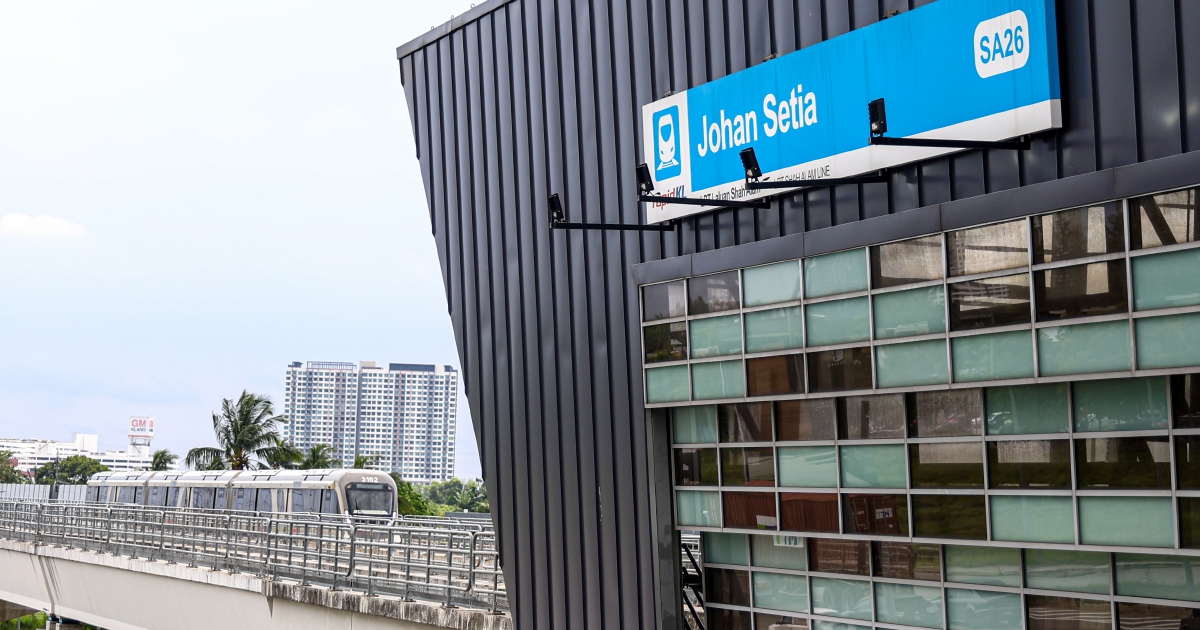
Prime Minister Anwar Ibrahim is set to officially launch the Light Rail Transit 3 (LRT3) Shah Alam Line tomorrow, marking the completion of a major transport infrastructure project that has been years in development. The line, stretching 37.8 kilometres between Bandar Utama and Johan Setia, has concluded its construction phase and stands ready to serve commuters across a densely populated corridor of Selangor.
The LRT3 Shah Alam Line represents a crucial addition to the Klang Valley's public transportation network, which has faced mounting pressure from rapid urbanisation and increasing vehicular congestion. The route traverses through several major residential and commercial hubs, positioning it as a key artery for daily commuter movements in the northwestern region of the federal territory and Selangor. By connecting Bandar Utama—itself a major residential and business district—with Johan Setia in the south, the line effectively bridges communities that previously lacked direct rail connectivity, a gap that has constrained both economic activity and quality of life for residents.
The completion of this project carries particular significance given the broader context of Malaysia's infrastructure development agenda. The LRT3 Shah Alam Line is not merely a single transit initiative but forms part of a wider ecosystem of rail developments intended to reduce reliance on private vehicles and alleviate chronic traffic congestion in the Klang Valley. As Malaysia's urban centres continue to expand, efficient public transport becomes increasingly essential for managing sustainable growth and maintaining livability in major metropolitan regions.
The timing of this launch also reflects the government's commitment to delivering long-standing infrastructure promises to the public. The project has undergone various phases and encountered typical construction challenges, but its finalisation demonstrates progress on commitments made to Selangor residents and businesses who have anticipated improved mobility options. For the Anwar Ibrahim administration, the inauguration serves as a tangible demonstration of delivering on development pledges at a time when public expectations for infrastructure advancement remain high.
From a regional perspective, the LRT3 Shah Alam Line contributes to the broader consolidation of Kuala Lumpur and Selangor as an integrated metropolitan region. The line's opening will enhance inter-connectivity between various parts of the Klang Valley, potentially encouraging transit-oriented development patterns where residential, commercial, and mixed-use projects cluster around stations. This transformation has significant implications for property values, business location decisions, and residential patterns across the northwestern Selangor corridor.
The 37.8-kilometre span encompasses diverse urban environments, from established commercial districts to developing residential areas and industrial zones. This diversity means the line will serve multiple user groups—office workers, students, shoppers, and manufacturing sector employees—creating a multi-faceted demand profile that may sustain healthy ridership levels. The line's ability to serve both peak-hour commuters and off-peak travellers enhances its economic viability and justifies its infrastructure investment.
Operational readiness represents another critical dimension of this inauguration. Beyond physical completion, the transition from a construction project to a functional transit system involves extensive testing of safety systems, staff training, scheduling optimisation, and integration with existing rapid transit networks. The fact that authorities have declared the line ready for passenger service indicates that these operational preparations have reached satisfactory standards, though early service periods typically involve refinement and adjustment as real-world usage patterns emerge.
For Malaysian policymakers and transit planners, the LRT3 Shah Alam Line offers valuable lessons applicable to other planned urban rail projects. Successfully executing a 37.8-kilometre project while maintaining construction timelines and serving adjacent communities provides insights into project management, stakeholder engagement, and infrastructure delivery that can inform future metropolitan transport initiatives. These lessons become particularly pertinent as Malaysia contemplates expanded rail networks in other major urban centres.
The environmental dimension also warrants consideration. By providing a high-capacity alternative to private vehicle transportation, the LRT3 Shah Alam Line contributes to reducing carbon emissions within the Klang Valley, aligning with Malaysia's commitments to environmental sustainability. As cities worldwide prioritise climate action and reduced air pollution, transit-oriented development supported by comprehensive rail networks represents a proven strategy for achieving these environmental objectives while maintaining economic vitality.
Economic implications extend beyond operational revenue to encompass broader catalysts for business development and employment creation. The line's opening is likely to stimulate property development around stations, generate construction-related employment during the development phase, and create ongoing operational jobs through transport services and associated commercial activities. For Selangor's economy, these multiplier effects contribute to sustained growth and diversification across the state's western corridor.
Commuter expectations and user experience will ultimately determine the line's long-term success and public acceptance. Early days of operation will reveal whether service frequency, reliability, cleanliness, and safety standards meet commuter expectations. Subsequent months will demonstrate whether the line achieves projected ridership targets and whether it genuinely reduces congestion on parallel road corridors. These performance metrics will influence both public perception and government investment decisions regarding future transit expansion projects.
The LRT3 Shah Alam Line inauguration thus transcends a simple ribbon-cutting ceremony. It represents the culmination of planning, engineering, and construction efforts; the realisation of transport aspirations for hundreds of thousands of potential users; and a strategic addition to Malaysia's urban transport infrastructure. As Prime Minister Anwar Ibrahim launches the line tomorrow, the moment also invites reflection on Malaysia's broader urban development trajectory and the critical role that integrated, efficient public transportation plays in shaping prosperous, liveable metropolitan regions for future generations.

