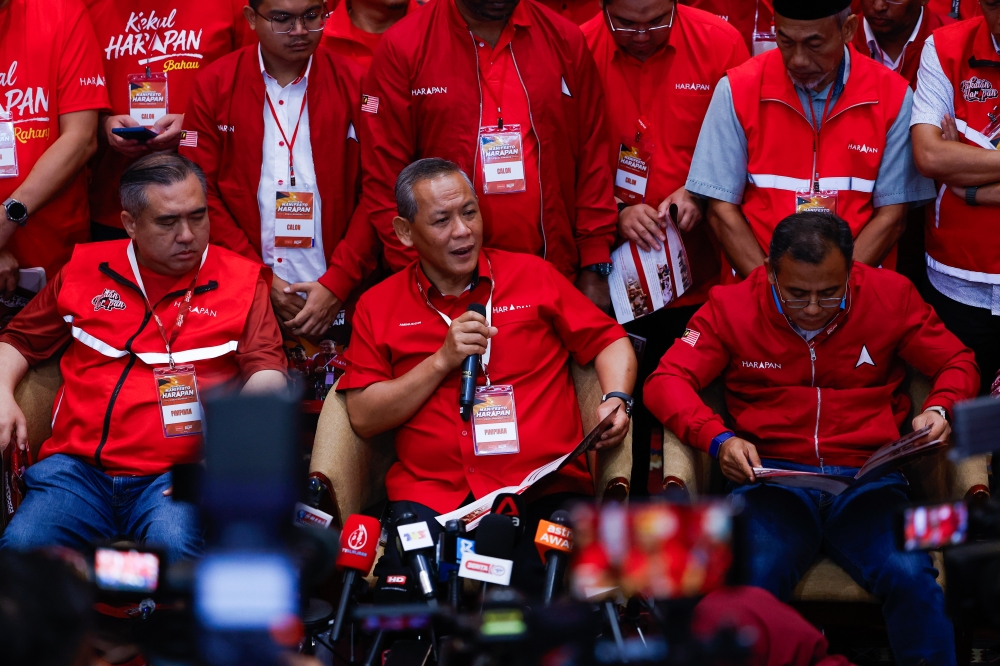
Prime Minister Datuk Seri Anwar Ibrahim will bolster Pakatan Harapan's campaign efforts in Negeri Sembilan by joining coalition activities scheduled for Wednesday, according to Selangor Menteri Besar Amiruddin Harun. The PH Chairman's participation underscores the coalition's determination to maintain momentum at the state level while consolidating support across the peninsula's various constituencies and demographic segments.
Amiruddin's announcement in Seremban signals a coordinated approach to grassroots engagement that extends beyond federal governance into regional political dynamics. Negeri Sembilan, while often overshadowed by its larger neighbours, represents a crucial battleground where shifting voter preferences can reshape parliamentary calculations. The state's mixed urban-rural character and its position as a swing territory make it strategically important for any coalition seeking to strengthen its overall representation.
Anwar's direct involvement in the campaign reflects Pakatan Harapan's strategic priority to deepen its organisational reach and renew voter engagement at the community level. For a coalition that has faced periodic internal tensions and the perpetual challenge of maintaining unity across multiple parties, visible leadership participation serves both symbolic and practical purposes. It demonstrates commitment to stakeholders while providing an opportunity to articulate the government's policy agenda through direct interaction with constituents.
The timing of this campaign thrust merits attention within the broader context of Malaysian politics. State-level political engagement has historically influenced federal balance, and Negeri Sembilan's electoral dynamics reflect trends observable across other states. The coalition's focus on sustained grassroots work suggests recognition that electoral support requires continuous cultivation rather than episodic effort during formal campaign periods. This reflects lessons learned from previous electoral cycles where complacency proved costly.
Negeri Sembilan's political landscape encompasses significant Malay-Muslim majority areas alongside substantial Chinese and Indian communities, creating a microcosm of Malaysia's broader demographic complexity. Pakatan Harapan's challenge involves maintaining cohesion across this diversity while articulating policies that resonate with different constituencies. The coalition's performance in such mixed-demography states often presages its performance nationally, making these campaigning efforts crucial indicators of broader political health.
The coalition's investment in state-level campaigns also reflects structural realities of Malaysian federalism. While the Prime Minister leads at federal level, state governments wield considerable influence over land policy, local development, education initiatives, and community programmes that directly affect daily lives. Demonstrating commitment through leadership presence at state campaigns communicates that Pakatan Harapan views state governance not as secondary but as integral to its overall mission.
Amiruddin's role as Selangor's Menteri Besar adds another dimension to this campaign initiative. Selangor, as Malaysia's most economically significant state, serves as a crucial power base within Pakatan Harapan's structure. The coordination between Selangor's leadership and federal party apparatus on campaigns in neighbouring states illustrates the interconnectedness of regional political ecosystems and the importance of cross-state solidarity within the coalition.
These campaign activities occur within a complex political environment where multiple parties compete for voter attention and the confidence of elected representatives. Malaysian politics have witnessed increasing volatility in recent years, with voters demonstrating willingness to shift allegiances when dissatisfied. Sustained engagement and visible leadership presence represent strategies to counteract such volatility through relationship-building and policy communication.
For Pakatan Harapan specifically, the imperative to maintain organisational vitality across all states remains paramount. The coalition's federal governance depends substantially on its ability to maintain or grow state-level presence, which in turn generates resources, personnel, and political leverage. Campaign activities like those planned for Negeri Sembilan serve practical purposes of membership mobilisation, volunteer coordination, and voter registration acceleration.
The broader significance of this campaign push extends to how Malaysian political coalitions manage sustainability. Unlike single-party systems where organisational continuity flows from hierarchical structures, multiparty coalitions require deliberate effort to maintain unity and shared purpose. Regular joint campaigning, coordinated messaging, and visible cooperation at multiple levels help reinforce the coalition's identity and collective commitment.
From a regional perspective, Pakatan Harapan's internal cohesion and electoral performance influence perceptions of political stability across Southeast Asia. Investors, regional partners, and international observers monitor Malaysian political developments as indicators of broader regional trends. The coalition's effectiveness in state-level engagement therefore carries implications beyond domestic politics, affecting perceptions of governance capacity and institutional stability.
Looking forward, these campaign efforts represent an ongoing investment in political infrastructure that will shape Malaysia's electoral landscape in coming years. The frequency and scale of such activities, combined with the calibre of leadership participation, reflect assessments about where political competition will be fiercest and where consolidation efforts offer the highest returns. For Negeri Sembilan constituents and the broader Malaysian electorate, such engagement provides opportunities for direct dialogue with national leadership about governance priorities and policy directions.

