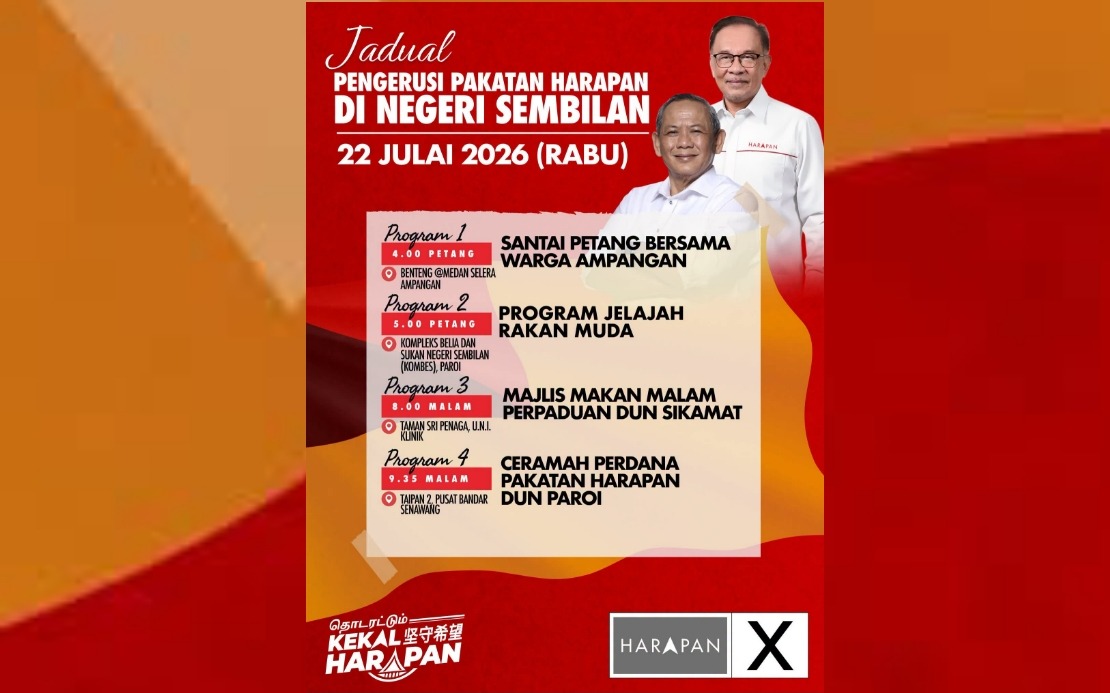
Prime Minister Datuk Seri Anwar Ibrahim is set to undertake a campaign tour across Negeri Sembilan tomorrow, attending multiple events in Seremban and Paroi as the state election race intensifies. The visit will be Anwar's inaugural appearance in the state since campaign activities officially began, underscoring the Pakatan Harapan coalition's focus on the 16th Negeri Sembilan State Election scheduled for August 1.
According to a statement posted on social media, Anwar will commence his itinerary at 4 pm and proceed through a series of engagements throughout the afternoon and evening. The packed schedule reflects the coalition's strategic push in what remains a competitive electoral battleground. As both Pakatan Harapan chairman and Parti Keadilan Rakyat president, Anwar's presence carries particular weight as the coalition seeks to maintain its electoral standing in the northern Selangor region.
The evening portion of his campaign tour will feature a Unity Dinner at Taman Sri Penaga in the Sikamat state legislative assembly constituency at 8 pm. This format of dinner events has become a staple of Malaysian political campaigning, allowing party leaders to connect with party members, supporters and community leaders in a more intimate setting than mass rallies. Such occasions typically feature speeches outlining party platforms, recognition of local activists, and reinforcement of coalition messaging ahead of polling day.
Following the Sikamat dinner, Anwar will transition to the Paroi constituency for what organisers are billing as a Pakatan Harapan Grand Rally at Taipan 2, Senawang Town Centre. Grand rallies represent the high-visibility centrepiece of campaign activities, designed to energise party machinery, attract media coverage and demonstrate organisational strength to voters. The Paroi event appears particularly significant given Anwar's direct participation, suggesting the coalition views this constituency as strategically important for overall election performance.
Negeri Sembilan represents a distinctive political landscape within Malaysia's electoral map. The state has traditionally been competitive, with various coalitions gaining ground in different cycles. Anwar's tour tomorrow reflects the national importance placed on this state election at the highest levels of the ruling coalition. The timing of his visit, occurring after campaign activities have been underway for some weeks, indicates a critical phase in the final push toward polling day.
The Election Commission has structured the electoral calendar to allow early voting on July 28, followed by general polling on August 1. This staged approach mirrors recent elections and provides flexibility for voters unable to participate on the primary polling date. The compressed campaign period means that key political figures must prioritise their appearances carefully, making Anwar's commitment of an entire day to Negeri Sembilan noteworthy in terms of resource allocation.
For Negeri Sembilan voters and observers, Anwar's tour offers an opportunity to gauge the coalition's campaign priorities and messaging in the final stretch. The choice of constituencies—Sikamat and Paroi—and the combination of formal dinner and rally events suggests a calculated approach to reach different voter segments. Sikamat, as a specific state assembly seat, may indicate particular competitive concerns, while the Paroi rally engages a broader township audience.
The coalition's investment in Anwar's personal campaign appearances reflects both confidence in his ability to mobilise support and recognition that state elections require dedicated attention despite concurrent national political dynamics. In Malaysian politics, prime ministerial campaign visits carry symbolic and practical significance, as they communicate centre-of-power backing for specific races and candidates.
For regional observers in Southeast Asia, this campaign activity illustrates how Malaysian politics continues to operate through intensive grassroots engagement and senior-level personal campaigning. Unlike some democracies where campaigns rely heavily on digital or media strategies, Malaysia's electoral process remains deeply dependent on direct politician-voter interaction and community-based mobilisation.
The Negeri Sembilan election will provide important data on voter sentiment concerning the Pakatan Harapan coalition's performance since the 2023 general election. State elections offer microcosms of broader political trends and serve as crucial indicators of coalition stability and public support levels. Tomorrow's campaign events will contribute to the narrative development that ultimately influences voter decision-making on August 1.

