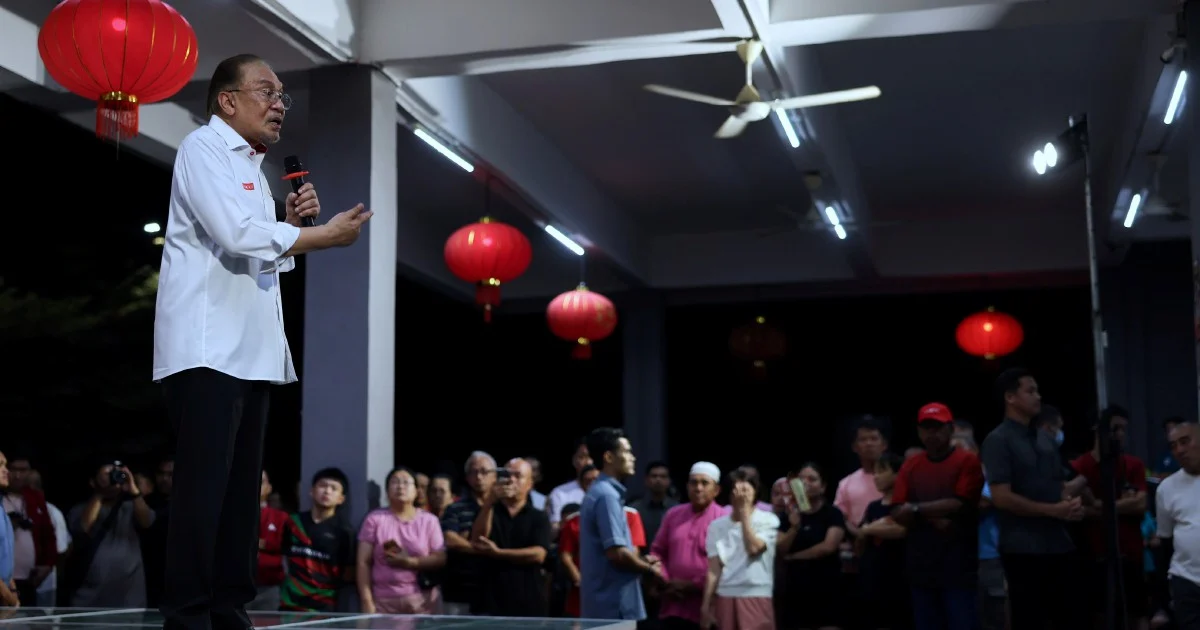
Prime Minister Datuk Seri Anwar Ibrahim has committed to placing Malaysia's durian crisis squarely on the diplomatic agenda during his forthcoming visit to China next month, signalling the government's determination to tackle a persistent market downturn that has hammered the nation's premium fruit sector. The decision to engage Chinese Premier Li Qiang directly on the matter underscores the economic weight of the issue, which extends beyond the agriculture ministry into broader bilateral trade relations.
The timing of Anwar's planned discussions in Beijing reflects mounting urgency in Malaysia's durian heartland, where farmers face an unprecedented squeeze from oversupply flooding domestic and regional markets simultaneously. The glut has triggered a sharp contraction in prices, stripping away the margin that makes durian cultivation profitable for smallholders and large-scale operators alike. By elevating the conversation to the highest political level, the government aims to explore tangible solutions rather than merely acknowledge the problem—a significant shift from previous approaches that relied primarily on domestic market management.
China represents Malaysia's most valuable export destination for premium agricultural products, and durian occupies a particularly strategic position within that trade relationship. Over recent years, Chinese consumer demand has transformed the fruit from a domestic delicacy into a high-value international commodity, with Malaysian varieties commanding premium prices in Shanghai, Beijing, and other major cities. However, the relationship also exposes Malaysian growers to the volatility of Chinese import patterns, consumer preferences, and regulatory barriers—all factors that have contributed to the current price collapse.
Anwar's approach of framing the durian challenge as a bilateral trade opportunity rather than a unilateral problem demonstrates nuanced diplomacy. Rather than requesting preferential treatment or tariff relief, engagement with Premier Li Qiang will likely explore mechanisms to stimulate import demand, streamline customs procedures, and potentially coordinate marketing initiatives that rebrand Malaysian durian in the Chinese market. Such discussions could yield practical outcomes including relaxed quarantine protocols, coordinated promotional campaigns, or facilitated access to new distribution channels.
The durian sector's vulnerability extends beyond price fluctuations to structural questions about production capacity and market diversification. Malaysia has substantially expanded cultivation across Johor, Pahang, and other major growing regions over the past decade, responding to explosive Chinese demand. This expansion proved economically rational when prices remained strong, but the current oversupply suggests that growers collectively misjudged either demand trajectory or production timing. The government's diplomatic engagement reflects an implicit acknowledgment that supply management alone cannot resolve the crisis.
For ordinary Malaysian farmers, the price collapse translates into devastating income losses. A durian that sold for premium prices months earlier now fetches a fraction of that value, eroding the viability of operations that require significant upfront investment in land preparation, tree maintenance, and harvesting infrastructure. Smallholders who financed expansion based on previous price trends now face pressure to liquidate assets or default on loans. This humanitarian dimension of the crisis, though less frequently discussed at high-level diplomatic forums, motivates government intervention.
China's receptiveness to Anwar's initiatives will depend partly on how Malaysian officials frame the proposal. Rather than appealing for Chinese generosity, the most persuasive argument emphasizes mutual benefit: increased Malaysian durian supply strengthens China's food security and offers Chinese consumers reliable access to a luxury product they increasingly desire. This reframing positions Malaysia as a reliable supplier advancing shared objectives rather than a distressed exporter seeking rescue.
The diplomatic engagement also carries broader implications for Malaysia's agricultural trade strategy in Southeast Asia and beyond. As regional competitors including Thailand and Vietnam expand their own durian production, Malaysia must secure and expand market share in high-value segments. Premium positioning in China depends partly on maintaining supply reliability and consistency—objectives that require both domestic policy support and international coordination to manage cyclical oversupply episodes.
Anwar's commitment to raise the issue reflects the political salience of rural concerns within Malaysian governance. Agricultural constituencies retain substantial influence despite urbanization, and visible government action on farmer hardship generates political credibility in constituencies critical to electoral support. The public pledge to engage Chinese leadership demonstrates responsiveness to grower concerns while signalling competence in navigating complex bilateral trade relations.
The outcome of discussions with Premier Li Qiang remains uncertain, but the willingness to elevate durian pricing to state-level diplomacy represents a significant acknowledgment of the crisis's severity and economic importance. Whether such engagement yields concrete mechanisms to absorb excess supply or merely establishes frameworks for future cooperation will substantially shape the sector's recovery trajectory. For Malaysian durian growers meanwhile, the diplomatic initiative offers hope that government mobilization might eventually stabilize markets and restore profitability to farms currently operating at unsustainable margins.

