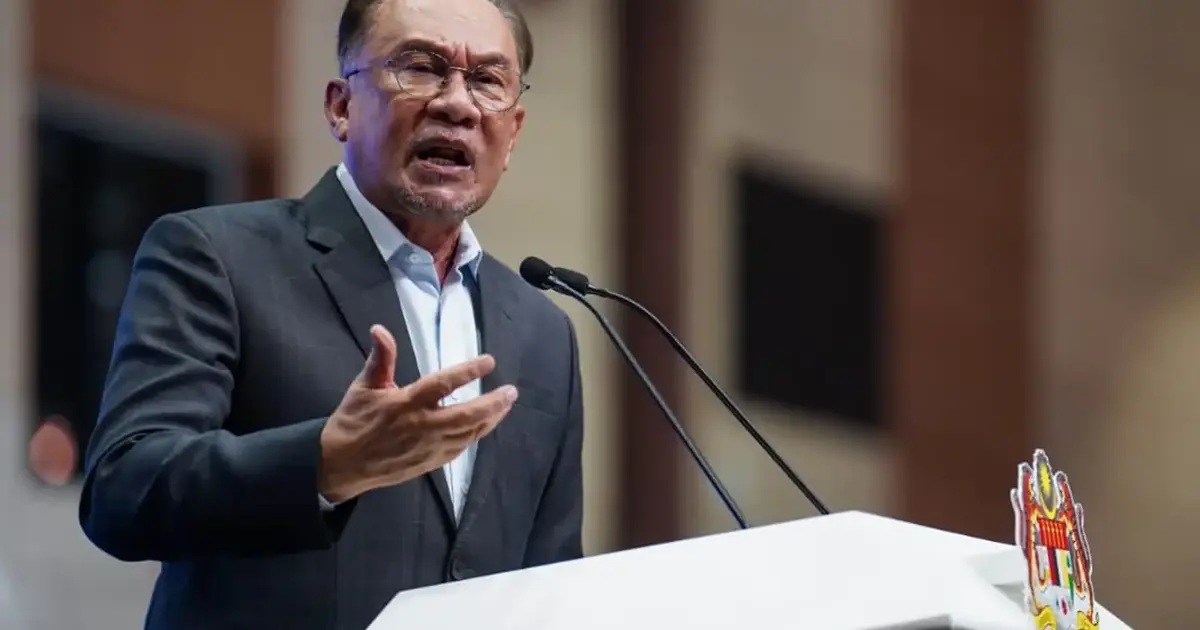
Khairy Jamaluddin, the outspoken former Umno Youth chief, has offered Prime Minister Anwar Ibrahim a candid assessment of his political trajectory, suggesting that Malaysia's leader still possesses viable options to rehabilitate his standing with the electorate despite mounting pressure from competing factions within the governing coalition.
The veteran politician's intervention comes at a moment when Anwar's administration faces persistent criticism from multiple quarters—parliamentary opponents questioning economic management, coalition partners manoeuvring for advantage, and sections of the public expressing disenchantment with the pace and substance of promised transformations. Khairy's framing presents two divergent pathways, each carrying distinct consequences for Anwar's political future and his capacity to govern effectively until the next general election.
The first option—prioritising substantive reform implementation—would require Anwar to redouble efforts on the anti-corruption infrastructure, judicial independence, and institutional accountability measures that formed cornerstones of his opposition rhetoric. This approach demands visible, measurable progress on initiatives that directly affect citizen experience: civil service efficiency, procurement transparency, and curbing rent-seeking by politically connected actors. The challenge lies in execution speed and demonstrating tangible results before public patience exhausts itself, particularly among younger voters who powered the watershed 2022 election outcome.
Implementing such reforms while managing a fractious coalition government tests any leader's political capital. The diverse interests within Pakatan Harapan, coupled with component parties that extract concessions on key decisions, create friction points where comprehensive reform agendas collide with factional demands. Anwar must navigate between satisfying reform expectations and maintaining the delicate coalition equilibrium—a balancing act that explains why supporters perceive reform momentum as slower than anticipated.
The alternative pathway—leveraging prime ministerial authority to consolidate political position—carries different trade-offs. This approach emphasises maximising control over state apparatus, managing media narratives, disciplining potential challengers within his own coalition, and neutralising opposition through legislative majorities and administrative leverage. While this strategy offers short-term stability and shields against parliamentary embarrassment, it risks reinforcing the very perceptions of power-consolidation that animated public disaffection with previous administrations.
Khairy's intervention proves significant because he represents a faction within Umno that occasionally aligns with governance concerns rather than reflexive partisan opposition. His observation implicitly acknowledges that Anwar's difficulties stem less from inherent incapacity and more from competing pressures requiring deliberate strategic choices. By framing this as a decision rather than an inevitable trajectory, Khairy creates space for Anwar to recalibrate approach without admitting failure.
For Malaysian observers and regional analysts, this dynamic illuminates broader questions about post-authoritarian transition in Southeast Asia. New coalitions attempting to reverse institutional atrophy face genuine tension between reform requirements and political survival imperatives. The longer governments postpone visible reform, the more constituencies abandon patience and gravitate toward alternative political movements. Yet rushing reforms without securing procedural safeguards risks implementation failures that delegitimise reform projects entirely.
Anwar's particular vulnerability stems from his origin narrative. He entered office as symbol of democratic renewal and institutional correction, carrying expectations that reform would proceed swiftly and comprehensively. Coalition governance immediately constrained this promise, yet public memory of pre-election positioning remains vivid. Merely governing conventionally—distributing patronage, balancing competing interests, maintaining stability—falls short of the transformative mandate many believed they endorsed.
The economic dimension compounds these tensions. Rising living costs, persistent unemployment among graduates, and stagnant wage growth create public mood resistant to arguments that reform requires patience. Voters experiencing immediate financial stress prioritise visible improvements over long-term institutional correction. This mismatch between reform timescales and economic urgency generates frustration that opposition parties skillfully exploit through simplified messaging and promises of faster relief.
Khairy's characterisation also reflects subtle repositioning within Umno itself. As that party contemplates its role in post-Muhyiddin coalition arrangements, figures like Khairy offer conditional engagement rather than blanket obstruction. This posture allows Umno to appear willing to cooperate if Anwar demonstrates commitment to governing competently, while preserving option to switch positioning if political winds shift. It is simultaneously supportive nudge and implicit warning that Umno's patience carries limits.
For Southeast Asian context, Anwar's predicament echoes challenges facing reform-oriented governments across the region. Thailand's political cycles, Indonesia's coalition management difficulties, and Philippines governance tensions all reflect similar dynamics where new administrations inherit institutional debilitation and face pressure to deliver rapid improvements while managing complex political constraints. Malaysia's case proves instructive because its institutional infrastructure remains more developed than some neighbours, yet even these comparative advantages fail to resolve the fundamental tension between transformation and coalition stability.
Moving forward, Anwar's strategic calculus will likely determine not merely his personal political trajectory but also Malaysian capacity to advance institutional improvement and democratic consolidation. Khairy's observation, while seemingly offering generous interpretation, simultaneously reminds that continued postponement of genuine reform will exhaust remaining goodwill and accelerate public disengagement from democratic processes—an outcome disadvantageous for long-term stability regardless of which coalition occupies government.

