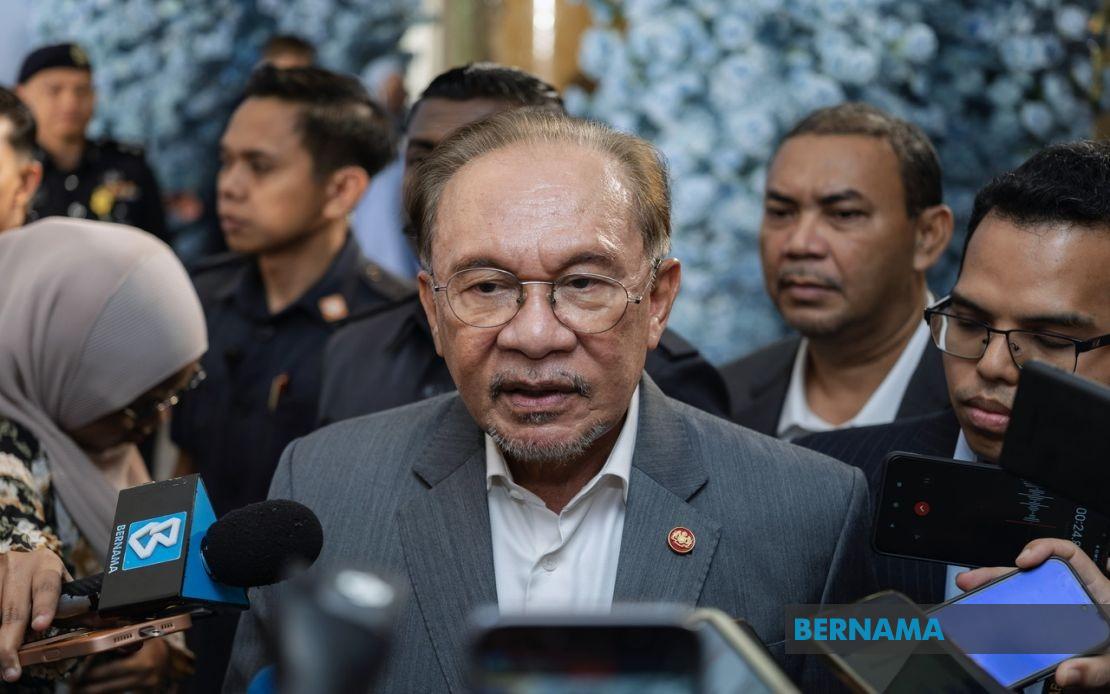
Prime Minister Datuk Seri Anwar Ibrahim confirmed on Tuesday that he has not yet been fully briefed on the circumstances that led four Melaka DAP state assemblymen to withdraw from the state government, though he indicated that Pakatan Harapan's senior leadership would soon review the matter and determine an appropriate response. Speaking to the media in Kuala Lumpur, the Prime Minister, who simultaneously serves as PH coalition chairman, acknowledged that internal party discussions were ongoing but declined to provide specifics about the timeline or nature of the anticipated follow-up actions.
The withdrawal occurred on Monday when the four representatives—Allex Seah Shoo Chin from Kesidang, Low Chee Leong from Kota Laksamana, Leng Chau Yen from Banda Hilir, and Kerk Chee Yee from Ayer Keroh—announced their immediate departure from the state administration. Their exit came in direct response to the Melaka State Legislative Assembly's passage of constitutional amendments that would permit the appointment of nominated assemblymen, a mechanism that critics have argued could undermine the democratic process and strengthen the hand of the ruling coalition.
The constitutional amendments represent a significant shift in Melaka's governance structure, introducing what observers describe as an alternative pathway to legislative representation that bypasses the electoral process entirely. This development carries implications beyond the state level, potentially signalling how PH-led administrations might adapt their governance models when facing parliamentary arithmetic challenges. The creation of nominated seats essentially allows parties to augment their representation without requiring additional electoral victories, a practice that has generated considerable controversy in Malaysian politics regarding democratic accountability and the integrity of representative institutions.
The DAP representatives' decision to withdraw signals fractures within the coalition's unity on this issue, suggesting that not all component parties agreed with the constitutional modifications or their implications for state governance. Their departure leaves the Melaka government with fewer assemblymen representing the urban-based Democratic Action Party, which has traditionally served as a crucial urban constituency voice within the broader Pakatan Harapan framework. This development may complicate PH's ability to maintain effective governance in Melaka and raises questions about the coalition's internal decision-making processes on significant constitutional matters.
Just hours before the assemblymen's announcement, Anwar had publicly appealed to the Melaka DAP leadership to reconsider their withdrawal plans, urging them to prioritise development initiatives and public welfare over internal partisan disputes. His appeal sought to emphasise the importance of stability and continuity in state administration, particularly given that Melaka has been managed by PH governments following electoral victories that reflected public preference for the coalition's development agenda. The Prime Minister's intervention underscored the federal leadership's concern about the political fallout from the state-level crisis.
The lack of a detailed briefing reaching the Prime Minister's office by mid-week is notable given the scale of the controversy and the media attention surrounding the constitutional amendments. This gap in communication suggests either that state-level party structures operated with considerable autonomy on the matter, or that federal leadership chose to allow state-level actors initial space to resolve the dispute independently. The absence of advance coordination or consultation with federal leadership on such consequential constitutional changes raises broader questions about how PH manages decision-making across its various state governments and whether sufficient mechanisms exist for pre-vetting major policy decisions.
The Melaka situation exemplifies the ongoing tensions within Malaysia's coalition-based political system, where multiple parties with distinct organisational cultures and policy preferences must govern jointly. The DAP, with its traditionally more progressive stance on democratic procedures and electoral transparency, may view appointed assemblymen as fundamentally incompatible with democratic principles, whereas other coalition partners might view such mechanisms as pragmatic responses to legislative mathematics. These philosophical differences can create governance challenges when constitutional amendments are considered without achieving prior consensus among coalition members.
From a broader Southeast Asian perspective, this episode reflects patterns seen across the region where coalition governments navigate the challenge of maintaining unity while accommodating diverse party interests and constituencies. Malaysia's experience with multi-party coalition governance at both federal and state levels offers instructive lessons about the institutional mechanisms required to prevent such conflicts from destabilising administrations. The resolution of the Melaka situation will likely influence how future PH governments approach significant constitutional or legislative changes affecting coalition governance arrangements.
Pakatan Harapan's leadership has indicated that follow-up action would materialise soon, though the coalition has not specified whether this would involve efforts to persuade the departing assemblymen to reverse their decision, accept the constitutional amendments while remaining in government, or negotiate alternative arrangements. The coalition's response will carry symbolic importance beyond Melaka, potentially setting precedents for how PH manages similar disputes in other state governments where it holds power. The decision on whether to prioritise coalition unity or accommodate the dissenting party's concerns will reflect the federation's evolving political culture regarding democratic governance and constitutional reforms.
The timing of these developments, occurring during a period when the federal government under Anwar's leadership has emphasised reform and institutional strengthening, creates additional scrutiny around how such reforms should be implemented. The PM's previous advocacy for institutional renewal and democratic accountability adds complexity to his position regarding state-level amendments that appear to expand executive discretion in appointing legislative representatives. How this contradiction resolves may reveal whether federal PH leadership views the Melaka amendments as a necessary adaptation to political realities or as inconsistent with the federation's broader reform agenda.
The forthcoming briefing and PH leadership's response will provide clarity on several fronts: whether the coalition views the constitutional amendments as individually party decisions or coalition matters requiring collective approval; whether the federal leadership will support reversing the amendments; and how the coalition will manage future disagreements among component parties on governance issues. These answers will substantially influence the stability of PH's state administrations and the coalition's cohesion heading into future electoral cycles. The Melaka crisis, though appearing localised, carries weight for how Malaysian coalition politics will evolve in the coming years.

