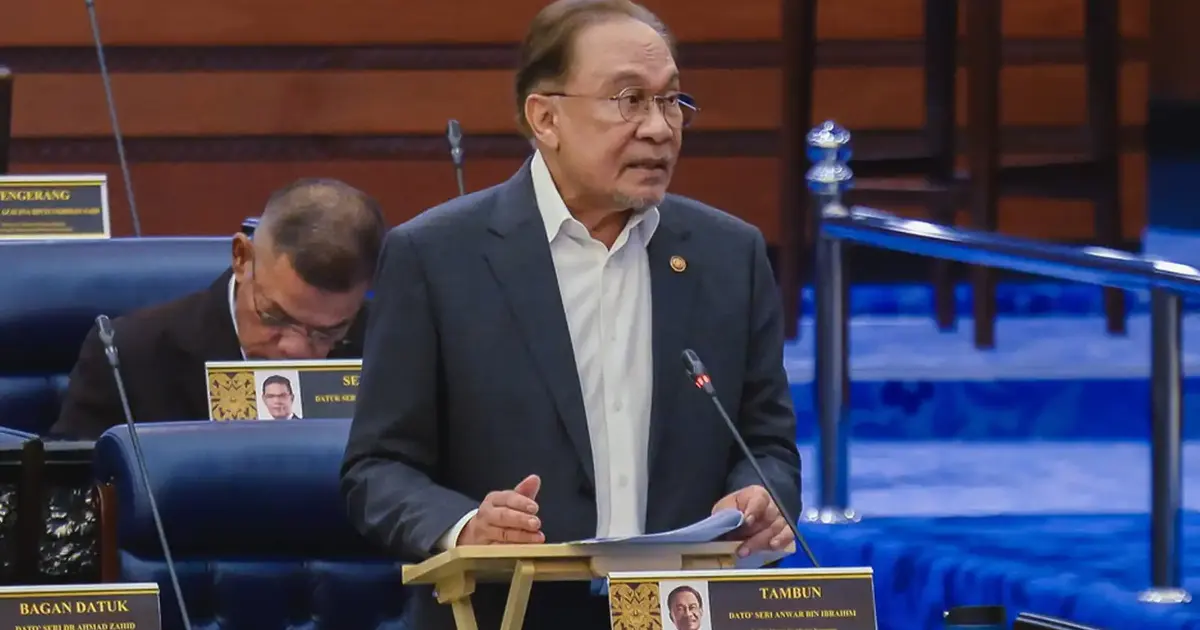
Prime Minister Anwar Ibrahim has drawn a distinct line in federal-state financial relations, declaring that Putrajaya will not automatically assume the burden of cost escalations or miscalculations emerging from decisions made by state administrations. The statement represents a significant shift in approach to intergovernmental fiscal management, establishing what appears to be a more stringent framework for how the centre handles state requests for additional money.
Anwar's position addresses a persistent challenge in Malaysian governance: the tendency for state projects to exceed initial budgets, with state governments subsequently seeking federal bailouts or supplementary allocations to cover shortfalls. By signalling upfront that such requests will not be entertained without comprehensive renegotiation, the prime minister is attempting to enforce greater fiscal accountability at the state level. This approach carries implications for how state governments plan and execute their development initiatives going forward.
The Prime Minister's remarks underscore a broader philosophy of fiscal responsibility that his administration has been progressively implementing since taking office. Rather than permitting states to treat the federal purse as a safety net for financial mismanagement, the government appears committed to establishing clearer boundaries around what Putrajaya will and will not fund. This reflects a recognition that unchecked expenditure at the state level, ultimately underwritten by federal resources, creates systemic inefficiencies within the national budget framework.
When state governments seek additional federal allocations or loans to address project cost overruns, Anwar indicated that any such requests would require substantial renegotiation of the original terms. This signals that states cannot simply present mounting bills to the federal government and expect automatic approval. Instead, the entire project framework would need to be revisited, potentially forcing states to either absorb costs themselves, restructure projects, or accept significantly altered terms and conditions. The practical effect is to create friction in the approval process, which in theory should encourage more disciplined planning at inception.
The emphasis on renegotiation rather than simple extension of funds suggests the federal government will demand concessions or explanations before committing additional resources. States may find themselves having to justify cost increases, provide detailed audits of where money was spent, or accept reduced scope for their projects. This represents a departure from historical patterns where federal resources have sometimes flowed relatively freely to state initiatives, particularly those involving infrastructure development or political priorities favoured by the ruling administration.
For Malaysian readers, this development carries several implications. The stricter stance may slow the pace of state-level project completion in the near term, as administrations that have grown accustomed to federal support recalibrate their expectations and approach to project management. States with weaker internal revenue bases will face particular pressure, potentially widening disparities between wealthier and poorer states in their ability to fund development without federal assistance. The policy therefore has distributional consequences that deserve scrutiny beyond its surface appeal of financial discipline.
Anwar's declaration also reflects pressure from Malaysia's fiscal situation. With national debt at elevated levels and competing demands for federal resources, the government has limited room to absorb state-level cost overruns without compromising its own budgetary objectives or its capacity to invest in national priorities. By establishing that states must bear responsibility for their financial decisions, the federal government protects its own budget flexibility and reduces the risk of unforeseen liabilities. This is essentially a form of fiscal risk management at the macro level.
From a Southeast Asian perspective, Malaysia's experience illustrates the enduring tension between federal governments and constituent states or provinces regarding financial responsibility. Other regional nations grapple with similar questions about whether central governments should cushion regional administrations from the consequences of poor planning or inefficient execution. Anwar's clear answer to this question positions Malaysia within a particular framework of federalism emphasizing subsidiary responsibility and local accountability.
The practical implementation of this policy will be revealing. State governments will undoubtedly test the boundaries of the Prime Minister's position, submitting requests for additional funds while framing them in ways that might escape the renegotiation requirement. Whether Anwar's administration holds firm or gradually accommodates requests will determine the policy's actual impact. Past Malaysian experience suggests that political considerations sometimes override fiscal principles, particularly in states governed by parties aligned with the federal government.
Stategovernments dependent on federal transfers for revenue will need to adjust their budgeting processes accordingly. This likely means more conservative initial cost estimates, greater contingency reserves within state budgets, or more selective approach to which projects proceed. More sophisticated state administrations may also invest in improved project management and cost-control mechanisms to avoid the situation where they must approach Putrajaya requesting bailouts. The policy therefore creates incentives for better governance at the state level, though whether these incentives translate into actual behavioural change remains uncertain.
Looking forward, Anwar's stance represents a potential recalibration of federal-state fiscal relations that could reshape how development initiatives are pursued across Malaysia. The implications extend beyond mere accounting practices, touching on questions of state autonomy, regional equity, and the division of responsibility within Malaysia's federal structure. Whether this approach proves sustainable and equitable will likely become a significant issue in coming years as states confront the practical consequences of tighter federal boundaries on discretionary spending.

