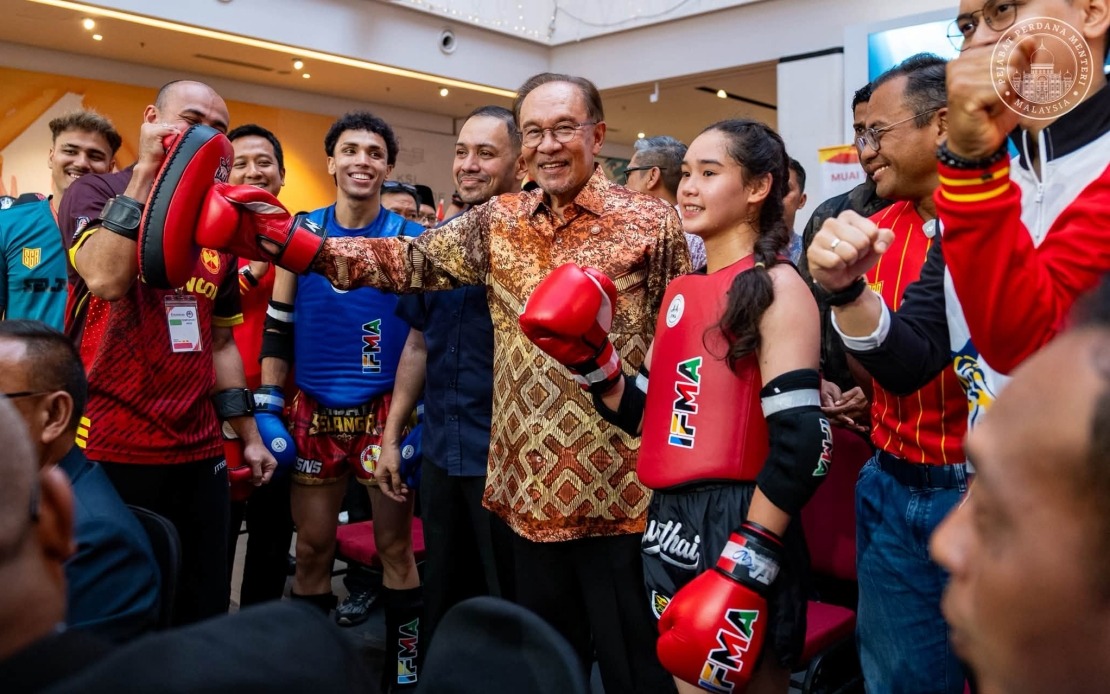
Prime Minister Datuk Seri Anwar Ibrahim has expressed optimism about Malaysia's sporting future after witnessing the calibre of young athletes competing in the ongoing 2026 Selangor Malaysia Games. Speaking through social media on Tuesday evening, Anwar conveyed his admiration for the dedication displayed by competitors and indicated confidence that many will eventually achieve success representing Malaysia internationally. The Prime Minister's remarks come as the biennial sporting extravaganza enters its final days in the nation's most populous state.
Anwar's observations were grounded in direct engagement with the athletes. The Premier took the opportunity to interact with several young competitors and observe Muay Thai competitions firsthand, allowing him to assess their technical proficiency and mental resilience. His comments specifically highlighted three qualities that impressed him: the competitive spirit evident among the young contingents, the disciplined approach they have adopted toward their training and competition, and the personal courage displayed when facing increasingly stiff competition from rivals across the nation.
The 2026 edition holds particular significance for Selangor, which is hosting these games for only the second time in nearly three decades. The previous occasion was in 1998, meaning this represents a watershed moment for sports development infrastructure and athlete cultivation in the state. The sheer scale of the competition underscores the depth of Malaysian sporting talent emerging from grassroots programmes. More than 5,000 young athletes have converged on Selangor venues to compete across 37 different sports disciplines, with the opportunity to capture medals from a total of 468 gold medal events. The competition runs through to August 24, giving organisers and observers ample time to identify emerging talent pools.
For Malaysia, these games serve a function beyond mere entertainment or state pride. SUKMA has long functioned as a crucial talent identification and development pipeline, particularly for athletes who may not yet have achieved the maturity or consistency required for senior national teams. The exposure young competitors gain through this platform—competing against similarly aged rivals from every state and federal territory—provides invaluable experience that shapes career trajectories. Many athletes who have gone on to represent Malaysia at Commonwealth Games, Asian Games, and Olympic competitions have earlier participated in SUKMA at various stages of their development.
The Prime Minister's specific mention of Muay Thai reflects a particular interest in this discipline, which has seen growing participation and development across Southeast Asia. Thailand's long-established dominance in the sport has traditionally set the benchmark for regional competitors, yet Malaysia has been investing in technical development and coaching infrastructure to improve competitiveness. Young Malaysian Muay Thai athletes gaining exposure and recognition at the highest domestic level creates pathways toward regional championships and eventually international recognition.
Anwar's comments must be understood within the broader context of Malaysian government investment in sports development. Over the past several years, there has been renewed commitment to identifying and nurturing young talent through systematic programmes, improved coaching standards, and better access to training facilities. The SUKMA platform represents one of the tangible manifestations of this policy direction, providing young athletes with competitive opportunities that were less readily available in previous generations. The emphasis on developing future international representatives aligns with Malaysia's stated sporting ambitions across various disciplines and competitive levels.
The timing of the Prime Minister's remarks also carries political weight. By publicly endorsing the efforts of young athletes and expressing confidence in their future potential, Anwar reinforces the government's commitment to youth development and national sporting ambitions. This messaging resonates particularly within Selangor, where the state government and federal administration work in concert to organise major sporting events. The positive engagement between political leadership and grassroots sporting development sends signals about resource allocation and policy priorities to state governments and sports administrators nationwide.
Beyond the immediate context of these games, Anwar's observations point to a broader strategic consideration regarding Malaysia's competitive positioning in regional sports. Southeast Asian neighbours, particularly Thailand, Indonesia, and Vietnam, have made significant investments in youth sporting programmes and talent development systems. Malaysia's ability to identify, develop, and promote young athletes through platforms like SUKMA directly influences the nation's capacity to compete effectively at regional and international levels in coming years. The athletes Anwar encountered represent the generation that will carry Malaysia's sporting hopes through the 2030s and beyond.
The Prime Minister's hope that these young athletes will eventually represent Malaysia on international stages reflects an understanding that domestic success must translate into global competitiveness. Not every athlete competing in SUKMA will achieve international representation, but the cumulative effect of nurturing thousands of young competitors creates a larger talent pool from which national teams can be selected and developed. This pipeline approach has proven effective in other nations and represents a logical investment strategy for Malaysian sports governance.
Looking forward, the momentum generated by SUKMA 2026 presents an opportunity to crystallise the Prime Minister's aspirations into concrete outcomes. Sustained investment in coaching, facilities, and competitive opportunities for athletes identified through these games will be essential to translating potential into achievement. The enthusiasm and discipline Anwar observed among current competitors can be channelled into systematic development programmes that maximise their chances of international success. For Malaysia's sporting ambitions to advance significantly, the recognition of talent must be paired with sustained institutional support and resources.

