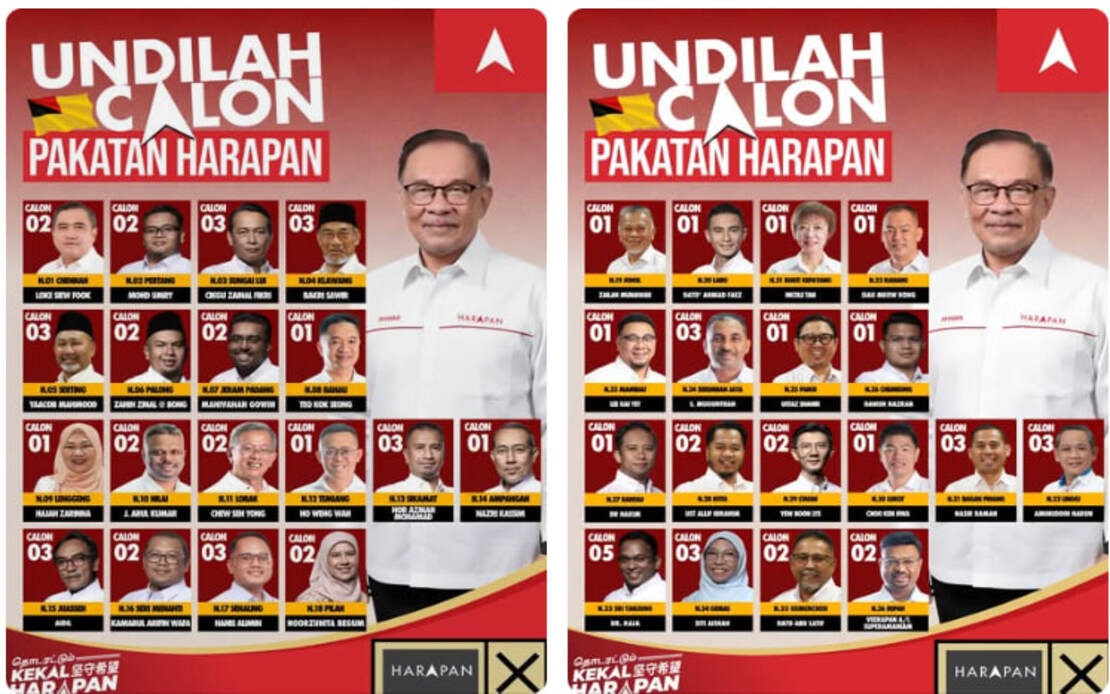
Prime Minister Datuk Seri Anwar Ibrahim, leading Pakatan Harapan, has made a direct appeal to the electorate of Negeri Sembilan to increase the coalition's political strength in the upcoming state assembly election. In a Facebook statement, Anwar stressed that securing a reinforced electoral mandate would enable the continuation of administration grounded in transparency and integrity under the current Menteri Besar, Datuk Seri Aminuddin Harun. The timing of this appeal comes as the state prepares for what is shaping up to be a competitive electoral contest, with nomination proceedings having concluded and the formal campaign period underway.
Anwar's emphasis on continuity reflects the broader strategic narrative that PH intends to advance during the campaign. According to the Prime Minister, developmental initiatives launched following the 2018 political realignment remain incomplete, and voters need to understand that uninterrupted governance is essential to deliver tangible benefits to all residents of the state. This framing positions the election not merely as a routine electoral exercise but as a referendum on the direction of state administration and the completion of an ongoing reform agenda.
The Election Commission announced that 103 candidates representing various political parties have formally registered to contest the 36 available State Legislative Assembly seats. This configuration presents a complex political landscape where no single party commands overwhelming numerical advantage. PH has fielded the maximum possible complement of 36 candidates, effectively contesting every single seat and signalling its confidence and commitment to maximum territorial coverage throughout the state.
Barisan Nasional, the traditional governing force in Malaysian politics, has put forward 25 candidates, maintaining a significant presence but ceding ground to both PH's aggressive candidacy and the challenge posed by other competitors. Parti Pribumi Bersatu Malaysia, which has seen internal divisions affect its political trajectory at the national level, has entered the fray with 24 candidates, indicating it remains a force in state-level politics despite recent turbulence. Perikatan Nasional has nominated 11 candidates, representing the combined strength of multiple opposition-aligned parties seeking to carve out electoral space.
Smaller political entities have also seized the opportunity to contest. Berjasa, ASLI, and PSM each fielded one candidate, reflecting the diverse spectrum of political expression available to Negeri Sembilan voters. Additionally, four independent candidates have registered, suggesting that localized political concerns and individual personalities continue to play a role in state electoral dynamics. This fragmented candidacy pattern could significantly influence outcomes, particularly in marginal constituencies where vote splitting might prove decisive.
Aminuddin Harun, the incumbent Menteri Besar who has helmed state administration since the political transition of 2018, stands for re-election in the Linggi state seat. His electoral fate will serve as a bellwether for PH's broader performance in the state. The choice of Aminuddin as the focal point of PH's state campaign underscores the coalition's reliance on an established, continuity-focused messaging strategy rather than an agenda of transformative change.
The Negeri Sembilan state assembly was formally dissolved on June 5, initiating the constitutional countdown to election day. The Election Commission has designated August 1 as the polling date, providing a compressed campaign window for candidates and parties to mobilize support. Early voting arrangements, scheduled for July 28, will facilitate participation among those unable to vote on the main polling day, potentially expanding the overall turnout base.
For Malaysian political observers, the Negeri Sembilan election carries significance beyond its local importance. As one of the few remaining state-level contests available for interim assessment of voter sentiment, the outcome will provide indicators of PH's electoral health and the appetite among constituencies for political change or continuity. The result may also influence calculations regarding the timing and feasibility of other pending state elections, particularly as the federal government charts its course toward potential general elections in 2025.
Regionally, the Negeri Sembilan contest reflects broader Southeast Asian patterns where coalitional politics and multi-party competition have become increasingly complex. The proliferation of candidates and the fragmented nature of party representation mirror dynamics seen across the region, where traditional two-bloc political frameworks have given way to more intricate competitive environments requiring sophisticated coalition management.
Anwar's invocation of religious language in his appeal, placing trust in Allah, reflects the integration of spiritual and political discourse common in Malaysian politics. This rhetorical approach resonates with the predominantly Muslim population while maintaining the pluralistic framework that PH has endeavored to project since its electoral breakthrough in 2018.
The implications of the Negeri Sembilan election extend to the broader question of whether PH can sustain and strengthen its political position at the state level while managing the complexities of federal governance. A decisive PH victory would reinforce Anwar's authority within the coalition and provide momentum heading into potential general elections. Conversely, a diminished mandate or setback would raise questions about voter appetite for the current federal administration's policies and performance.
As the campaign intensifies, parties will compete not only on organizational capacity and candidate quality but also on their ability to connect with voters' concerns regarding economic opportunities, public services, and governance standards. The outcome will ultimately reflect how Negeri Sembilan residents assess the past and envisage the future direction of their state.

