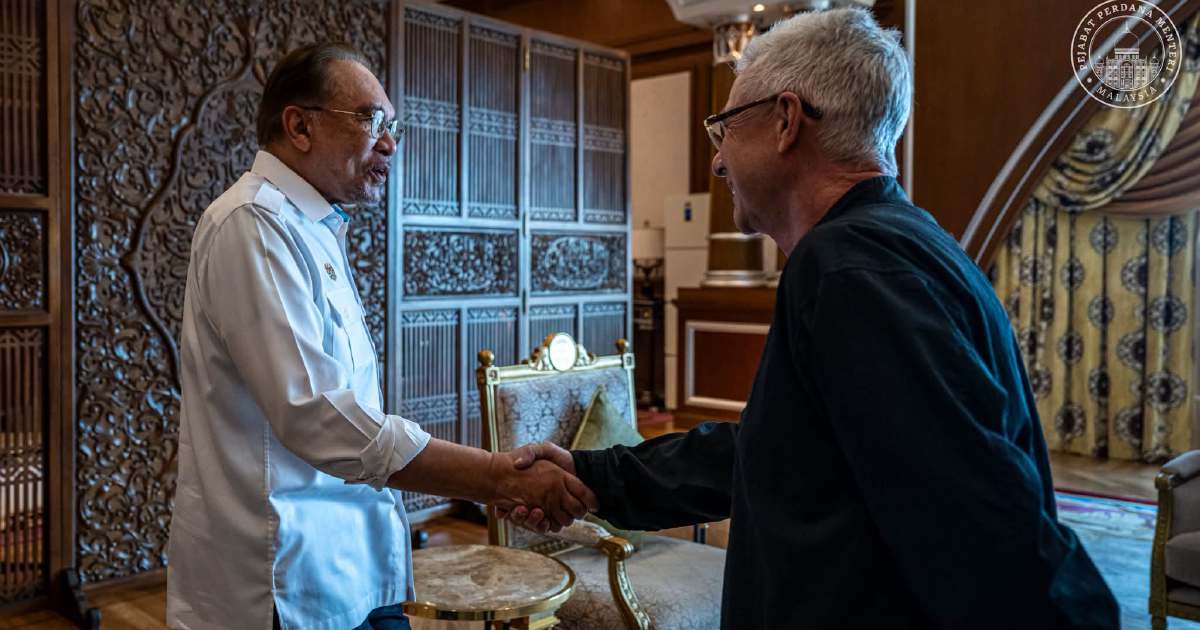
Prime Minister Datuk Seri Anwar Ibrahim has held discussions with Michael Roche, the executive director overseeing the Singapore Grand Prix, as Malaysia gears up to welcome one of motorsport's most prestigious races to the Sepang International Circuit in October. The meeting underscores Kuala Lumpur's commitment to drawing lessons from a neighbouring Formula 1 venue that has established itself as a benchmark for professional event management and operational excellence in Southeast Asia.
The timing of this engagement carries particular significance for Malaysia's motorsport ambitions. The Formula 1 Gulf Air Bahrain Grand Prix represents a major international occasion that will place the spotlight on the country's infrastructure, hospitality capabilities, and technical readiness. Singapore's decade-long track record as a Formula 1 host makes it an invaluable reference point; the island nation's event has consistently attracted global audiences and generated substantial economic spinoffs through tourism and media coverage.
Michael Roche's role as executive director positions him as a custodian of operational know-how accumulated through managing one of Asia's marquee sporting events. The Singapore Grand Prix distinguished itself by pioneering the nocturnal street circuit format in Formula 1, a demanding logistical undertaking that required meticulous coordination between race organisers, government agencies, and private stakeholders. These accumulated experiences represent intellectual capital that can inform how Malaysia approaches its own hosting responsibilities.
For Malaysia, the convergence of sporting ambition and economic development has become increasingly central to the national agenda. The Sepang International Circuit, located in Selangor, has evolved from a predominantly domestic racing venue into a facility aspiring to international prominence. The upcoming Bahrain Grand Prix—branded under the Gulf Air sponsorship—represents a deliberate step toward establishing Malaysia as a serious contender within the regional motorsport ecosystem. This requires not merely hosting the event, but executing it with operational finesse that reflects favourably on national capabilities.
The knowledge exchange between Anwar's office and Singapore's F1 leadership extends beyond ceremonial diplomacy. Practical considerations include crowd management protocols, emergency response coordination, broadcast logistics, and stakeholder engagement strategies. Singapore's experience navigating the complex interface between street racing and urban operations offers concrete lessons applicable to Malaysia's approach. Furthermore, the financial sustainability of major sporting events—a perennial concern for host nations—represents terrain where Singapore has demonstrated proven competency.
Regional competition for high-profile sporting events has intensified substantially across Southeast Asia. Thailand, Indonesia, and Vietnam have all pursued Formula 1 and other marquee motorsport opportunities in recent years. This competitive landscape elevates the stakes for Malaysia to execute its hosting duties with distinction. Anwar's engagement with Roche reflects an understanding that excellence in event delivery translates into tangible advantages: enhanced tourism figures, positive international media portrayal, and strengthened positioning within the global sporting calendar.
The consultation also addresses technical and regulatory dimensions. Formula 1 operations involve stringent international standards overseen by the Fédération Internationale de l'Automobile (FIA). Coordinating with an experienced executive director helps Malaysian planners navigate these requirements efficiently. The sport demands specialised infrastructure—from paddock facilities to media centres to spectator accommodation—all calibrated to international specifications. Singapore's institutional knowledge regarding these technical prerequisites proves invaluable for Malaysian counterparts preparing similar infrastructure.
Anwar's personal involvement in the discussion signals high-level political commitment to the event's success. In Malaysia's governance structure, such meetings typically indicate that relevant ministers, government agencies, and private sector participants will follow through with aligned execution strategies. The Prime Minister's engagement creates institutional momentum that can facilitate smoother coordination between the Sepang International Circuit management, state and federal authorities, and corporate sponsors.
Sustainability considerations increasingly shape how major sporting events are evaluated internationally. Singapore's Grand Prix has progressively incorporated environmental measures and community engagement initiatives. These aspects resonate with contemporary expectations regarding responsible event hosting. Anwar's consultation likely extends to understanding how Singapore balances the intensive resource demands of Formula 1 with broader sustainability commitments—a balance increasingly scrutinised by international observers and local stakeholders.
The October Formula 1 Gulf Air Bahrain Grand Prix represents more than a single weekend's motorsport spectacle. For Malaysia, successful execution strengthens the country's credentials as a capable host of major international events, potentially opening doors for future sporting occasions and associated economic opportunities. Anwar's outreach to Singapore demonstrates pragmatic recognition that excellence in event management draws substantially from learning established benchmarks and adapting proven methodologies to local contexts.
Moving forward, this collaborative approach signals that Malaysia intends to position Sepang not merely as a venue, but as a hub within Asia's motorsport infrastructure. By systematically absorbing best practices from experienced regional counterparts, Malaysia enhances its competitive positioning and increases the likelihood that the October Grand Prix will achieve operational excellence. The consultation represents the visible dimension of intensive behind-the-scenes preparation that will determine whether Malaysia's Formula 1 venture succeeds as both a sporting showcase and an economic initiative.

