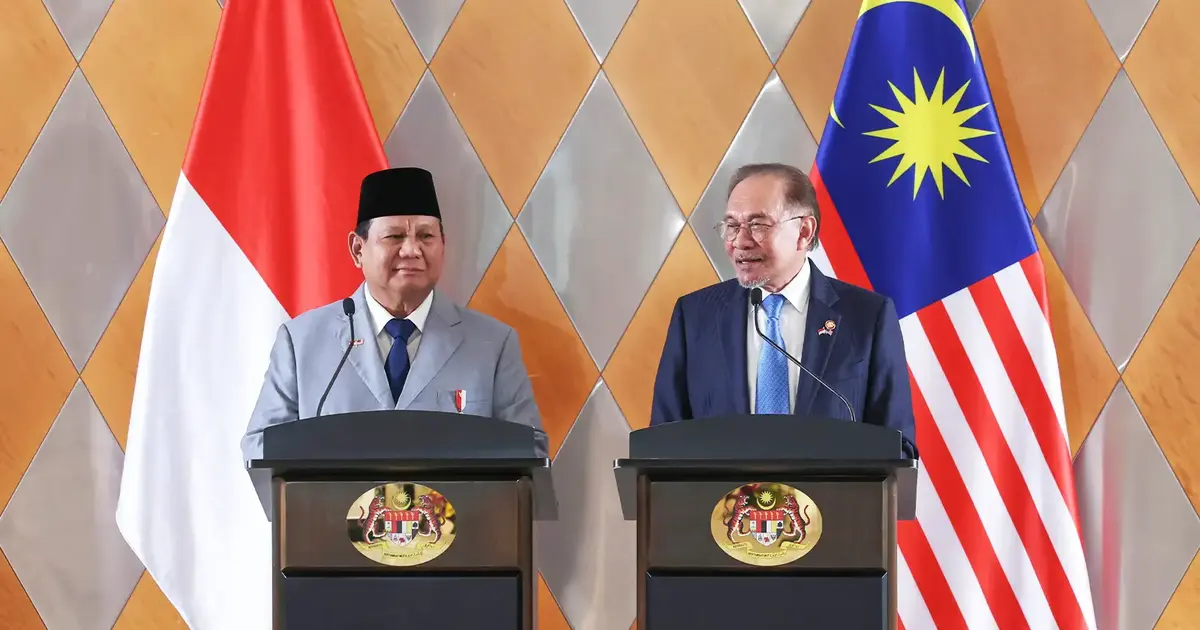
Prime Minister Anwar Ibrahim has escalated concerns about Felda's involvement in the Eagle High venture by reaching out directly to Indonesian President Prabowo Subianto, signalling the gravity of potential financial exposure facing Malaysia's largest land settlement agency. The move underscores growing anxiety within the government about an investment that could result in catastrophic losses exceeding RM2 billion if management missteps continue unaddressed.
Felda Global Ventures, the commercial arm of the Federal Land Development Authority, stands to recover merely RM200 million from its substantial Eagle High commitment should the situation deteriorate further, according to Anwar's assessment. This troubling disparity between the initial investment and potential recovery highlights how poorly structured or inadequately monitored overseas investments can devastate domestic agencies charged with supporting rural communities. The figures paint a bleak picture for an organisation already grappling with structural challenges in an evolving palm oil market.
The Eagle High venture represents a critical juncture for Felda's institutional credibility and financial stability. Established to uplift smallholder farmers and settlers across Malaysia, Felda has diversified into regional investments seeking higher returns. However, the Eagle High involvement demonstrates how aggressively pursuing growth opportunities without rigorous due diligence can expose the organisation to significant risk. For Malaysian settlers who depend on Felda's dividend distributions and development programmes, this investment outcome carries real consequences for their livelihoods.
Anwar's diplomatic overture to Prabowo reflects the bilateral dimension of the problem. Indonesia's role as host jurisdiction and potential stakeholder in the Eagle High venture means Jakarta's cooperation could prove instrumental in salvaging value or at minimum, minimising further deterioration. By engaging the Indonesian president personally, Anwar is attempting to leverage high-level political channels to protect Malaysian economic interests—a pragmatic approach given that formal corporate mechanisms may have already proved insufficient.
The timing of this intervention also matters significantly. Anwar's willingness to wade into the details of Felda's commercial portfolio suggests either that previous attempts to resolve the matter through routine channels have failed, or that the situation has deteriorated to a point demanding executive attention. Either scenario indicates systemic governance gaps within Felda itself, raising questions about board oversight, investment committee procedures, and risk management frameworks that allowed such exposure to accumulate.
For Malaysian investors and fund managers observing this situation, the Eagle High episode offers cautionary lessons about investing in complex regional ventures, particularly those involving multiple jurisdictions and stakeholders. Due diligence standards, contractual protections, and exit mechanisms require careful construction before capital is deployed. Felda's experience may prompt tighter scrutiny across Malaysian investment vehicles operating abroad, potentially increasing governance costs but reducing future exposure to similar predicaments.
The broader regional context cannot be ignored. Malaysia and Indonesia maintain extensive economic ties spanning palm oil, investment flows, and labour mobility. A resolution favourable to both nations could strengthen the bilateral partnership, whilst a contentious outcome might strain relations. Prabowo's response to Anwar's overture will signal Indonesian commitment to supporting Malaysian economic interests and protecting the investment environment for cross-border ventures.
For Felda's settler community, this situation underscores the vulnerability of institutions dependent on commercial performance to fund social obligations. The prospect of losing RM2 billion in shareholder value means fewer resources for agricultural extension, infrastructure development, and welfare programmes supporting farming families. This consequence extends beyond corporate balance sheets into genuine hardship for some of Malaysia's most economically marginal populations.
The resolution path forward likely involves several components: candid assessment of what went wrong in investment analysis and approval processes, immediate steps to stabilise the Eagle High venture and prevent further deterioration, potential renegotiation of terms if legally permissible, and longer-term governance reforms within Felda to prevent similar missteps. Anwar's intervention signals that the Prime Minister's Office will remain engaged throughout this process, suggesting the matter has ascended to the highest level of government priority. How effectively this pressure translates into concrete improvements to the situation will determine whether this becomes merely another corporate loss or a catalyst for institutional reform within one of Malaysia's oldest and most important development agencies.

