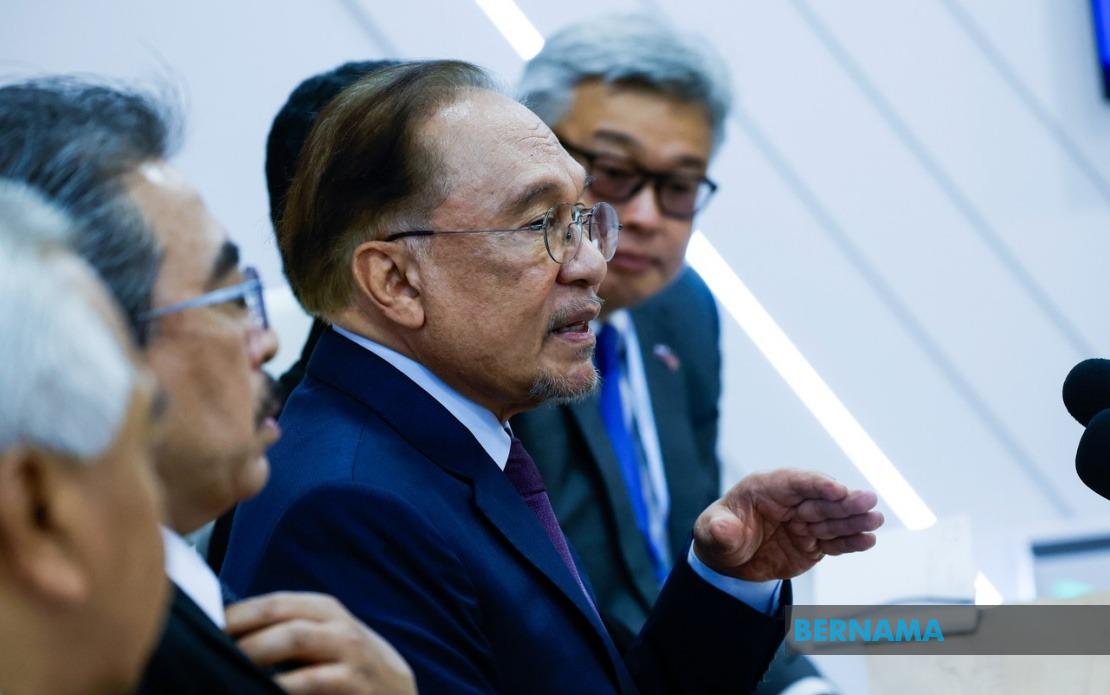
Prime Minister Datuk Seri Anwar Ibrahim concluded a significant two-day working visit to Kazan with Malaysia and Russia cementing commitments across energy, trade, investment, and people-to-people exchanges. The centerpiece of the diplomatic engagement was Russia's undertaking to provide Malaysia with stable, long-term energy supplies anchored in multi-year agreements rather than the shorter annual or seasonal arrangements that currently dominate bilateral energy transactions. This strategic shift addresses Malaysia's vulnerability to volatile global energy markets and provides greater predictability for domestic energy planning and industrial operations.
During closing remarks to Malaysian media, Anwar outlined the mechanics of the emerging energy arrangement, emphasizing that Russia had moved beyond general commitments to providing a structured framework spanning petroleum, oil, and gas sectors. The framework has already secured high-level approval from both governments, and bilateral teams are now navigating final technical details before implementation. Company representatives have already engaged in preliminary discussions, with draft agreements prepared and core principles aligned. Anwar indicated that upon returning to Malaysia, the government would accelerate the formalization process, suggesting that formal signing could occur within weeks rather than months.
The energy component reflects deeper strategic calculations within Malaysia's government. As a nation heavily dependent on hydrocarbon imports and facing energy security challenges amid geopolitical instability, Malaysia has progressively diversified supplier relationships beyond traditional Middle Eastern sources. Russia's commitment to guaranteed supply lines, backed by its substantial reserves and export capacity, provides crucial insurance against supply disruptions. The long-term framework also offers pricing stability advantages, shielding Malaysia from sudden price spikes that can destabilize budgets and competitiveness across energy-intensive industries including petrochemicals, semiconductors, and manufacturing.
Beyond energy, Anwar articulated a broader recalibration of Malaysia's international economic posture. He called for greater boldness in pursuing economic partnerships with Russia and other emerging economies, cautioning against an excessively cautious approach to international commercial engagement. This rhetorical shift signals frustration with risk-averse policies that may have limited Malaysian companies' penetration into promising non-Western markets. The statement carries implications for how future administrations may evaluate foreign direct investment proposals from Russian and other non-aligned bloc entities, potentially streamlining approval processes and reducing bureaucratic friction.
Practical facilitation mechanisms also featured prominently in discussions. Anwar pushed for visa-free travel arrangements and direct flight services between Malaysia and Russia, recognizing that tourism and people-to-people connectivity require tangible infrastructure support. Current indirect routing through multiple hubs increases travel times and costs, limiting middle-class tourism flows. Direct flights would particularly benefit Malaysian business travelers, students, and cultural delegations seeking to engage with Russian institutions. Similarly, visa simplification reduces friction that deters casual travel and educational exchanges.
The bilateral meeting between Anwar and Rais of the Republic of Tatarstan, Rustam Minnikhanov, expanded the energy dialogue to encompass downstream petroleum activities, refining operations, and petrochemical manufacturing. Tatarstan's position as one of Russia's leading oil-producing regions creates natural synergies with Malaysia's Petronas, which operates globally and possesses downstream expertise. Potential joint ventures in refining capacity or petrochemical complexes could leverage Malaysian technological capabilities and capital alongside Tatarstan's resource endowments, creating win-win arrangements that deepen economic interdependence.
At the regional level, the finalization of the ASEAN-Russia Strategic Programme on Trade and Investment Cooperation 2026-2035 provides an institutional framework supporting bilateral initiatives like Malaysia's energy arrangements. This decade-long cooperative roadmap signals sustained engagement despite geopolitical headwinds, offering member states including Malaysia a predictable environment for commercial and diplomatic planning. The programme encompasses trade facilitation, investment protections, and sectoral cooperation spanning agriculture, digital technology, and scientific research.
Trade data underscores the expansion trajectory. In 2024, total ASEAN-Russia trade reached US$18.1 billion, while Russian foreign direct investment in the bloc amounted to RM367.90 million. For Malaysia specifically, Russia ranked as the ninth-largest European trading partner in 2025, with bilateral trade valued at RM8.72 billion. Malaysian exports to Russia concentrate on electrical products, machinery, and processed foods, while imports center on petroleum products, minerals, and chemicals. These complementary trade patterns suggest untapped growth potential, particularly as sanctions pressures encourage Russian diversification away from Western markets.
Anwar also highlighted cybersecurity cooperation, digital technology development, and higher education exchanges as emerging pillars of Malaysia-Russia engagement. These sectors reflect recognition that modern strategic partnerships extend beyond traditional energy and trade. Cybersecurity cooperation becomes increasingly vital as regional tensions rise and digital infrastructure faces growing threats. Technology partnerships could position Malaysian firms as gateways to Southeast Asian markets for Russian innovations, particularly in artificial intelligence, telecommunications, and advanced manufacturing.
The Kazan visit concluded Anwar's broader Central Asian diplomatic tour, which proceeded immediately to Turkmenistan for a two-day official visit. This sequencing reflects deliberate strategy: consolidating Russia's long-term supply commitments before engaging Turkmenistan, another major gas producer. The combination signals Malaysian intent to establish multiple supply corridors, reducing dependence on any single partner and creating competitive dynamics that favor buyer interests. Turkmenistan's gas reserves represent another potential source for diversifying Malaysia's energy portfolio.
Underscoring the urgency animating these visits, Malaysia faces intensifying global energy volatility driven by geopolitical tensions, supply chain fragility, and price fluctuations. The Russia-Ukraine conflict, Middle Eastern instability, and shifting OPEC+ production decisions create unpredictability that jeopardizes long-term energy planning. By negotiating multi-year supply agreements with Russia and exploring similar frameworks with Turkmenistan, Malaysia reduces exposure to spot market volatility and ensures predictable energy costs for domestic consumers and industries.
The diplomatic mission also reflected Malaysia's recalibration within the non-aligned movement. Rather than defaulting to Western-oriented energy partnerships, Anwar's government is actively cultivating relationships with major producers outside Western alliance structures. This positioning enhances Malaysia's diplomatic flexibility and leverage, allowing the country to maintain relationships across geopolitical divides while pursuing pragmatic national interests. For Malaysian businesses, particularly Petronas and energy-intensive manufacturers, these connections create commercial opportunities previously constrained by Cold War residues.
Moving forward, the successful Kazan engagement establishes momentum for deeper Malaysia-Russia cooperation extending well beyond energy. The frameworks established during this visit position Malaysia as a preferred Southeast Asian partner for Russian commercial and political engagement, potentially yielding advantages in subsequent regional negotiations. For Malaysian policymakers, the mission demonstrated that patient diplomatic engagement with major powers yields tangible economic returns, validating the government's strategy of expanding ties across traditional strategic divides.