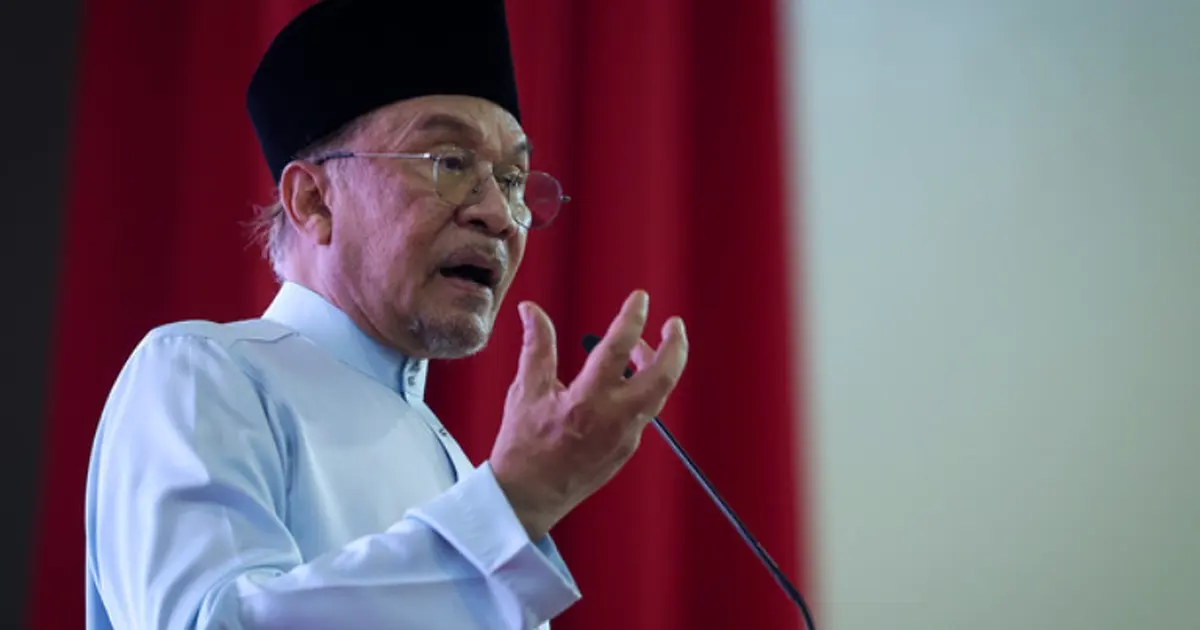
PKR Youth leader Huraimi Husri has levelled sharp criticism at Umno, claiming that Prime Minister Anwar Ibrahim extended a lifeline to the party during a period of profound weakness following the 2023 general election, only to be repaid with political disloyalty. Speaking on behalf of the Federal Territories chapter, Huraimi characterised the relationship between the PKR president and Umno as one where Anwar acted as a trusted ally extending vital assistance at a moment when Umno's future appeared precarious.
The backdrop to this assertion relates to the post-GE15 political landscape, when no single coalition secured a decisive parliamentary majority. Umno emerged from that election severely diminished, with its seat count reduced and its political dominance in peninsular Malaysia fundamentally weakened. The party faced internal turbulence and questions about its relevance in Malaysian politics, a dramatic reversal from its position as an unassailable governing force for nearly seven decades. During this turbulent period, the narrative suggests that Anwar, despite leading PKR—traditionally positioned as a rival—chose to engage constructively rather than exploit Umno's vulnerability.
The formation of the Madani administration represented a pivotal moment in Malaysian coalition politics, as PKR aligned with Umno and other parties to create a governing arrangement that differed markedly from the confrontational opposition politics of the previous decade. Rather than seeking to permanently marginalise Umno through electoral or parliamentary tactics, Anwar's approach included incorporating the party into the governing structure. This decision by the PKR president reflected a pragmatic assessment that ensuring political stability and preventing further fragmentation of the political centre-right was preferable to ideological confrontation.
However, Huraimi's comments indicate growing frustration within PKR circles over what they perceive as insufficient reciprocity from Umno. The suggestion of betrayal points toward tensions within the current coalition arrangement, where disagreements over ministerial positions, policy direction, legislative priorities, or public positioning may have created friction. Such tensions are not uncommon in multi-party coalitions, where competing interests and constituencies must be balanced against shared governance objectives.
From a broader perspective, the PKR Youth leader's remarks reflect the complex dynamics of Malaysian coalition politics, where historical rivals sometimes become temporary partners. The statement serves as both a political commentary and a warning signal about potential instability within the Madani coalition. In Malaysian politics, public criticism of coalition partners typically indicates underlying tensions that could have implications for parliamentary stability and government longevity.
The framing of Anwar as having "saved" Umno carries particular weight given historical context. Umno's narrative during and after GE15 centred on recovery from organisational challenges and electoral losses. By positioning PKR and Anwar as instrumental in that recovery, Huraimi implicitly argues that Umno has an obligation of gratitude. This argument, however, may oversimplify the motivations behind coalition formation, which are typically driven by pragmatic political calculation rather than philanthropic impulses.
For Malaysian observers, the significance of these comments extends beyond rhetorical scoring between coalition members. The stability of the current government depends substantially on maintaining working relationships across different political parties with divergent constituencies and ideological orientations. Umno represents traditional Malay-Muslim concerns and rural constituencies, while PKR draws support from urban areas and more cosmopolitan demographics. When public figures within one coalition partner publicly criticise another, it raises questions about the resilience of these arrangements when pressured by electoral cycles or internal party dynamics.
The tension also reflects the different strategic positions of PKR and Umno as the government approaches the midterm of its five-year term. PKR, as the largest coalition component, may harbour ambitions of consolidating its political position and expanding influence. Umno, conversely, seeks to rehabilitate its image and regain ground lost in GE15. These divergent trajectories can create friction over resource allocation, legislative priorities, and public credit-claiming for government achievements.
Additionally, the statement from Huraimi should be understood within the context of intra-party political positioning. PKR Youth, as the party's youth wing, often adopts more combative rhetorical stances than the central leadership. Such positioning can serve functions within youth mobilisation, appealing to supporters who desire more assertive political stands. However, public criticism from party youth wings can also signal to the senior leadership that bases are growing impatient with particular strategies or relationships.
The accusation of betrayal, while rhetorically powerful, requires scrutiny regarding specifics. Coalition politics inherently involves compromise and negotiation. Umno's unwillingness to concede certain positions or its pursuit of policies contrary to PKR preferences might be characterised as betrayal from one perspective, or as legitimate representation of its constituency from another. The language chosen by Huraimi suggests genuine frustration, though it may also represent tactical positioning ahead of potential coalition reassessments or intra-government disputes.
Looking forward, these remarks underscore the fragility of Malaysian coalition arrangements and the importance of sustained dialogue between partners. The success of the Madani government ultimately depends on whether parties can manage expectations and maintain sufficient cohesion to deliver on governance objectives. Public expressions of frustration, while perhaps cathartic for party bases, can complicate the delicate task of holding diverse political forces together in service of shared administrative goals.
For Southeast Asian observers monitoring Malaysian politics, the stability of the current government configuration matters beyond Malaysia's borders. The country's political steadiness influences regional confidence in governance across the broader region. Sustained coalition tensions or parliamentary instability could create ripple effects on Malaysia's capacity to contribute effectively to regional initiatives and institutions. Thus, Huraimi's comments represent not merely domestic political theatre but potential indicators of deeper structural challenges within Malaysian coalition governance.

