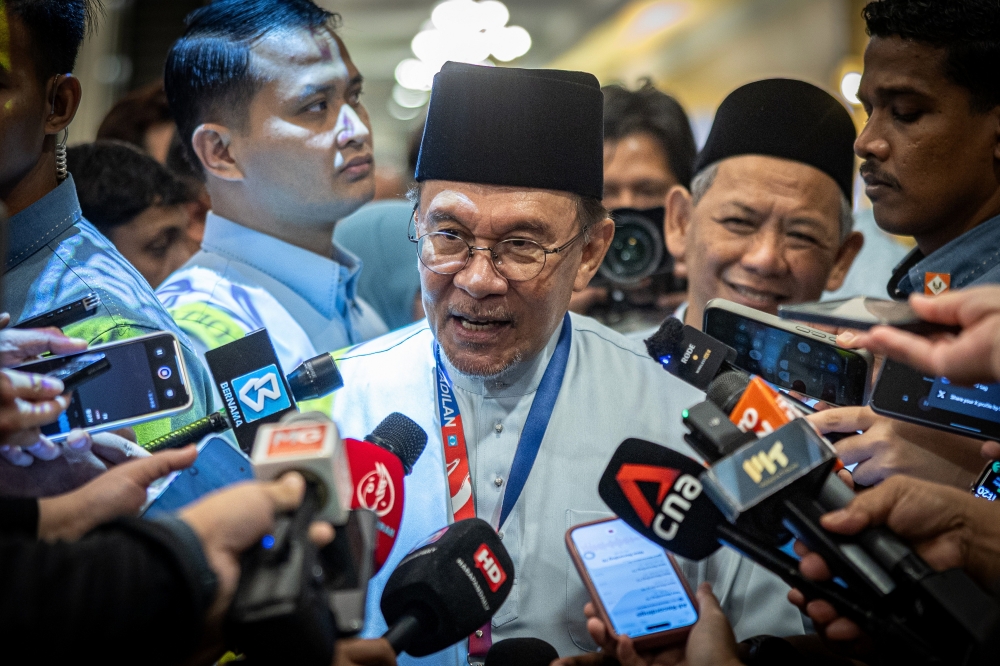
Prime Minister Datuk Seri Anwar Ibrahim moved swiftly to quash speculation about fractures within Malaysia's ruling coalition on August 15, dismissing recent commentary that had suggested discord between his office and that of Deputy Prime Minister Datuk Seri Zahid Hamidi. Speaking in Melaka, Anwar characterised his approach to governance as deliberately measured and non-confrontational, framing it as part of a broader commitment to institutional stability that he believes is essential for the nation's development. The prime minister's comments came in response to observations made by fellow politician Khairy Jamaluddin, who had referenced potential tensions at the highest levels of government.
Anwar's rejection of the rift narrative reflects the delicate balance required in Malaysian coalition politics, where multiple parties must maintain functional relationships despite differing policy priorities and political constituencies. The prime minister underscored that his philosophy centres on pursuing objectives through dialogue and consensus-building rather than confrontation, a stance he positioned as fundamental to his leadership style. This emphasis on peaceful resolution signals to coalition partners and the broader political establishment that Anwar intends to govern through negotiation rather than executive pressure, a significant departure from perceptions of more authoritarian leadership approaches that have characterised certain periods of Malaysian politics.
The timing of these remarks carries particular significance within Malaysia's complex political environment. Coalition governments in the country depend on maintaining cohesion among parties that sometimes hold divergent interests, and public declarations of unity serve important signalling functions both domestically and internationally. By directly addressing speculation about his relationship with Zahid, Anwar sought to prevent rumour escalation that might undermine investor confidence or create openings for opposition parties to exploit government instability as a campaign issue.
Zahid Hamidi, as deputy prime minister and president of the United Malays National Organisation (UMNO), represents one of the coalition's most significant power centres. Any substantive rift between the two leaders would carry profound implications for government coherence and legislative capacity. UMNO's parliamentary representation remains crucial to maintaining the government's working majority, making the relationship between Anwar and Zahid functionally central to the administration's ability to pass legislation and implement its agenda. Anwar's public statement thus serves as reassurance both to coalition members and to the broader Malaysian public about the government's operational viability.
The reference to Khairy Jamaluddin's comments adds another dimension to this political choreography. Khairy, a prominent politician within UMNO, carries sufficient profile that his observations can influence media narratives and public perception of governmental dynamics. By responding directly to Khairy's suggestions, Anwar demonstrated that he monitors political commentary from within the coalition and takes seriously even indirect criticism of government unity. This attentiveness also indicates that Anwar views the narrative around coalition stability as consequential enough to warrant prime ministerial intervention.
Anwar's characterisation of his approach as inherently peaceful reflects his broader political philosophy developed through decades of involvement in Malaysian politics. Having experienced periods of intense political conflict himself, including institutional imprisonment, the prime minister has publicly advocated for reconciliation and pragmatism as superior to confrontation. This positioning appeals to a Malaysian electorate that generally favours stability and effective governance over dramatic political upheaval. By consistently reinforcing this message, Anwar reinforces his personal brand as a moderate force capable of managing competing interests.
The strategic value of these statements extends beyond immediate coalition management. International observers and business leaders closely monitor Malaysian political stability as an indicator of investment climate and regulatory predictability. Anwar's emphasis on peaceful governance and coalition unity provides reassurance that the administration will continue pursuing economic and developmental objectives without disruption from internal political conflict. This is particularly important given Malaysia's position as a major regional economy and global investment destination where political uncertainty can trigger capital flight and reduced foreign direct investment.
Within the broader context of Malaysian politics, where coalition governments have historically been vulnerable to sudden realignments and defections, Anwar's proactive statements about his relationship with Zahid serve a preventative function. By publicly affirming unity and dismissing rift narratives, the prime minister establishes a political baseline from which any future divisions would represent a dramatic departure requiring substantial explanation. This rhetorical approach constrains the space for politicians to claim government breakdown without first exhausting more transparent channels for addressing grievances.
The incident also illuminates how Malaysian politics increasingly unfolds through media commentary and public statements rather than purely behind-closed-doors negotiations. Politicians like Khairy use interviews and public forums to signal concerns about government direction or leadership dynamics, knowing that such comments will be reported and analysed. Anwar's response demonstrates that prime ministerial attention to these signals is part of contemporary governance, requiring leaders to manage not just parliamentary votes and cabinet decisions but also the narrative ecosystem surrounding political operations.
Looking forward, Anwar's insistence on the stability of his coalition relationships will likely provide the rhetorical foundation for his administration's continued pursuit of legislative initiatives. Should future disputes emerge within the coalition, his previous statements establish a reference point against which such conflicts would be evaluated. Whether this investment in unity messaging ultimately prevents coalition fragmentation or simply delays its manifestation remains an open question that will determine much about Malaysian politics over the coming years.

